Hoffman Haydn, Sierro Tiffany, Niu Tianyi, Sarino Melanie E, Sarrafzadeh Majid, McArthur David, Edgerton V Reggie, Lu Daniel C
Department of Neurosurgery, University of California, Los Angeles, 300 Stein Plaza, Ste. 536, Los Angeles, CA, 90095-6901, USA.
Rancho Los Amigos National Rehabilitation Center, Downey, CA, 90242, USA.
J Neuroeng Rehabil. 2017 Mar 21;14(1):22. doi: 10.1186/s12984-017-0234-1.
Activity-based therapy (ABT) for patients with spinal cord injury (SCI), which consists of repetitive use of muscles above and below the spinal lesion, improves locomotion and arm strength. Less data has been published regarding its effects on hand function. We sought to evaluate the effects of a weekly hand-focused therapy program using a novel handgrip device on grip strength and hand function in a SCI cohort.
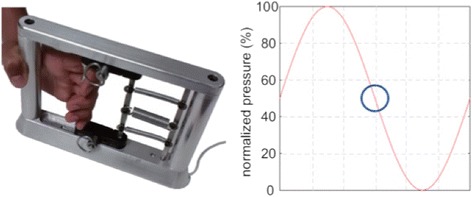
Patients with SCI were enrolled in a weekly program that involved activities with the MediSens (Los Angeles, CA) handgrip. These included maximum voluntary contraction (MVC) and a tracking task that required each subject to adjust his/her grip strength according to a pattern displayed on a computer screen. For the latter, performance was measured as mean absolute accuracy (MAA). The Spinal Cord Independence Measure (SCIM) was used to measure each subject's independence prior to and after therapy.
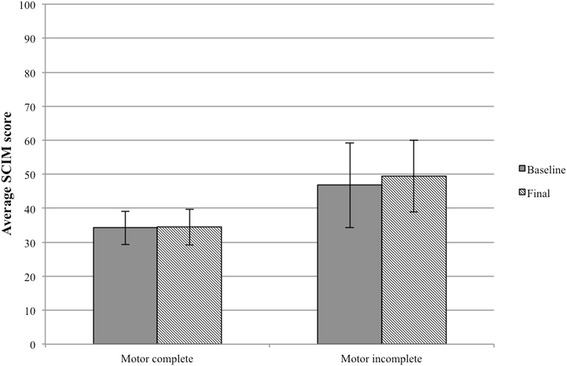
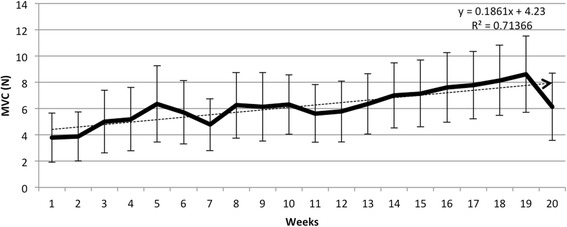
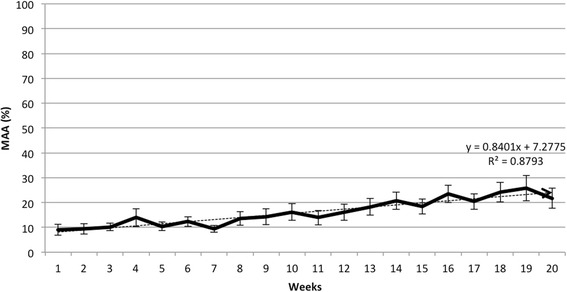
Seventeen patients completed the program with average participation duration of 21.3 weeks. The cohort included patients with American Spinal Injury Association (ASIA) Impairment Scale (AIS) A (n = 12), AIS B (n = 1), AIS C (n = 2), and AIS D (n = 2) injuries. The average MVC for the cohort increased from 4.1 N to 21.2 N over 20 weeks, but did not reach statistical significance. The average MAA for the cohort increased from 9.01 to 21.7% at the end of the study (p = .02). The cohort's average SCIM at the end of the study was unchanged compared to baseline.
A weekly handgrip-based ABT program is feasible and efficacious at increasing hand task performance in subjects with SCI.
针对脊髓损伤(SCI)患者的基于活动的疗法(ABT),包括反复使用脊髓损伤部位上下的肌肉,可改善运动能力和手臂力量。关于其对手部功能影响的研究数据较少。我们旨在评估一项使用新型握力装置的每周手部聚焦疗法计划对SCI队列患者握力和手部功能的影响。
SCI患者参加了一项每周计划,该计划包括使用MediSens(加利福尼亚州洛杉矶)握力器进行的活动。这些活动包括最大自主收缩(MVC)和一项跟踪任务,要求每个受试者根据电脑屏幕上显示的模式调整其握力。对于后者,表现以平均绝对准确率(MAA)来衡量。脊髓独立测量量表(SCIM)用于在治疗前后测量每个受试者的独立性。
17名患者完成了该计划,平均参与时长为21.3周。该队列包括美国脊髓损伤协会(ASIA)损伤量表(AIS)A级(n = 12)、B级(n = 1)、C级(n = 2)和D级(n = 2)损伤的患者。该队列的平均MVC在20周内从4.1牛增加到21.2牛,但未达到统计学意义。该队列的平均MAA在研究结束时从9.01%增加到21.7%(p = 0.02)。该队列在研究结束时的平均SCIM与基线相比没有变化。
一项基于每周握力训练的ABT计划对于提高SCI患者的手部任务表现是可行且有效的。