Li Shuangming, Wan Ying, Fan Chunhai, Su Yan
School of Mechanical Engineering, Nanjing University of Science and Technology, Nanjing 210094, China.
Sensors (Basel). 2017 Mar 22;17(3):653. doi: 10.3390/s17030653.
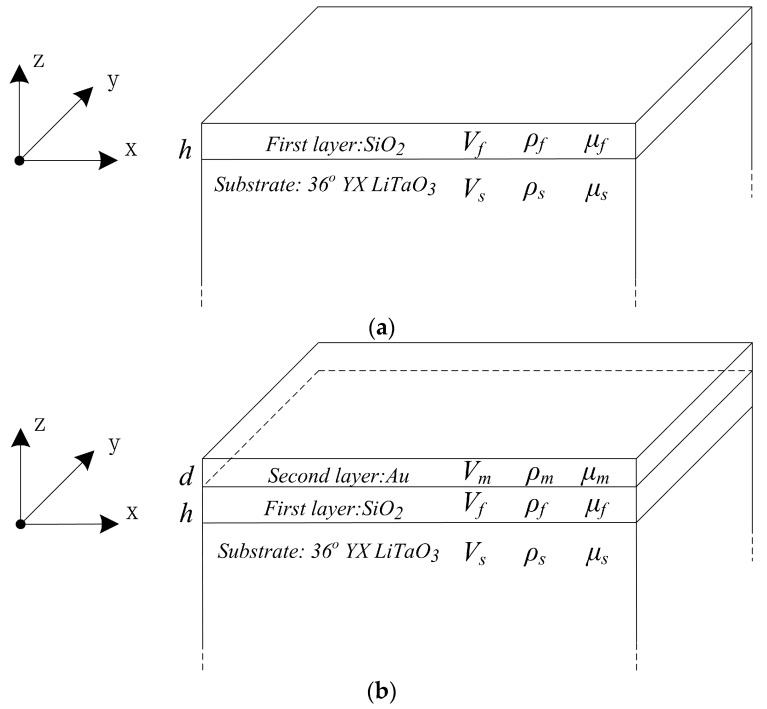
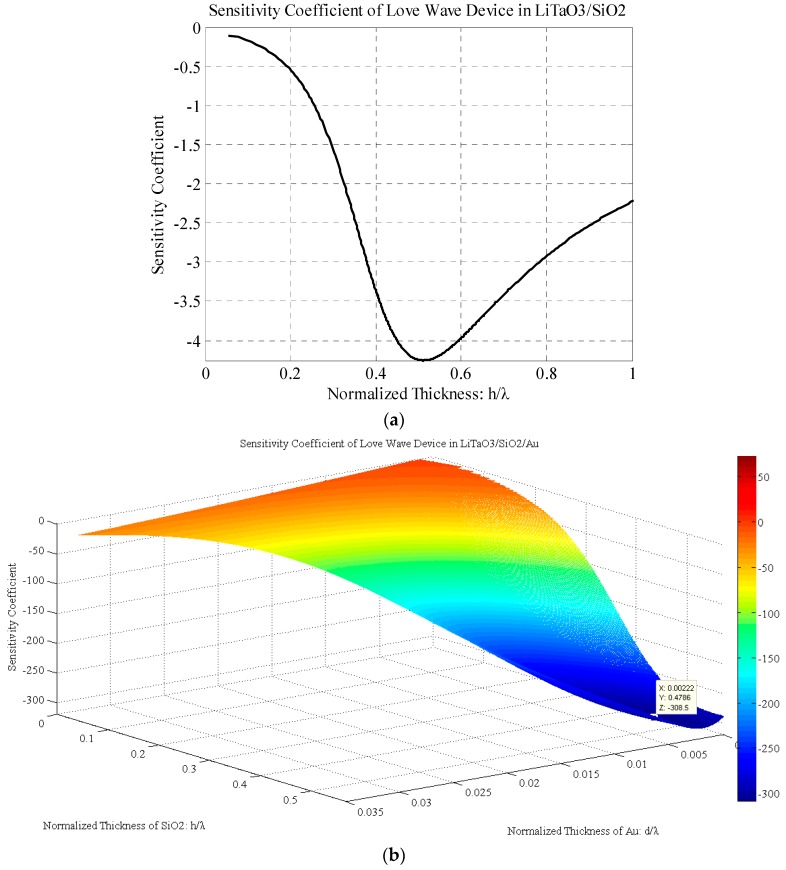
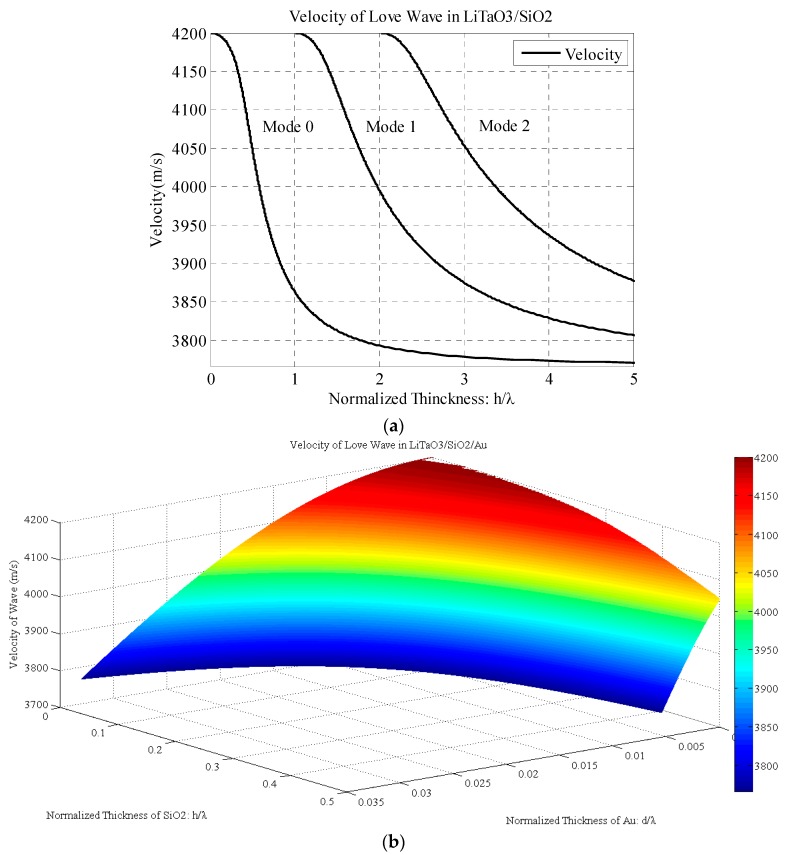
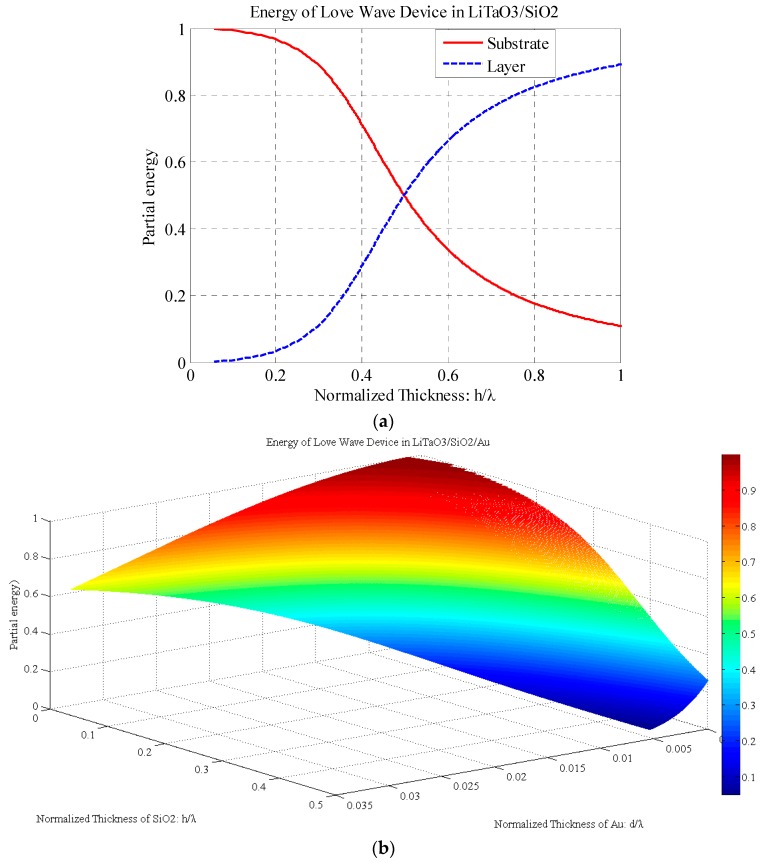
Love wave sensors have been widely used for sensing applications. In this work, we introduce the theoretical analysis of the monolayer and double-layer waveguide Love wave sensors. The velocity, particle displacement and energy distribution of Love waves were analyzed. Using the variations of the energy repartition, the sensitivity coefficients of Love wave sensors were calculated. To achieve a higher sensitivity coefficient, a thin gold layer was added as the second waveguide on top of the silicon dioxide (SiO₂) waveguide-based, 36 degree-rotated, Y-cut, X-propagating lithium tantalate (36° YX LiTaO₃) Love wave sensor. The Love wave velocity was significantly reduced by the added gold layer, and the flow of wave energy into the waveguide layer from the substrate was enhanced. By using the double-layer structure, almost a 72-fold enhancement in the sensitivity coefficient was achieved compared to the monolayer structure. Additionally, the thickness of the SiO₂ layer was also reduced with the application of the gold layer, resulting in easier device fabrication. This study allows for the possibility of designing and realizing robust Love wave sensors with high sensitivity and a low limit of detection.
洛夫波传感器已被广泛应用于传感领域。在这项工作中,我们介绍了单层和双层波导洛夫波传感器的理论分析。分析了洛夫波的速度、粒子位移和能量分布。利用能量重新分布的变化,计算了洛夫波传感器的灵敏度系数。为了获得更高的灵敏度系数,在基于二氧化硅(SiO₂)波导的、36度旋转的Y切割、X传播的钽酸锂(36°YX LiTaO₃)洛夫波传感器顶部添加了一层薄金层作为第二波导。添加的金层显著降低了洛夫波速度,并增强了波能从衬底流入波导层的流量。通过使用双层结构,与单层结构相比,灵敏度系数提高了近72倍。此外,应用金层还减小了SiO₂层的厚度,从而使器件制造更容易。这项研究为设计和实现具有高灵敏度和低检测限的稳健洛夫波传感器提供了可能性。