Xiong Heng, Liu Dongbing, Li Qiye, Lei Mengyue, Xu Liqin, Wu Liang, Wang Zongji, Ren Shancheng, Li Wangsheng, Xia Min, Lu Lihua, Lu Haorong, Hou Yong, Zhu Shida, Liu Xin, Sun Yinghao, Wang Jian, Yang Huanming, Wu Kui, Xu Xun, Lee Leo J
BGI-Shenzhen, Shenzhen 518083, China.
China National GeneBank-Shenzhen, BGI-Shenzhen, Shenzhen 518083, China.
Gigascience. 2017 May 1;6(5):1-8. doi: 10.1093/gigascience/gix012.
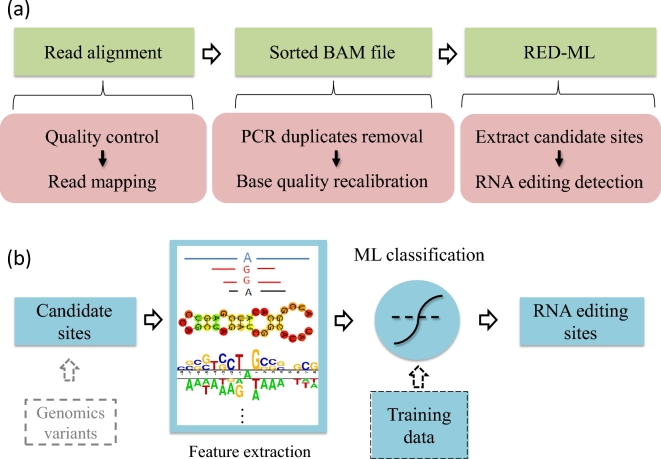
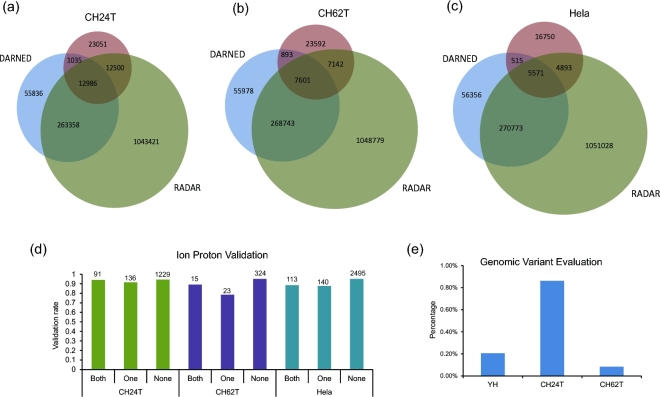
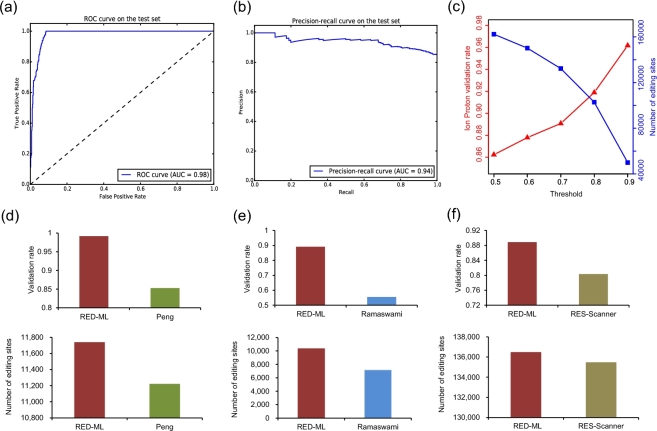
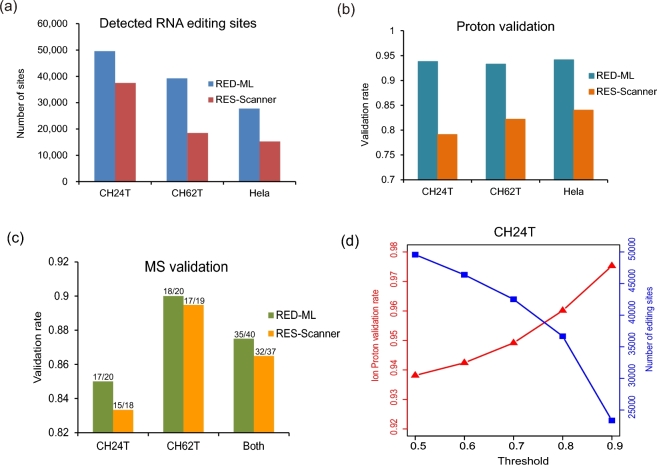
With the advancement of second generation sequencing techniques, our ability to detect and quantify RNA editing on a global scale has been vastly improved. As a result, RNA editing is now being studied under a growing number of biological conditions so that its biochemical mechanisms and functional roles can be further understood. However, a major barrier that prevents RNA editing from being a routine RNA-seq analysis, similar to gene expression and splicing analysis, for example, is the lack of user-friendly and effective computational tools. Based on years of experience of analyzing RNA editing using diverse RNA-seq datasets, we have developed a software tool, RED-ML: RNA Editing Detection based on Machine learning (pronounced as "red ML"). The input to RED-ML can be as simple as a single BAM file, while it can also take advantage of matched genomic variant information when available. The output not only contains detected RNA editing sites, but also a confidence score to facilitate downstream filtering. We have carefully designed validation experiments and performed extensive comparison and analysis to show the efficiency and effectiveness of RED-ML under different conditions, and it can accurately detect novel RNA editing sites without relying on curated RNA editing databases. We have also made this tool freely available via GitHub https://github.com/BGIRED/RED-ML. We have developed a highly accurate, speedy and general-purpose tool for RNA editing detection using RNA-seq data. With the availability of RED-ML, it is now possible to conveniently make RNA editing a routine analysis of RNA-seq. We believe this can greatly benefit the RNA editing research community and has profound impact to accelerate our understanding of this intriguing posttranscriptional modification process.
随着第二代测序技术的发展,我们在全球范围内检测和定量RNA编辑的能力有了极大提高。因此,现在在越来越多的生物学条件下对RNA编辑进行研究,以便能进一步了解其生化机制和功能作用。然而,阻碍RNA编辑成为常规RNA测序分析(例如类似于基因表达和剪接分析)的一个主要障碍是缺乏用户友好且有效的计算工具。基于多年使用各种RNA测序数据集分析RNA编辑的经验,我们开发了一个软件工具RED-ML:基于机器学习的RNA编辑检测工具(发音为“red ML”)。RED-ML的输入可以像单个BAM文件一样简单,也可以在有可用的匹配基因组变异信息时加以利用。输出不仅包含检测到的RNA编辑位点,还包含一个置信度分数以方便下游筛选。我们精心设计了验证实验,并进行了广泛的比较和分析,以展示RED-ML在不同条件下的效率和有效性,并且它可以在不依赖于经整理的RNA编辑数据库的情况下准确检测新的RNA编辑位点。我们还通过GitHub https://github.com/BGIRED/RED-ML免费提供了这个工具。我们开发了一种使用RNA测序数据进行RNA编辑检测的高精度、快速且通用的工具。有了RED-ML,现在可以方便地将RNA编辑作为RNA测序的常规分析。我们相信这将极大地造福RNA编辑研究群体,并对加速我们对这个有趣的转录后修饰过程的理解产生深远影响。