Gonzalez-Perez Gabriela, Lamousé-Smith Esi S N
Division of Pediatric Gastroenterology, Hepatology and Nutrition, Department of Pediatrics, Columbia University Medical Center , New York, NY , USA.
Front Immunol. 2017 Mar 8;8:265. doi: 10.3389/fimmu.2017.00265. eCollection 2017.
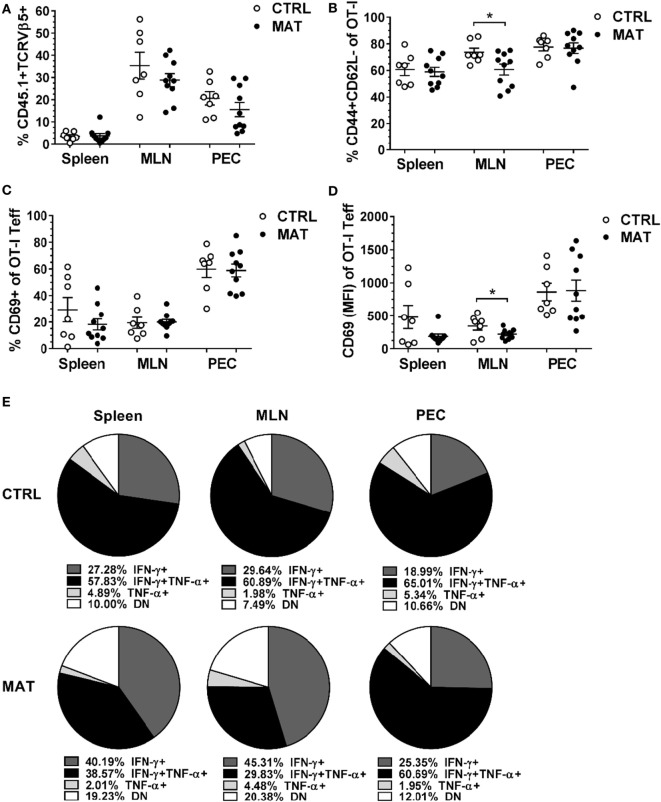
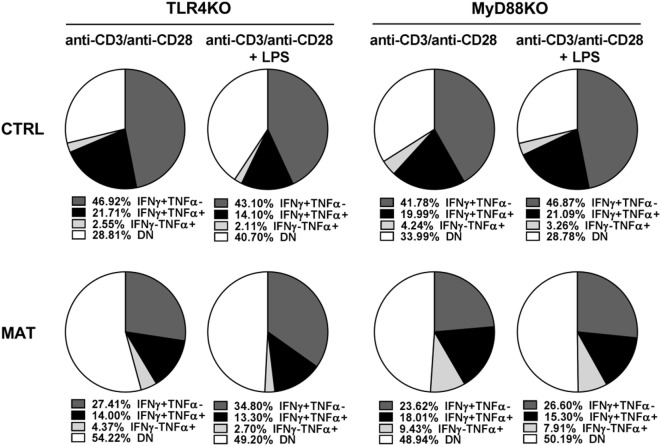
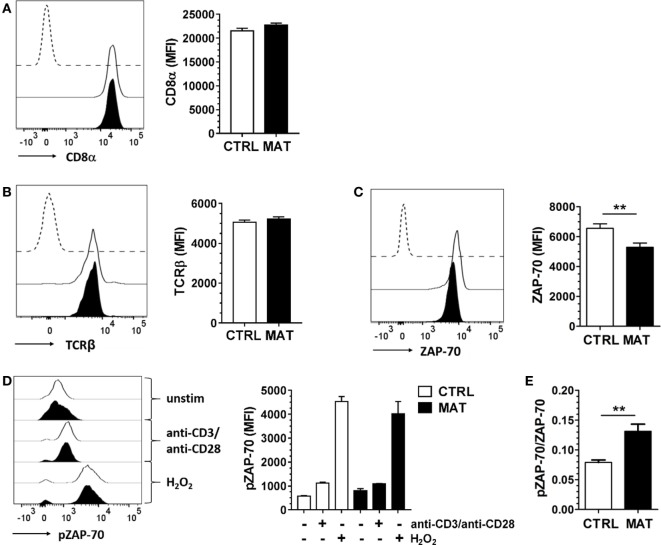
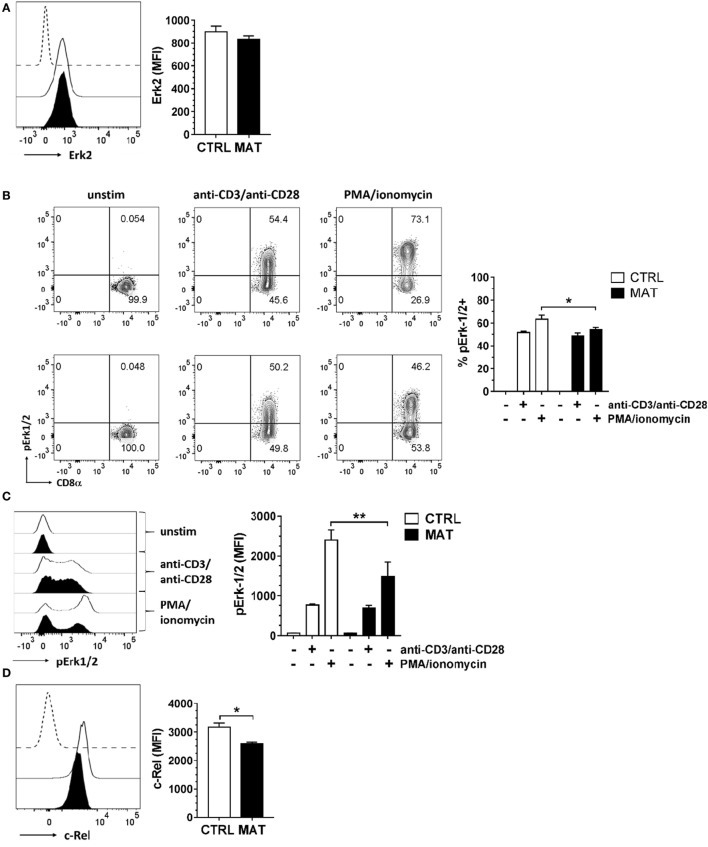
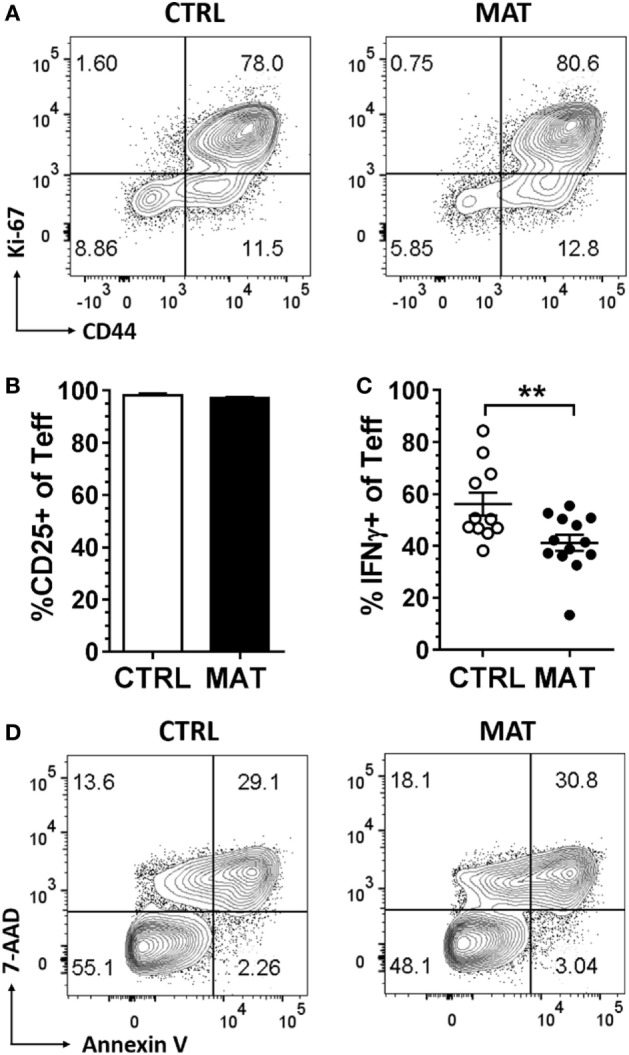
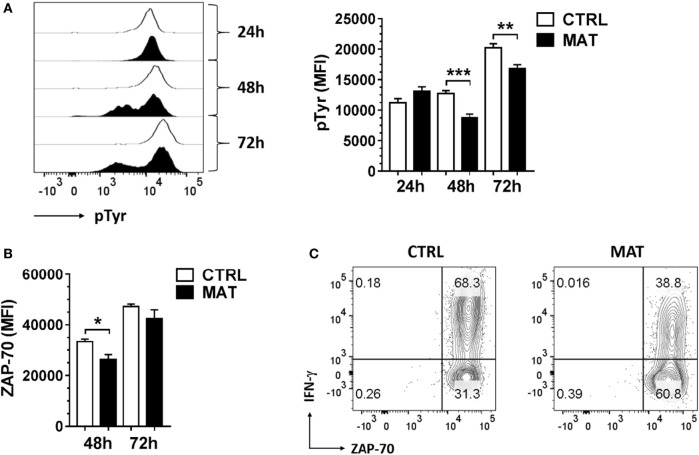
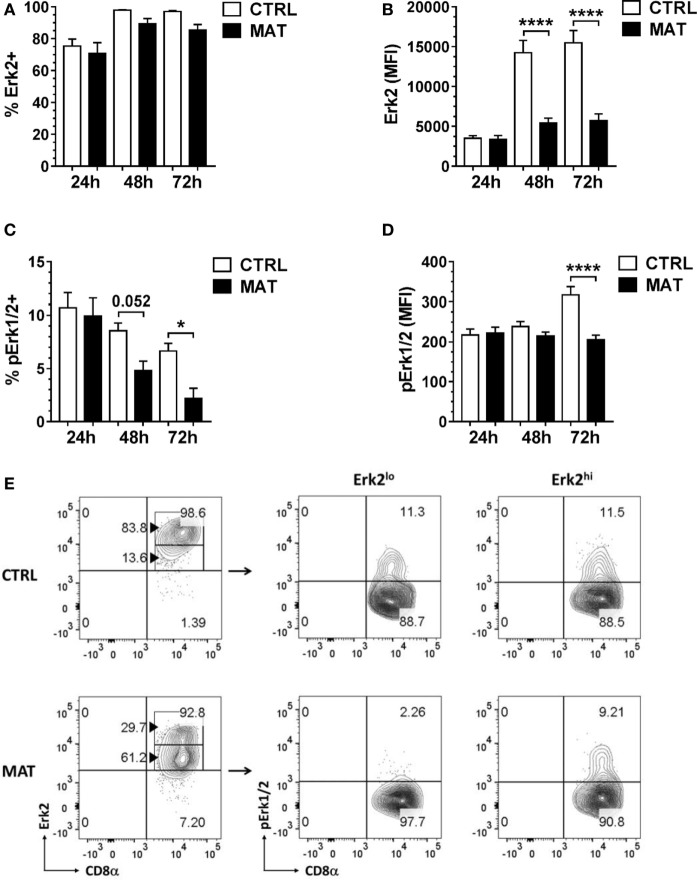
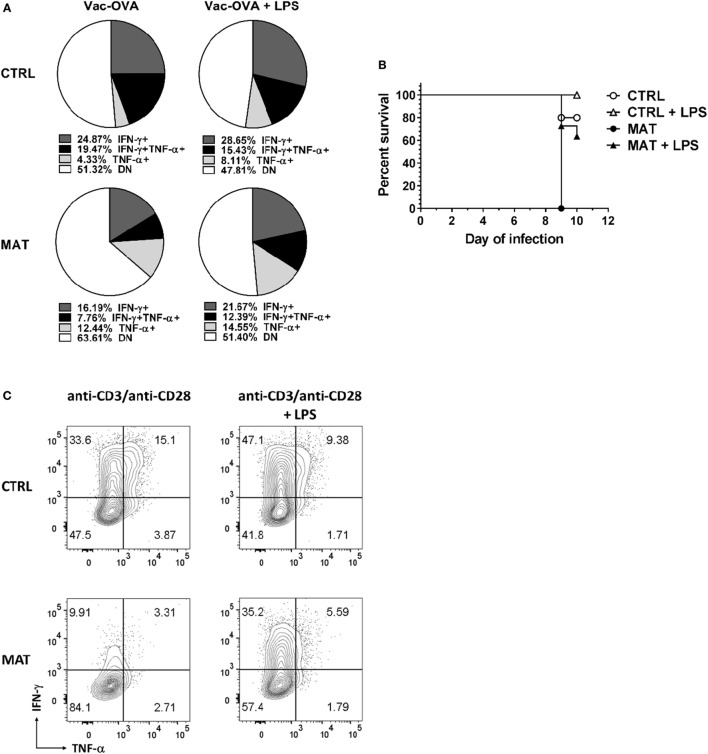
We recently reported that maternal antibiotic treatment (MAT) of mice in the last days of pregnancy and during lactation dramatically alters the density and composition of the gastrointestinal microbiota of their infants. MAT infants also exhibited enhanced susceptibility to a systemic viral infection and altered adaptive immune cell activation phenotype and function. CD8 effector T cells from MAT infants consistently demonstrate an inability to sustain interferon gamma (IFN-γ) production following vaccinia virus infection and upon T cell receptor (TCR) stimulation. We hypothesize that T cells developing in infant mice with gastrointestinal microbiota dysbiosis and insufficient toll-like receptor (TLR) exposure alters immune responsiveness associated with intrinsic T cell defects in the TCR signaling pathway and compromised T cell effector function. To evaluate this, splenic T cells from day of life 15 MAT infant mice were stimulated with anti-CD3 and anti-CD28 antibodies prior to examining the expression of ZAP-70, phosphorylated ZAP-70, phospho-Erk-1/2, c-Rel, total protein tyrosine phosphorylation, and IFN-γ production. We determine that MAT infant CD8 T cells fail to sustain total protein tyrosine phosphorylation and Erk1/2 activation. Lipopolysaccharide treatment and , partially restored IFN-γ production in MAT effector CD8 T cells and reduced mortality typically observed in MAT mice following systemic viral infection. Our results demonstrate a surprising dependence on the gastrointestinal microbiome and TLR ligand stimulation toward shaping optimal CD8 T cell function during infancy.
我们最近报道,在怀孕后期和哺乳期对小鼠进行母体抗生素治疗(MAT)会显著改变其幼崽胃肠道微生物群的密度和组成。接受MAT治疗的幼崽对全身性病毒感染的易感性也增强,且适应性免疫细胞激活表型和功能发生改变。来自接受MAT治疗的幼崽的CD8效应T细胞在感染痘苗病毒后以及受到T细胞受体(TCR)刺激时,始终表现出无法维持干扰素γ(IFN-γ)的产生。我们推测,在胃肠道微生物群失调且Toll样受体(TLR)暴露不足的幼鼠中发育的T细胞会改变与TCR信号通路中内在T细胞缺陷相关的免疫反应性,并损害T细胞效应功能。为了评估这一点,在检测ZAP-70、磷酸化ZAP-70、磷酸化Erk-1/2、c-Rel、总蛋白酪氨酸磷酸化和IFN-γ产生的表达之前,用抗CD3和抗CD28抗体刺激出生第15天的接受MAT治疗的幼鼠的脾T细胞。我们确定,接受MAT治疗的幼崽的CD8 T细胞无法维持总蛋白酪氨酸磷酸化和Erk1/2激活。脂多糖治疗部分恢复了接受MAT治疗的效应CD8 T细胞中的IFN-γ产生,并降低了接受MAT治疗的小鼠在全身性病毒感染后通常观察到的死亡率。我们的结果表明,在婴儿期,胃肠道微生物群和TLR配体刺激对塑造最佳CD8 T细胞功能有着惊人的依赖性。