Phua Chee Kiang, Wee Audrey, Lim Albert, Abisheganaden John, Verma Akash
Department of Respiratory and Critical Care Medicine, Tan Tock Seng Hospital, Singapore.
Respir Med Case Rep. 2017 Feb 28;20:205-207. doi: 10.1016/j.rmcr.2017.02.012. eCollection 2017.
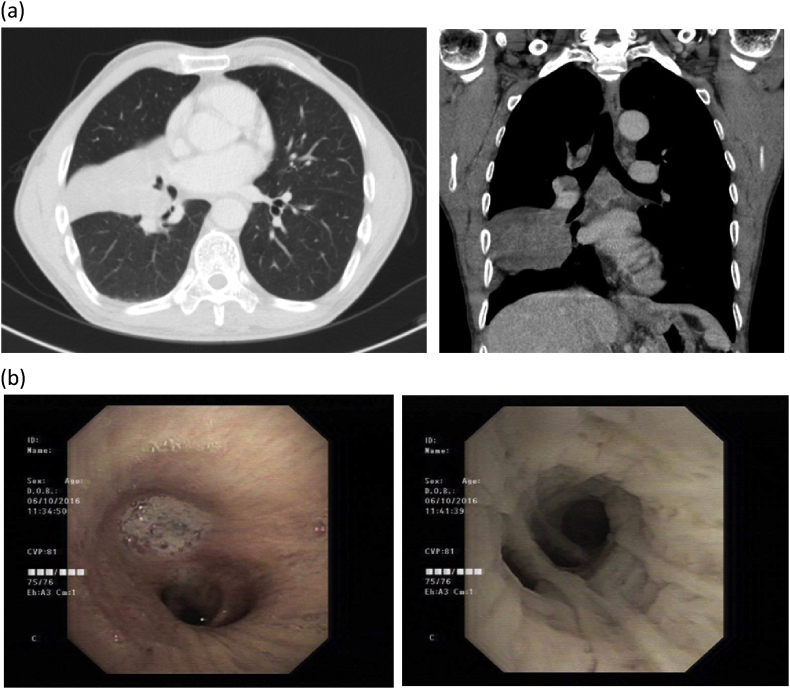
Combination of sedatives such as fentanyl and midazolam during bronchoscopy is recommended by American College of Chest Physician due to its favourable drug profile. It improves patient comfort and tolerance, and is commonly given unless contraindicated. We describe a rare case of fentanyl-induced chest wall rigidity syndrome during a routine bronchoscopy with endobronchial ultrasound guided-transbronchial needle aspiration (EBUS-TBNA) in a 55 year old male presenting with a lung mass and mediastinal lymphadenopathy. This was effectively managed with neuromuscular blockade, intubation and reversal agents including naloxone. This rare complication should be effectively managed by all bronchoscopist as it carries significant mortality and morbidity if not recognised early. We review the literature on the occurrence of fentanyl-induced chest wall rigidity and its predisposing risks factors.
美国胸科医师学会推荐在支气管镜检查期间联合使用芬太尼和咪达唑仑等镇静剂,因其药物特性良好。它可提高患者的舒适度和耐受性,通常在无禁忌证时使用。我们描述了一例罕见病例,一名55岁男性因肺部肿块和纵隔淋巴结肿大接受常规支气管镜检查及支气管内超声引导下经支气管针吸活检(EBUS-TBNA)时,发生了芬太尼诱导的胸壁强直综合征。通过神经肌肉阻滞、插管及使用包括纳洛酮在内的逆转剂,该病例得到了有效处理。所有支气管镜检查医师都应有效处理这种罕见并发症,因为如果不及早识别,它会带来显著的死亡率和发病率。我们回顾了关于芬太尼诱导胸壁强直的发生情况及其易感危险因素的文献。