Khan Faez Iqbal, Lan Dongming, Durrani Rabia, Huan Weiqian, Zhao Zexin, Wang Yonghua
School of Food Science and Engineering, South China University of Technology, Guangzhou, China; School of Chemistry and Chemical Engineering, Henan University of Technology, Zhengzhou, China.
School of Food Science and Engineering, South China University of Technology , Guangzhou , China.
Front Bioeng Biotechnol. 2017 Mar 9;5:16. doi: 10.3389/fbioe.2017.00016. eCollection 2017.
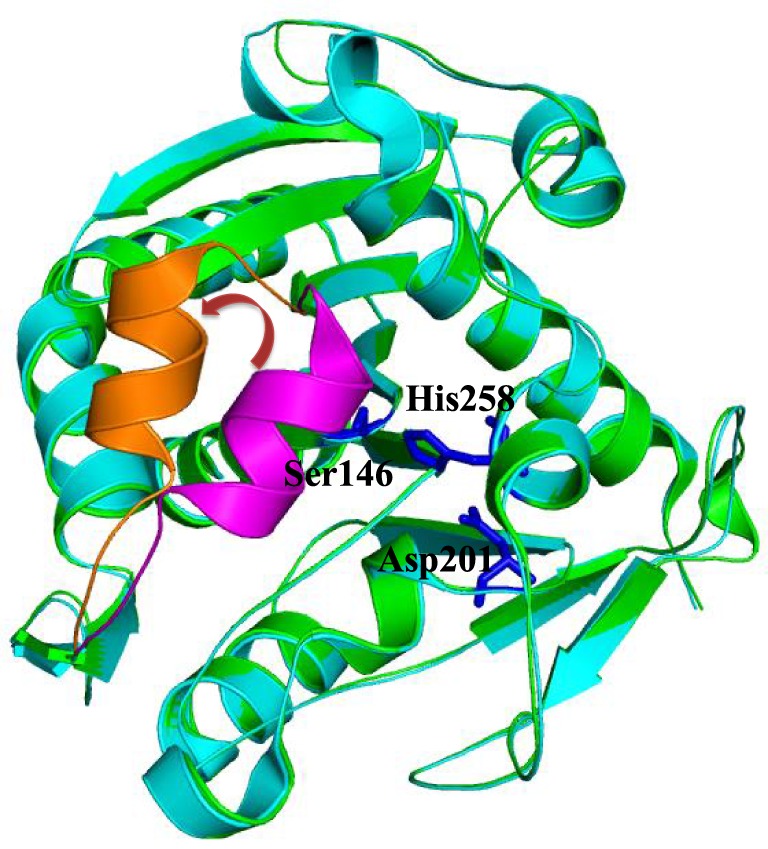
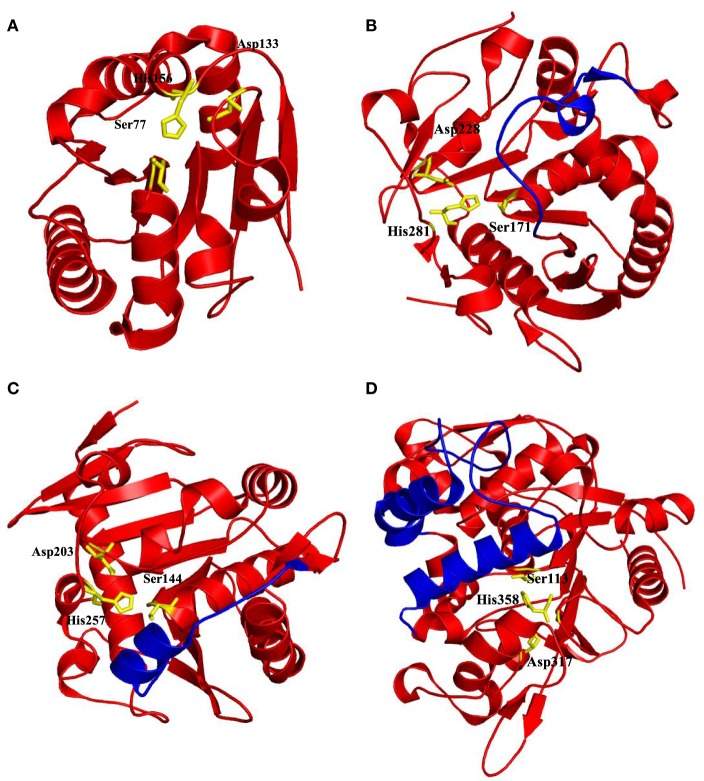
Lipases are important industrial enzymes. Most of the lipases operate at lipid-water interfaces enabled by a mobile lid domain located over the active site. Lid protects the active site and hence responsible for catalytic activity. In pure aqueous media, the lid is predominantly closed, whereas in the presence of a hydrophobic layer, it is partially opened. Hence, the lid controls the enzyme activity. In the present review, we have classified lipases into different groups based on the structure of lid domains. It has been observed that thermostable lipases contain larger lid domains with two or more helices, whereas mesophilic lipases tend to have smaller lids in the form of a loop or a helix. Recent developments in lipase engineering addressing the lid regions are critically reviewed here. After on, the dramatic changes in substrate selectivity, activity, and thermostability have been reported. Furthermore, improved computational models can now rationalize these observations by relating it to the mobility of the lid domain. In this contribution, we summarized and critically evaluated the most recent developments in experimental and computational research on lipase lids.
脂肪酶是重要的工业酶。大多数脂肪酶在位于活性位点上方的可移动盖子结构域的作用下,在脂质 - 水界面发挥作用。盖子保护活性位点,因此对催化活性负责。在纯水性介质中,盖子主要处于关闭状态,而在存在疏水层的情况下,它会部分打开。因此,盖子控制着酶的活性。在本综述中,我们根据盖子结构域的结构将脂肪酶分为不同的组。据观察,耐热脂肪酶含有较大的盖子结构域,带有两个或更多个螺旋,而嗜温脂肪酶往往具有呈环或螺旋形式的较小盖子。本文对脂肪酶工程中针对盖子区域的最新进展进行了批判性综述。此后,已报道了底物选择性、活性和热稳定性方面的显著变化。此外,改进的计算模型现在可以通过将其与盖子结构域的流动性相关联来解释这些观察结果。在本论文中,我们总结并批判性地评估了脂肪酶盖子实验和计算研究的最新进展。