Fathi Ezzatollah, Farahzadi Raheleh
Department of Clinical Sciences, Faculty of Veterinary Medicine, University of Tabriz, Tabriz, Iran.
Cardiovascular Research Center, Tabriz University of Medical Sciences, Tabriz, Iran.
PLoS One. 2017 Mar 24;12(3):e0173877. doi: 10.1371/journal.pone.0173877. eCollection 2017.
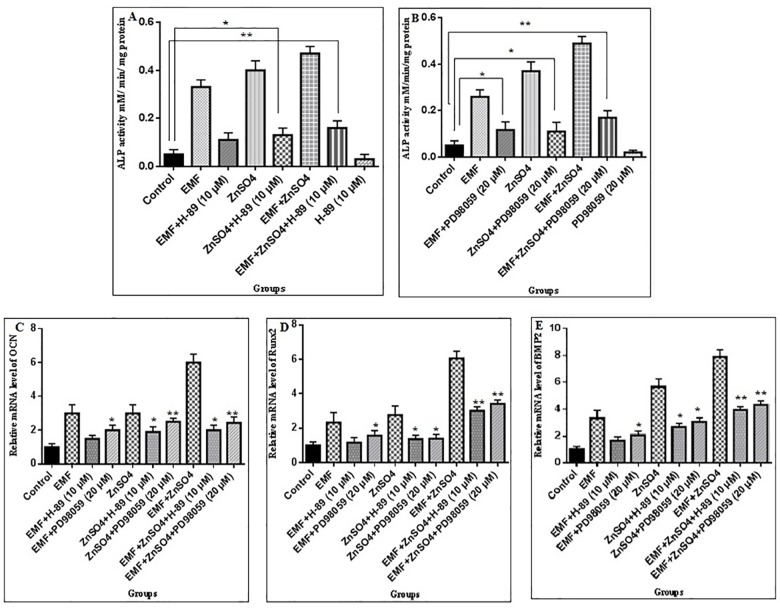
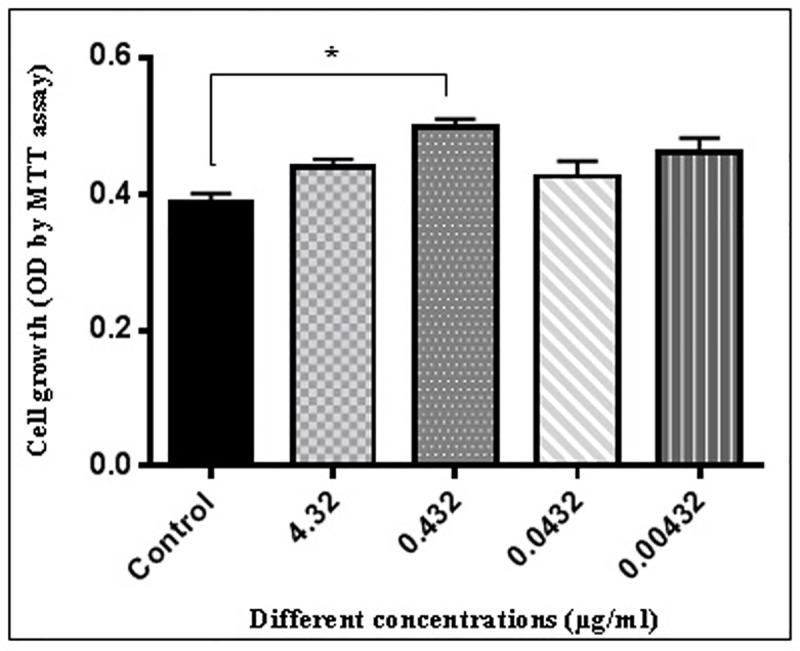
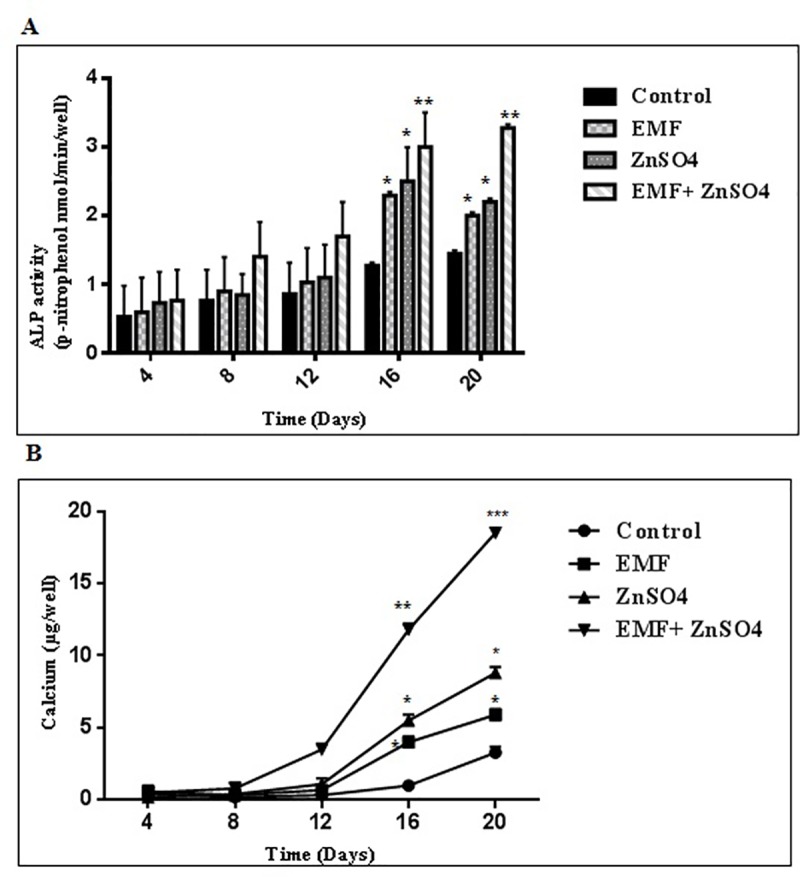
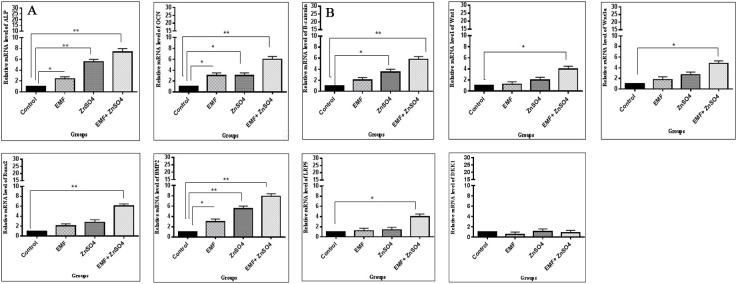
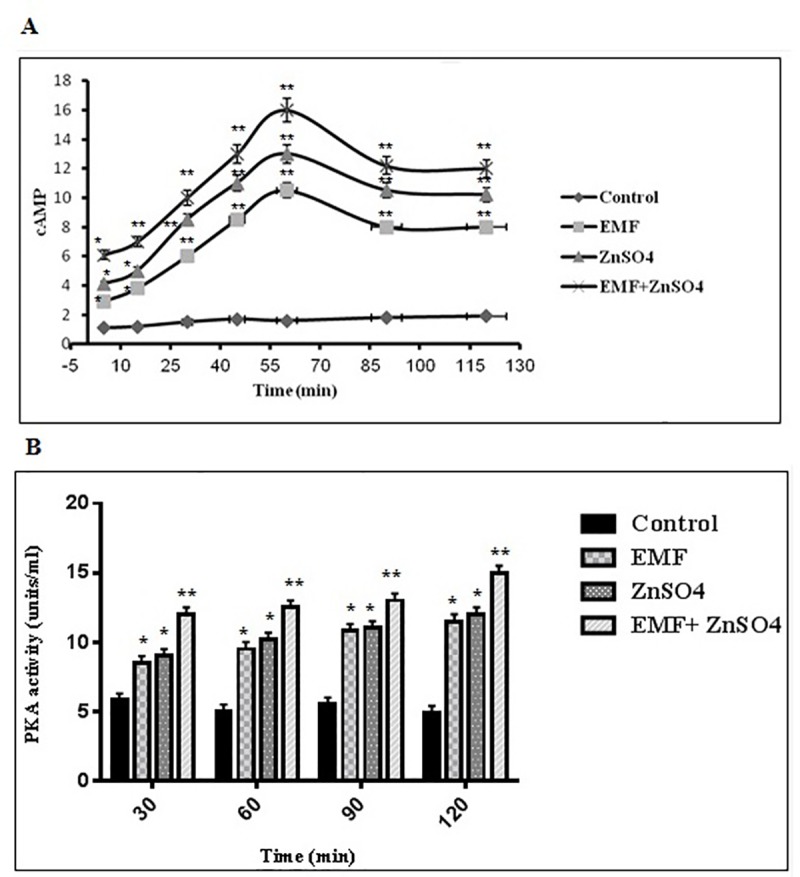
Zinc ion as an essential trace element and electromagnetic fields (EMFs) has been reported to be involved in the regulation of bone metabolism. The aim of this study was to elucidate the effects of zinc sulphate (ZnSO4) on the osteogenic differentiation of adipose tissue-derived mesenchymal stem cells (ADSCs) in the presence of EMF as a strategy in osteoporosis therapy. Alkaline phophatase (ALP) activity measurement, calcium assay and expression of several osteoblastic marker genes were examined to assess the effect of ZnSO4 on the osteogenic differentiation of ADSCs under EMF. The expression of cAMP and PKA was evaluated by ELISA. The expression of β-catenin, Wnt1, Wnt3a, low-density lipoprotein receptor-related protein 5 (LRP5) and reduced dickkopf1 (DKK1) genes were used to detect the Wnt/β-catenin pathway. It was found that ZnSO4, in the presence of EMF, resulted in an increase in the expression of osteogenic genes, ALP activity and calcium levels. EMF, in the presence of ZnSO4, increased the cAMP level and protein kinase A (PKA) activity. Treatment of ADSCs with (MAPK)/ERK kinase 1/2 inhibitor, or PKA inhibitor, significantly inhibited the promotion of osteogenic markers, indicating that the induction of osteogenesis was dependent on the ERK and PKA signaling pathways. Real-time PCR analysis showed that ZnSO4, in the presence of EMF, increased the mRNA expressions of β-catenin, Wnt1, Wnt3a, LRP5 and DKK1. In this study, it was shown that 0.432 μg/ml ZnSO4, in the presence of 50 Hz, 20 mT EMF, induced the osteogenic differentiation of ADSCs via PKA, ERK1/2 and Wnt/β-catenin signaling pathways.
锌离子作为一种必需的微量元素,与电磁场(EMFs)已被报道参与骨代谢的调节。本研究的目的是阐明硫酸锌(ZnSO4)在电磁场存在的情况下对脂肪组织来源的间充质干细胞(ADSCs)成骨分化的影响,作为骨质疏松症治疗的一种策略。通过检测碱性磷酸酶(ALP)活性、钙含量以及几种成骨细胞标记基因的表达,来评估ZnSO4在电磁场作用下对ADSCs成骨分化的影响。通过酶联免疫吸附测定(ELISA)评估环磷酸腺苷(cAMP)和蛋白激酶A(PKA)的表达。利用β-连环蛋白、Wnt1、Wnt3a、低密度脂蛋白受体相关蛋白5(LRP5)和分泌型卷曲相关蛋白1(DKK1)基因的表达来检测Wnt/β-连环蛋白信号通路。研究发现,在电磁场存在的情况下,ZnSO4导致成骨基因表达增加、ALP活性和钙水平升高。在ZnSO4存在的情况下,电磁场增加了cAMP水平和蛋白激酶A(PKA)活性。用丝裂原活化蛋白激酶(MAPK)/细胞外信号调节激酶1/2抑制剂或PKA抑制剂处理ADSCs,显著抑制了成骨标记物的促进作用,表明成骨诱导依赖于ERK和PKA信号通路。实时聚合酶链反应(PCR)分析表明,在电磁场存在的情况下,ZnSO4增加了β-连环蛋白、Wnt1、Wnt3a、LRP5和DKK1的mRNA表达。在本研究中,结果表明,在50Hz、20mT电磁场存在的情况下,0.432μg/ml的ZnSO4通过PKA、ERK1/2和Wnt/β-连环蛋白信号通路诱导ADSCs的成骨分化。