INRA, UR83 Poultry Research Unit, 37380 Nouzilly, France.
INRA, Plat-form for Integrative Analysis of Biomolecules and Phenomic of Animals of Bio-agronomic Interest, 37380 Nouzilly, France.
Poult Sci. 2017 Jun 1;96(6):1735-1747. doi: 10.3382/ps/pew444.
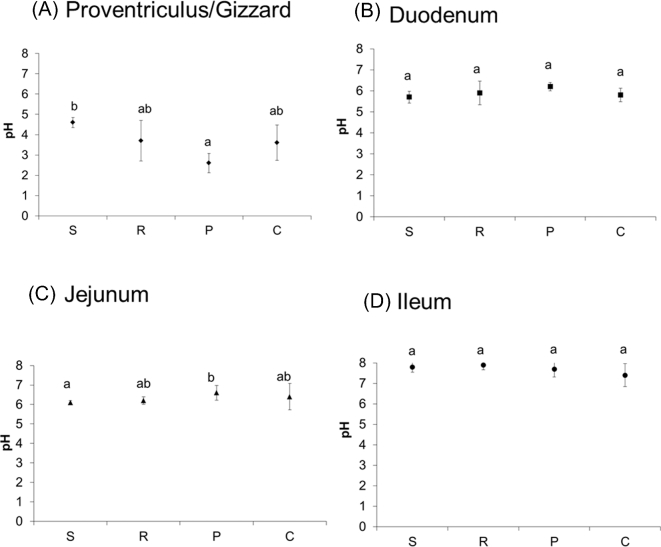
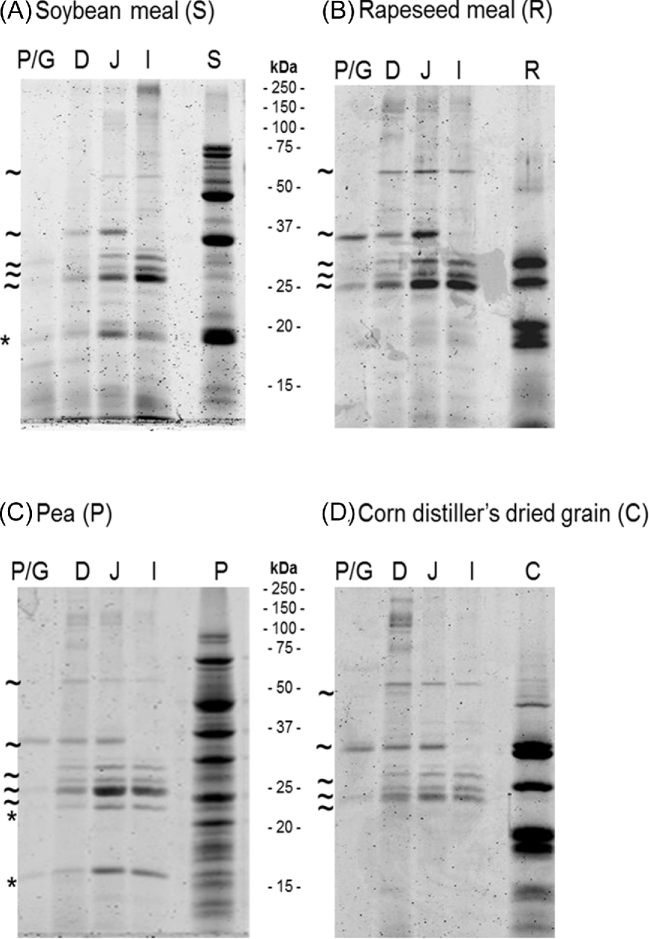
The use of various protein sources (industry by-products, proteaginous) in poultry diets requires a greater understanding of protein digestion mechanisms. The aim of this study was to characterize the molecular actors required for protein digestion in broilers fed 4 different diets containing soybean meal, rapeseed meal, pea, or corn distiller's dried grain with solubles as the only protein source. The digesta of the digestive tract segments were collected and soluble proteins were analyzed by SDS-PAGE. SDS-PAGE analyses revealed 5 ubiquitous bands in digesta of all digestive tract segments regardless of the diet, whereas 3 bands were diet-specific. The digesta of the jejunum were further submitted to proteomic analysis. Forty-two proteins of chicken origin and 17 plant proteins were identified in digesta samples by mass spectrometry. Fifteen proteins of chicken origin were specific to one diet and 18 were common to all diets. By homology with mammals, these proteins are thought to be involved in protein, lipid, carbohydrate, and nucleic acid metabolism and also in intestinal homeostasis. Some of the 17 plant proteins were found to be not fully digested (soybean meal, rapeseed meal, and pea diets) and others were identified as protease inhibitors (soybean meal and pea diets). This study provides a comprehensive analysis of the physiological proteins involved in the digestion of 4 protein sources used in broiler diets. Such an approach, combined with the analysis of insoluble components of these different protein sources, would contribute to define whether these protein sources could be more largely used in poultry nutrition. It also would allow identifying ways to improve their digestibility in broiler chickens (feed additives such as exogenous proteases or processing to inactivate anti-nutritional factors, for instance).
各种蛋白质源(工业副产品、蛋白源)在禽类日粮中的应用需要更深入地了解蛋白质消化机制。本研究的目的是表征 4 种不同日粮(仅以豆粕、菜籽粕、豌豆或玉米酒糟及其可溶物为蛋白质来源)中肉鸡蛋白质消化所需的分子因素。收集消化道各段的食糜,并用 SDS-PAGE 分析可溶性蛋白。SDS-PAGE 分析表明,无论日粮如何,所有消化道段的食糜中都存在 5 种普遍存在的条带,而 3 种条带是日粮特异性的。进一步对空肠食糜进行蛋白质组学分析。通过质谱法在食糜样品中鉴定出 42 种鸡源性蛋白和 17 种植物蛋白。15 种鸡源性蛋白特异性存在于 1 种日粮中,18 种蛋白存在于所有日粮中。通过与哺乳动物的同源性,这些蛋白被认为参与蛋白质、脂质、碳水化合物和核酸代谢以及肠道内稳态。在这些植物蛋白中,有一些未被完全消化(豆粕、菜籽粕和豌豆日粮),还有一些被鉴定为蛋白酶抑制剂(豆粕和豌豆日粮)。本研究全面分析了肉鸡日粮中 4 种蛋白质来源消化所涉及的生理蛋白。这种方法与这些不同蛋白质来源不溶性成分的分析相结合,将有助于确定这些蛋白质来源是否可以更广泛地应用于禽类营养。它还有助于确定提高肉鸡消化率的方法(例如,添加外源蛋白酶或加工以失活抗营养因子的饲料添加剂)。