Bianco Serena, Mancardi Daniele, Merlino Annalisa, Bussolati Benedetta, Munaron Luca
Department of Life Sciences & Systems Biology, University of Torino, Italy.
Department of Clinical and Biological Sciences, University of Torino, Italy.
Redox Biol. 2017 Aug;12:499-504. doi: 10.1016/j.redox.2017.03.015. Epub 2017 Mar 18.
endothelial cells play a key role in vessels formation both under physiological and pathological conditions. Their behavior is influenced by blood components including gasotransmitters (HS, NO and CO). Tumor cells are subjected to a cyclic shift between pro-oxidative and hypoxic state and, in this scenario, HS can be both cytoprotective and detrimental depending on its concentration. HS effects on tumors onset and development is scarcely studied, particularly concerning tumor angiogenesis. We previously demonstrated that HS is proangiogenic for tumoral but not for normal endothelium and this may represent a target for antiangiogenic therapeutical strategies.
in this work, we investigate cell viability, migration and tubulogenesis on human EC derived from two different tumors, breast and renal carcinoma (BTEC and RTEC), compared to normal microvascular endothelium (HMEC) under oxidative stress, hypoxia and treatment with exogenous HS.
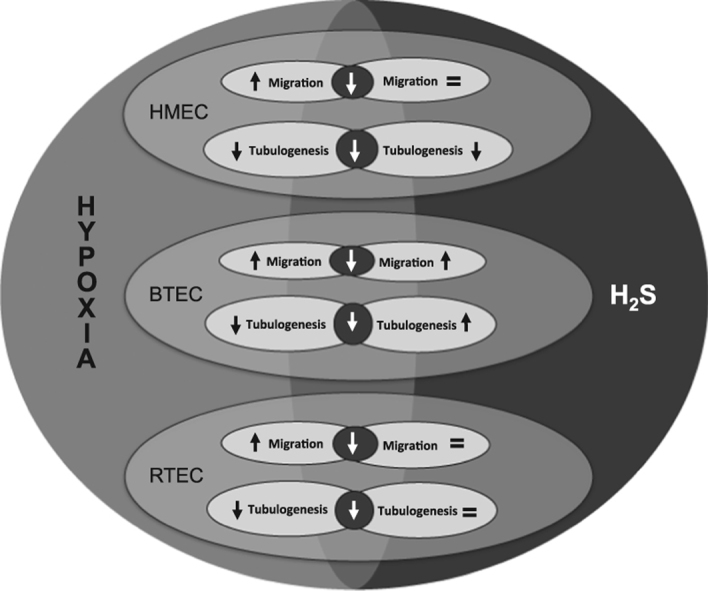
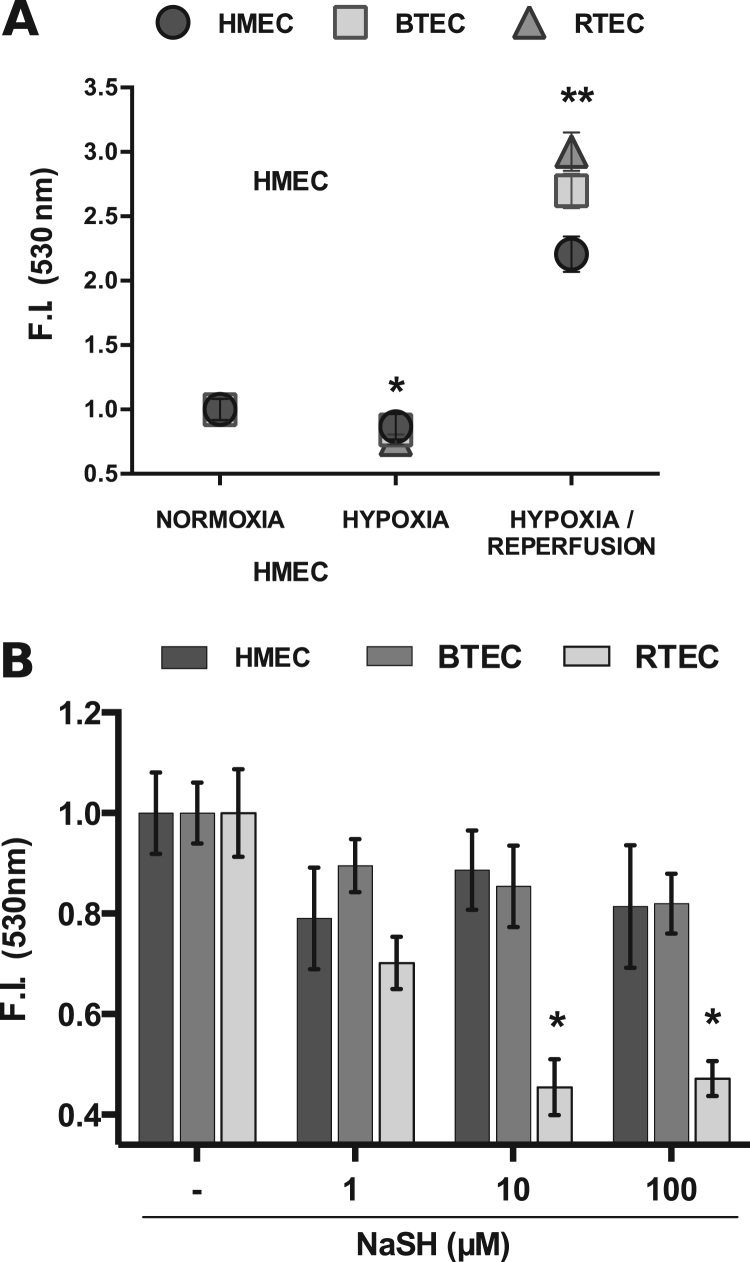
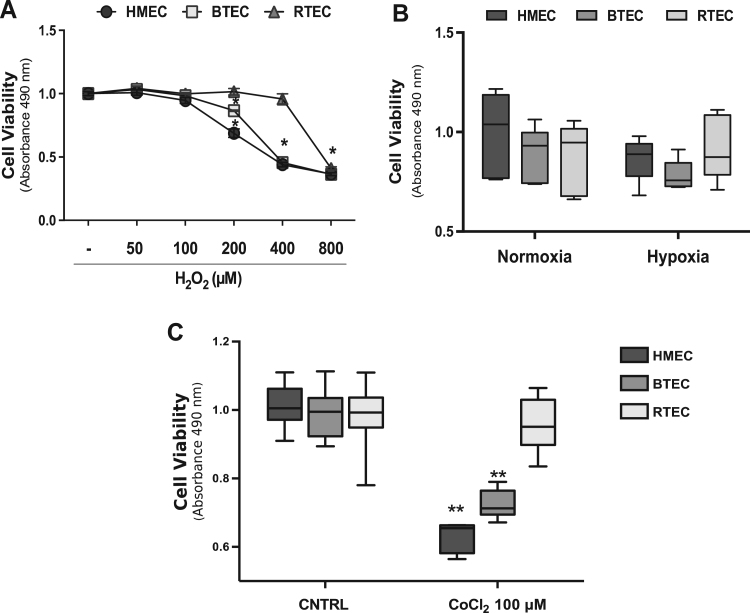
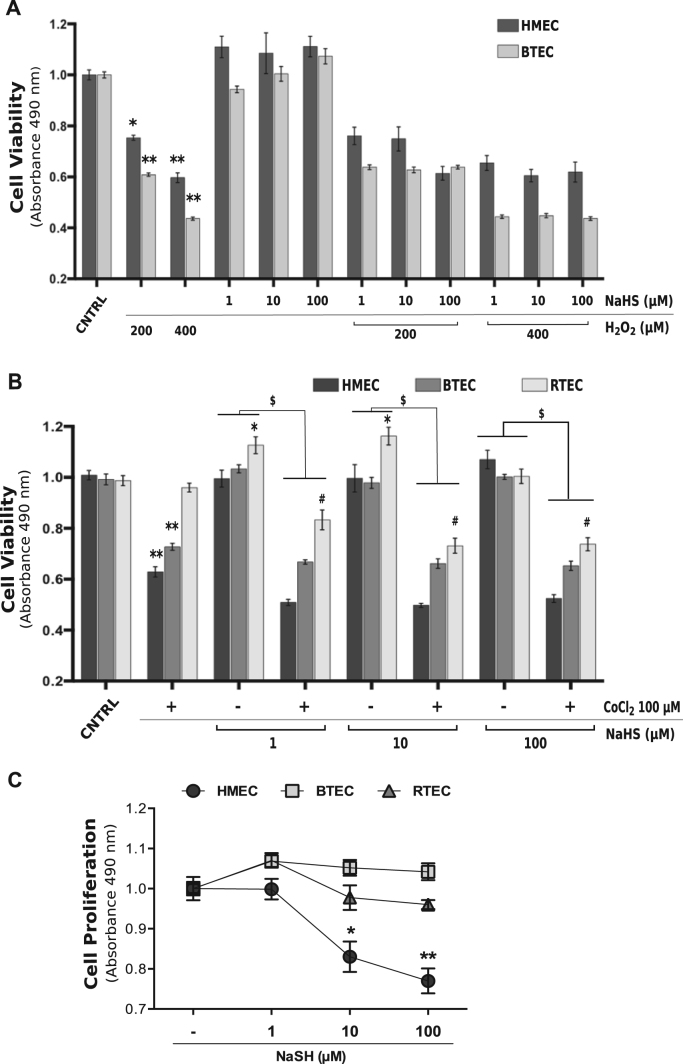
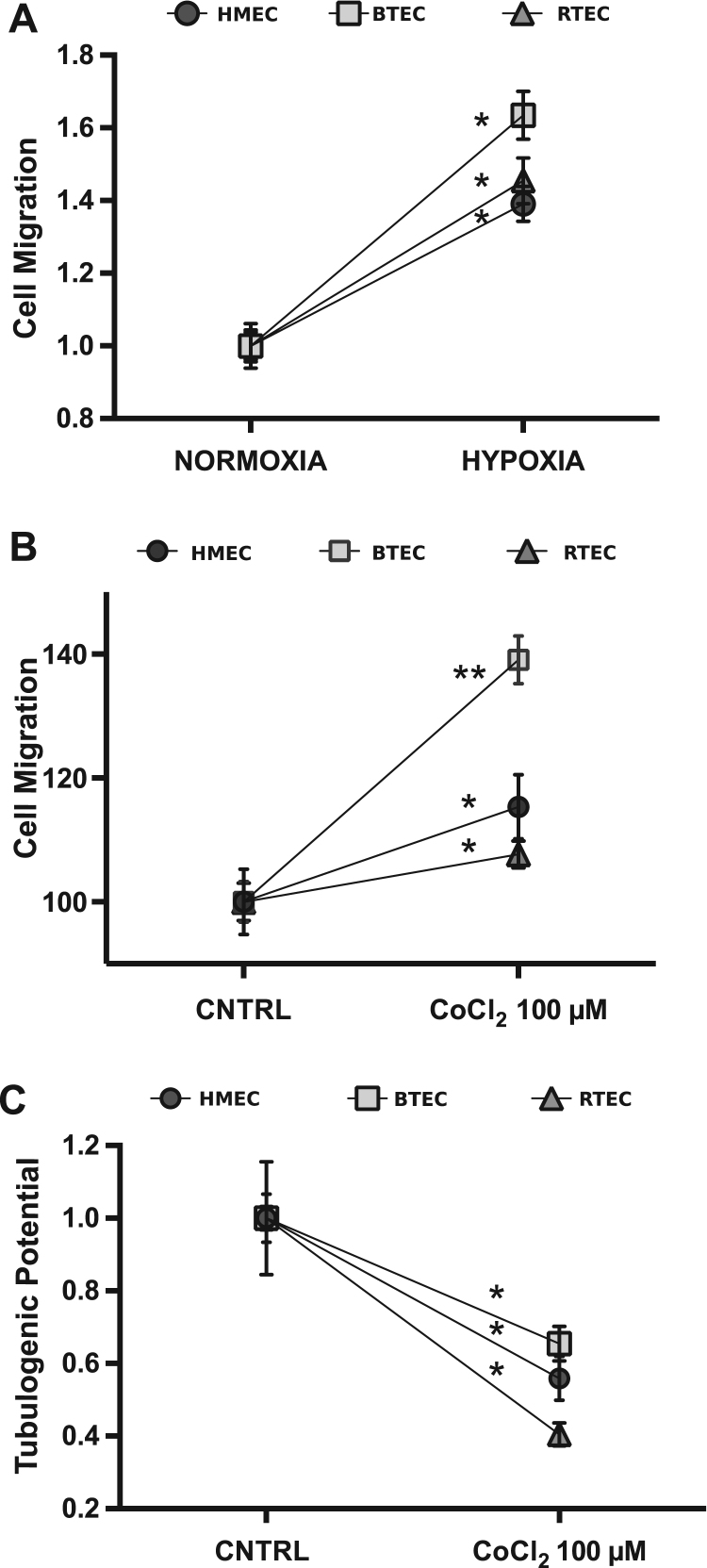
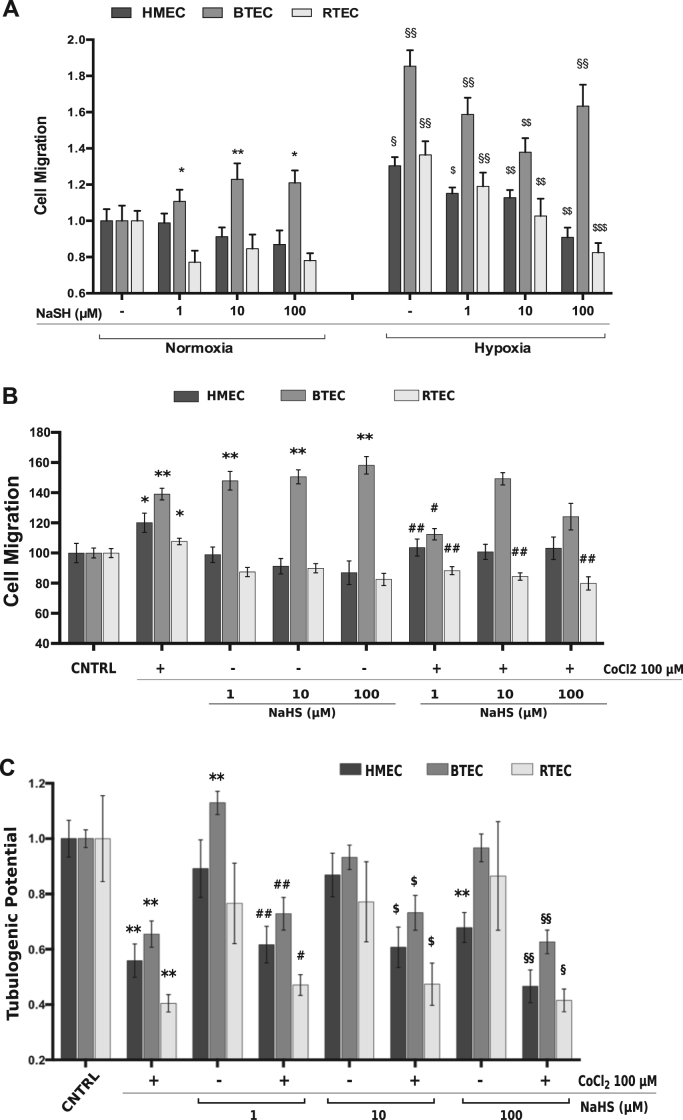
all EC types are similarly sensitive to oxidative stress induced by hydrogen peroxide; chemical hypoxia differentially affects endothelial viability, that results unaltered by real hypoxia. HS neither affects cell viability nor prevents hypoxia and HO-induced damage. Endothelial migration is enhanced by hypoxia, while tubulogenesis is inhibited for all EC types. HS acts differentially on EC migration and tubulogenesis.
these data provide evidence for a great variability of normal and altered endothelium in response to the environmental conditions.
内皮细胞在生理和病理条件下的血管形成中起关键作用。它们的行为受包括气体递质(硫化氢、一氧化氮和一氧化碳)在内的血液成分影响。肿瘤细胞在促氧化和缺氧状态之间经历周期性转变,在这种情况下,硫化氢根据其浓度既可以具有细胞保护作用,也可以产生有害作用。硫化氢对肿瘤发生和发展的影响鲜有研究,尤其是在肿瘤血管生成方面。我们之前证明硫化氢对肿瘤内皮细胞有促血管生成作用,但对正常内皮细胞没有,这可能代表抗血管生成治疗策略的一个靶点。
在这项研究中,我们研究了在氧化应激、缺氧和外源性硫化氢处理下,源自两种不同肿瘤(乳腺癌和肾癌)的人内皮细胞(BTEC和RTEC)与正常微血管内皮细胞(HMEC)相比的细胞活力、迁移和管腔形成情况。
所有类型的内皮细胞对过氧化氢诱导的氧化应激同样敏感;化学性缺氧对内皮细胞活力有不同影响,而实际缺氧对其活力无影响。硫化氢既不影响细胞活力,也不能预防缺氧和羟基诱导的损伤。缺氧增强内皮细胞迁移,而所有类型的内皮细胞的管腔形成均受到抑制。硫化氢对内皮细胞迁移和管腔形成有不同作用。
这些数据证明正常内皮细胞和改变的内皮细胞对环境条件的反应存在很大差异。