Olson Gregory M, Gao Heng, Meyer Buffy M, Miles M Scott, Overton Edward B
Department of Environmental Sciences, 1273 Energy, Coast and Environment Building, Louisiana State University, Baton Rouge, LA 70803, USA.
Louisiana Department of Transportation and Development, 1201 Capitol Access Rd., Baton Rouge, LA 70802, USA.
Heliyon. 2017 Mar 16;3(3):e00269. doi: 10.1016/j.heliyon.2017.e00269. eCollection 2017 Mar.
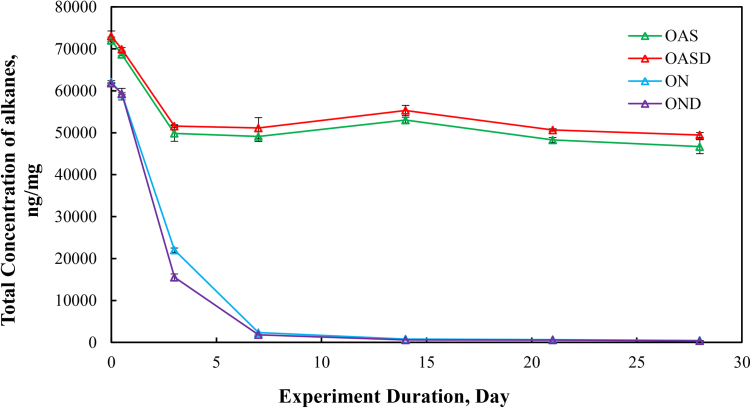
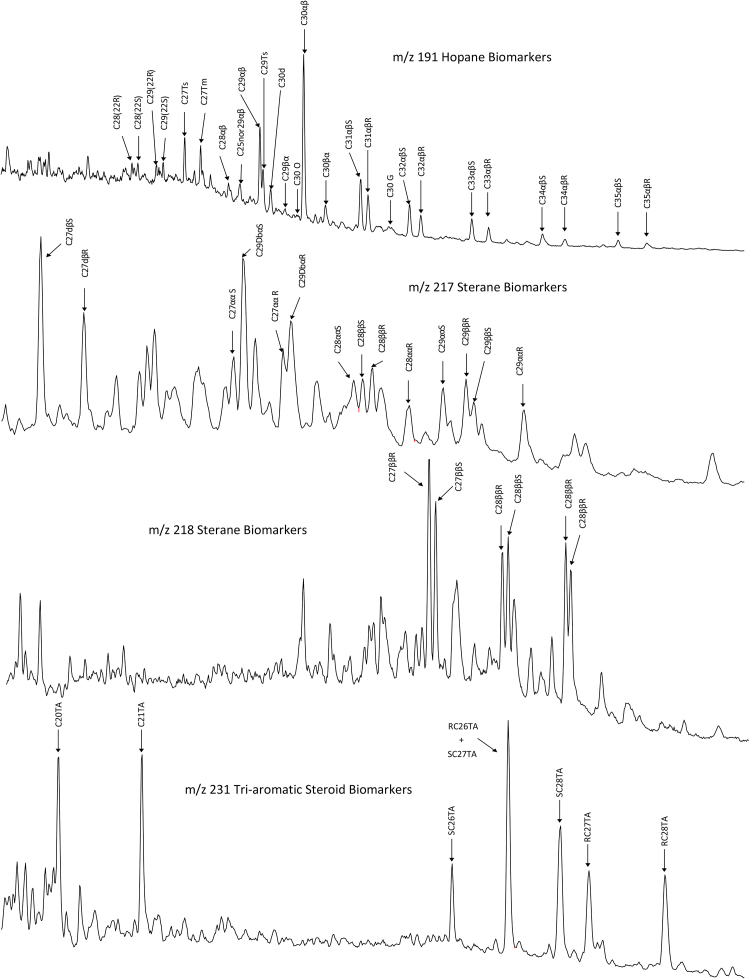
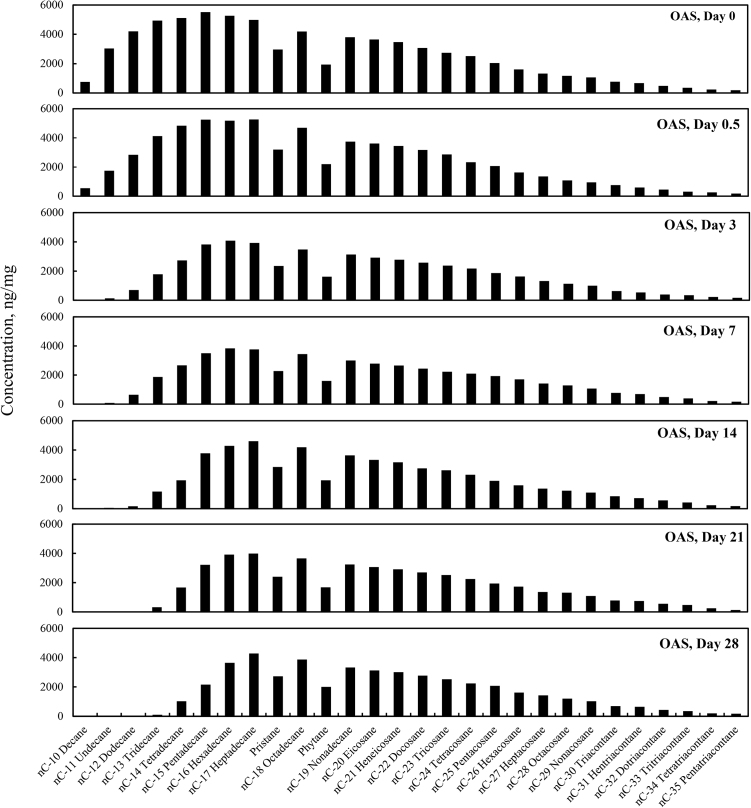
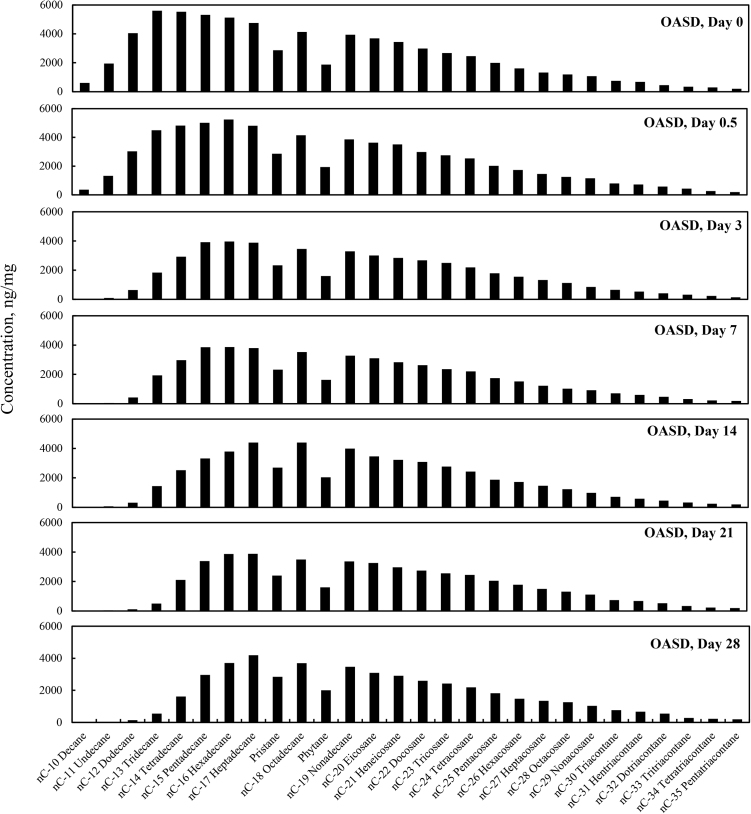
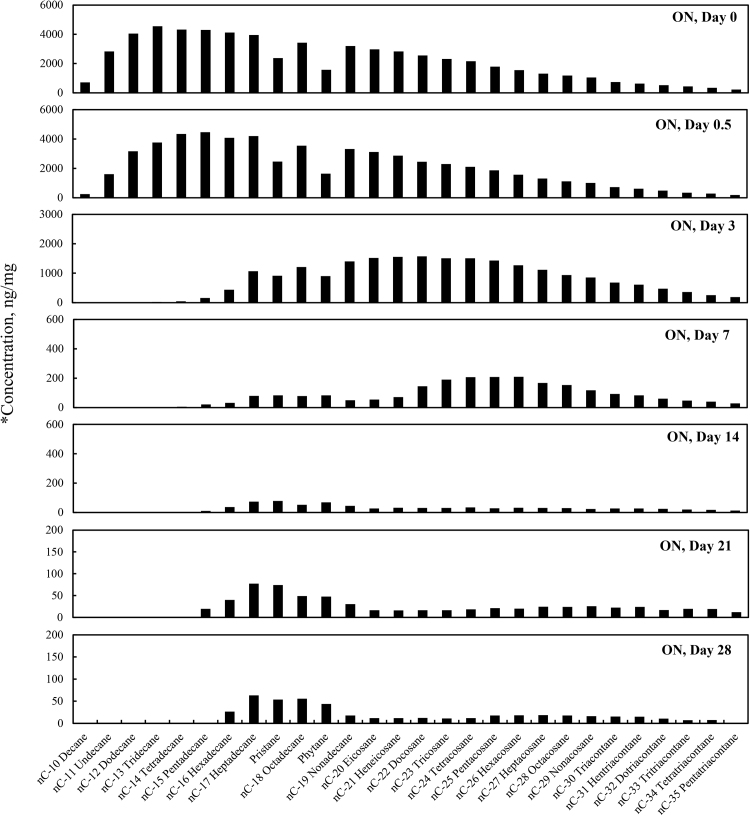
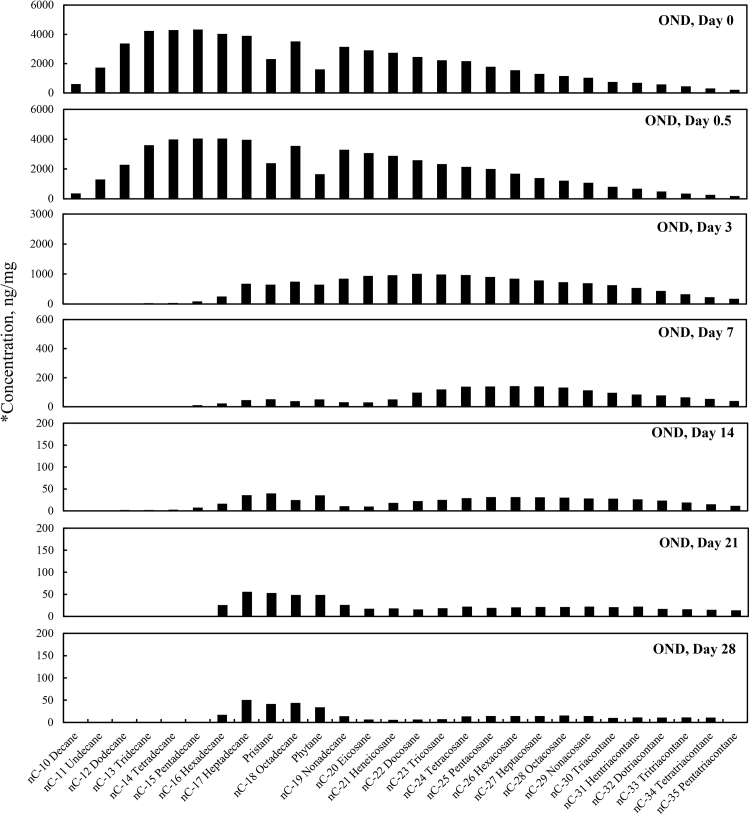
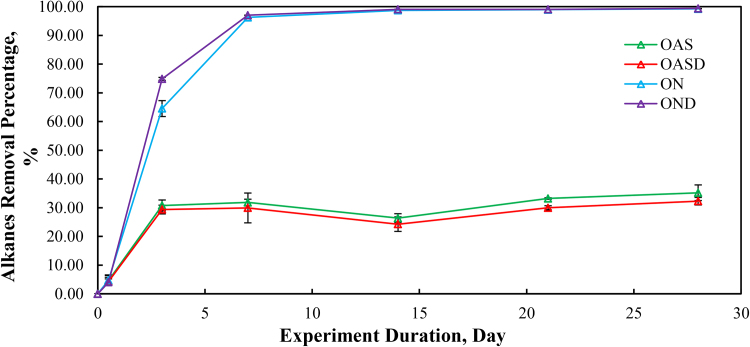
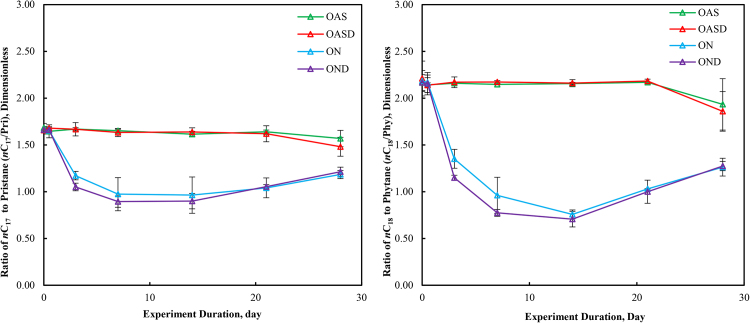
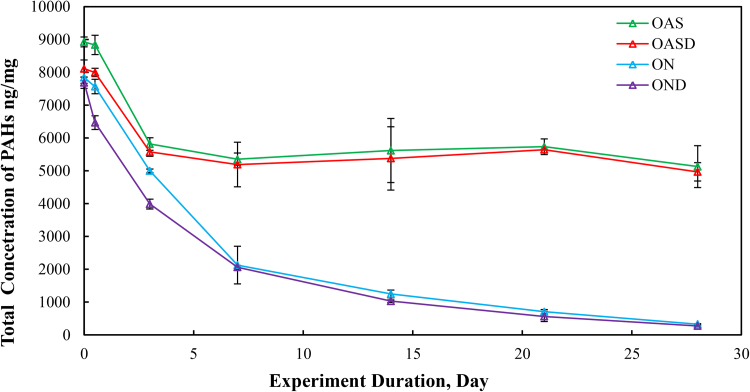
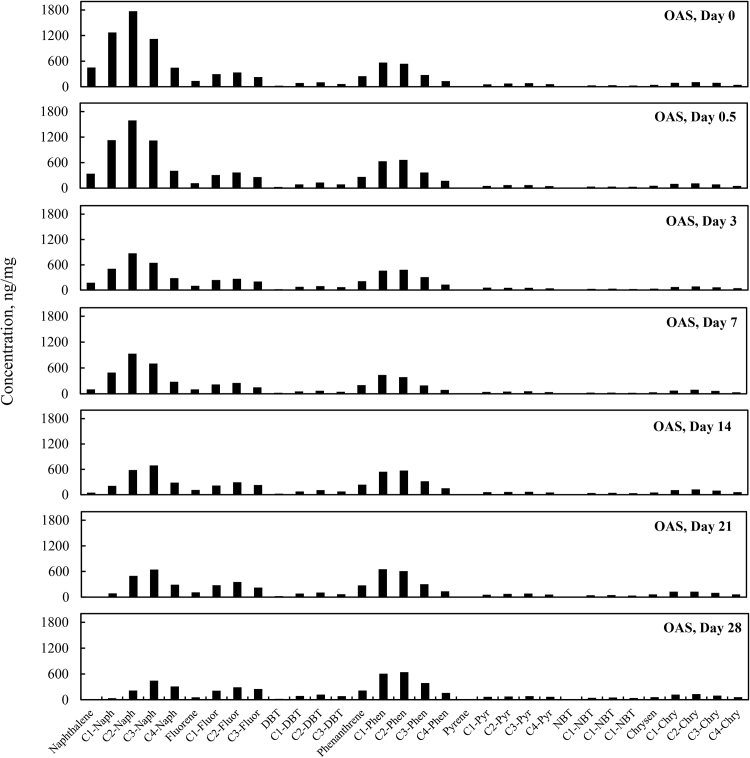
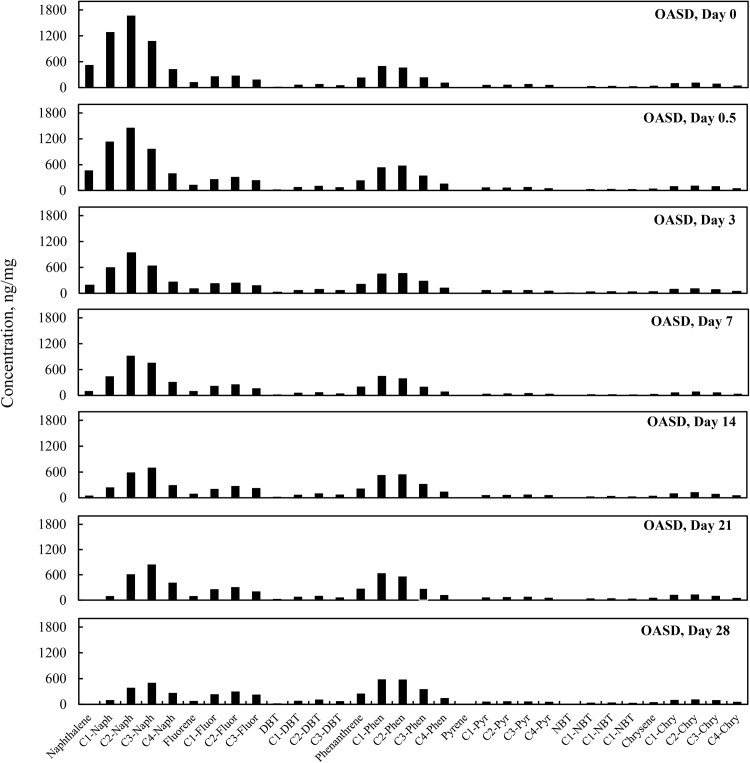
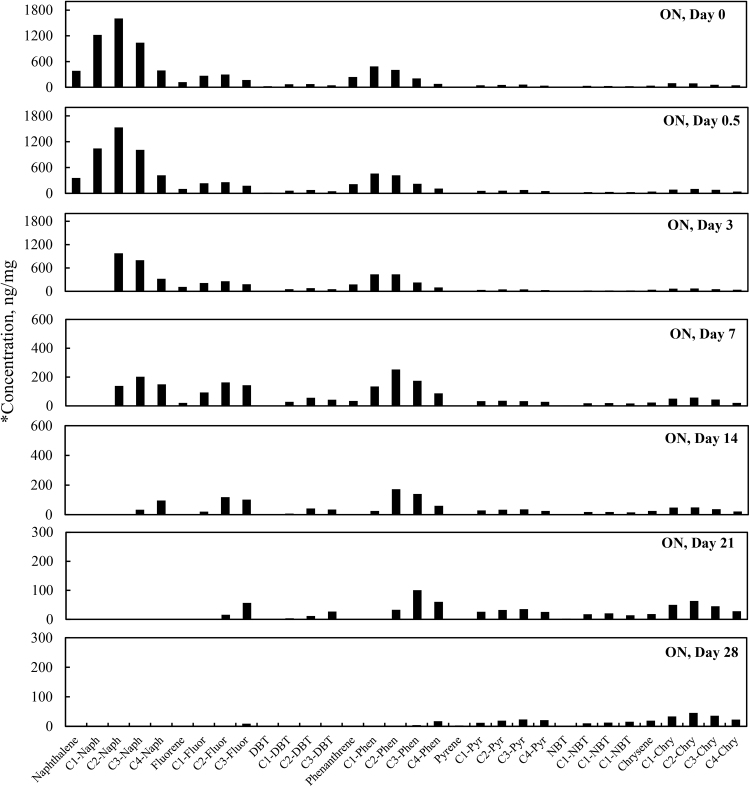
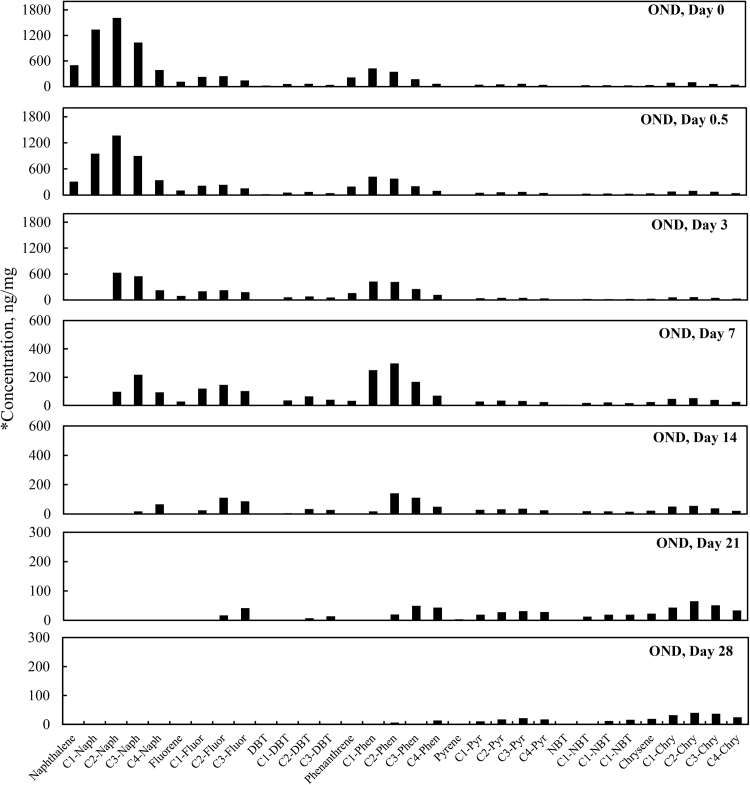
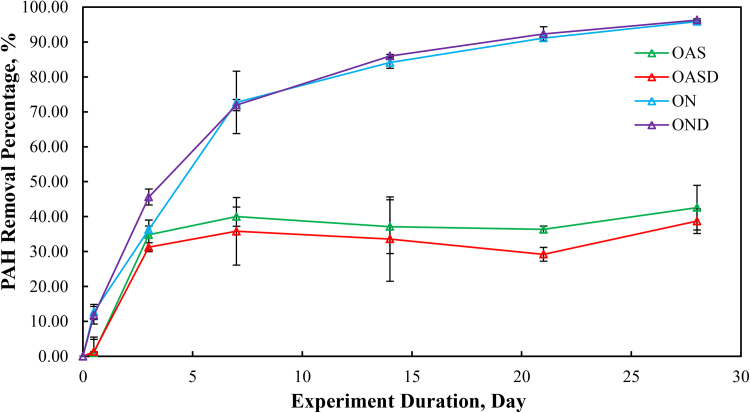
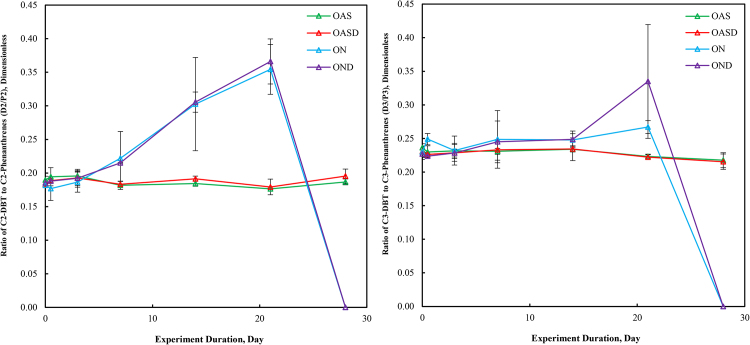
During the 2010 oil well blowout in the Northern Gulf of Mexico (GoM), the application of 6.97 million litres of chemical dispersants was used at the well-head and on the sea surface to promote oil degradation and weathering of the Mississippi Canyon 252 (MC252) crude oil. Chemical dispersants encourage microbial degradation by increasing the surface area of the spilled oil, which also increases its bioavailability. However, the net beneficial effects of using chemical dispersants on spilled oil and their effects on weathering are not completely elucidated in contemporary literature. The use of simulated environmental conditions in replicate laboratory microcosm weathering experiments were employed to study the weathering of oil and the effects of dispersants on oil weathering. Fresh MC252 oil was evaporatively weathered 40% by-weight to approximate the composition of oil seen in surface slicks during the 2010 spill. This surface oil was then well mixed with two types of seawater, autoclaved artificial seawater, the abiotic control, and Gulf of Mexico seawater, the biotic experiment. Four different weathering combinations were tested: 10 mg of oil mixed in 150 ml artificial seawater (OAS) or natural (i.e., GoM) seawater (ON) and 10 mg of oil with dispersant mixed with 150 ml of artificial seawater (OASD) or natural (i.e., GoM) seawater (OND). For the treatments with dispersant (OASD and OND), the dispersant-to-oil ratio (DoR) was 1:20. The experiment was carried out over 28 days with replicates that were sacrificed on Days 0, 0.5, 3, 7, 14, 21 and 28. For the OAS and OASD treatments, abiotic weathering (i.e., evaporation) dominated the weathering process. However, the ON and OND treatments showed a dramatic and rapid decrease in total concentrations of both alkanes and aromatics with biodegradation dominating the weathering process. Further, there were no identifiable differences in the observed weathering patterns between microcosms using oil or oil treated with dispersant. In the biotic weathering microcosms, the relative degree of individual polycyclic aromatic hydrocarbon (PAH) depletion decreases with an increase in rings and within a homolog series (increased alkylation). The C/pristane and C/phytane ratios rapidly decreased compared to the abiotic weathering experiments. The C2-dibenzothiophenes (DBT)/C2-phenanthrenes (D2/P2) and C3-DBTs/C3-phenanthrenes (D3/P3) ratios initially remained constant during the early stages of weathering and then increased with time showing preferential weathering of the sulfur containing compounds compared to similar sized PAH compounds. These ratios in the abiotic microcosms remained constant over 28 days. Additionally, twenty-four quantitative MC252 oil biomarker ratios were evaluated to determine if their usefulness as oil source-fingerprinting tools were compromised after significant weathering and dispersant augmentation.
在2010年墨西哥湾北部油井井喷期间,在井口和海面使用了697万升化学分散剂,以促进密西西比峡谷252(MC252)原油的降解和风化。化学分散剂通过增加溢油的表面积来促进微生物降解,这也增加了其生物可利用性。然而,当代文献中并未完全阐明使用化学分散剂对溢油的净有益影响及其对风化的影响。利用模拟环境条件进行重复实验室微观风化实验,以研究油的风化以及分散剂对油风化的影响。将新鲜的MC252油通过蒸发风化至重量减少40%,以近似2010年溢油期间在表面浮油中观察到的油的组成。然后将这种表面油与两种类型的海水充分混合,一种是经高压灭菌的人工海水,作为非生物对照,另一种是墨西哥湾海水,用于生物实验。测试了四种不同的风化组合:10毫克油与150毫升人工海水(OAS)或天然(即墨西哥湾)海水(ON)混合,以及10毫克油与分散剂混合后与150毫升人工海水(OASD)或天然(即墨西哥湾)海水(OND)混合。对于使用分散剂的处理(OASD和OND),分散剂与油的比例(DoR)为1:20。实验进行了28天,在第0、0.5、3、7、14、21和28天对重复样本进行分析。对于OAS和OASD处理,非生物风化(即蒸发)主导了风化过程。然而,ON和OND处理显示,烷烃和芳烃的总浓度急剧且迅速下降,生物降解主导了风化过程。此外,在使用油或用分散剂处理过的油的微观世界中,观察到的风化模式没有明显差异。在生物风化微观世界中,随着环数增加和同系物系列内烷基化增加(烷基化程度增加),单个多环芳烃(PAH)的相对损耗程度降低。与非生物风化实验相比,C/姥鲛烷和C/植烷的比值迅速下降。C2-二苯并噻吩(DBT)/C2-菲(D2/P2)和C3-DBTs/C3-菲(D3/P3)的比值在风化早期阶段最初保持恒定,然后随时间增加,表明与类似大小的PAH化合物相比,含硫化合物优先风化。在非生物微观世界中,这些比值在28天内保持恒定。此外,评估了24种定量的MC252油生物标志物比值,以确定在经历显著风化和分散剂增强后,它们作为油源指纹识别工具的有效性是否受到影响。