The BioRobotics Institute, Scuola Superiore Sant'Anna, Pisa, Italy.
Department of Signals and Systems, Chalmers University of Technology, Gothenburg, Sweden.
Sci Rep. 2017 Mar 28;7:45363. doi: 10.1038/srep45363.
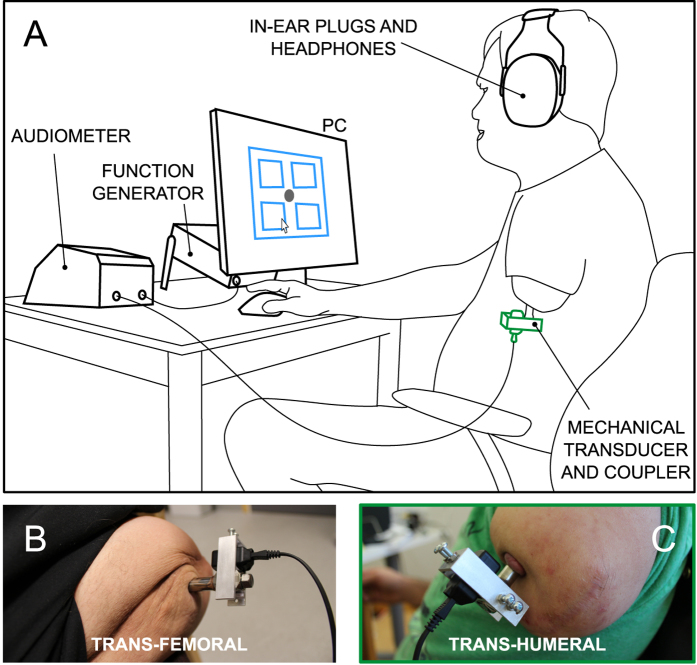
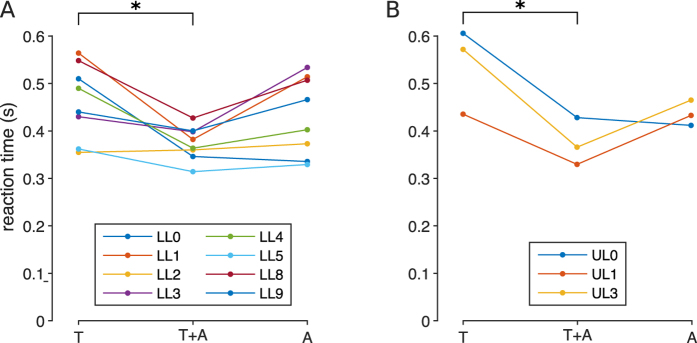
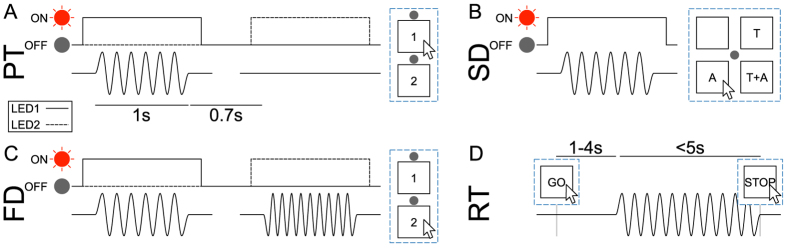
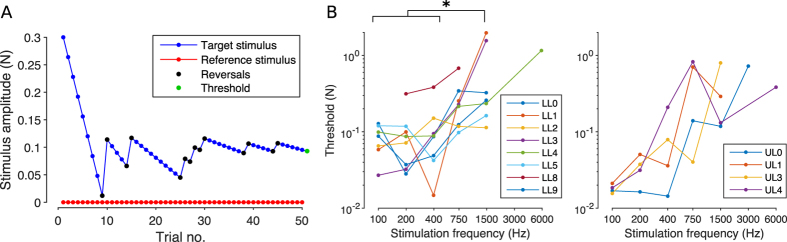
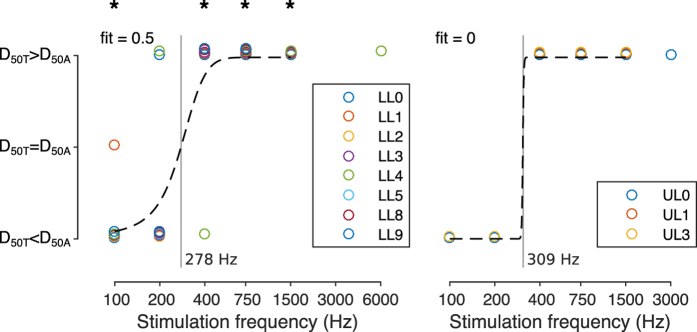
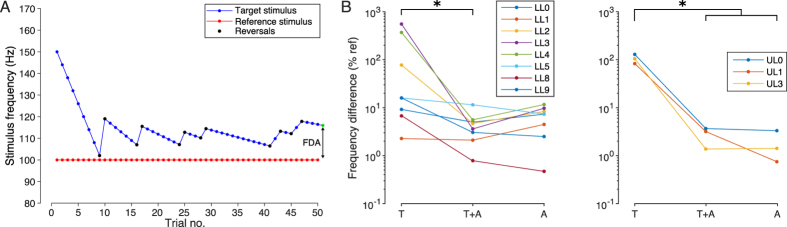
Osseoperception is the sensation arising from the mechanical stimulation of a bone-anchored prosthesis. Here we show that not only touch, but also hearing is involved in this phenomenon. Using mechanical vibrations ranging from 0.1 to 6 kHz, we performed four psychophysical measures (perception threshold, sensation discrimination, frequency discrimination and reaction time) on 12 upper and lower limb amputees and found that subjects: consistently reported perceiving a sound when the stimulus was delivered at frequencies equal to or above 400 Hz; were able to discriminate frequency differences between stimuli delivered at high stimulation frequencies (~1500 Hz); improved their reaction time for bimodal stimuli (i.e. when both vibration and sound were perceived). Our results demonstrate that osseoperception is a multisensory perception, which can explain the improved environment perception of bone-anchored prosthesis users. This phenomenon might be exploited in novel prosthetic devices to enhance their control, thus ultimately improving the amputees' quality of life.
骨感知是指源自骨锚定假体机械刺激的感觉。在这里,我们表明,不仅触觉,而且听觉也参与了这一现象。我们使用 0.1 到 6 kHz 的机械振动,对 12 名上肢和下肢截肢者进行了四项心理物理测量(感知阈值、感觉辨别、频率辨别和反应时间),发现受试者:当刺激频率等于或高于 400 Hz 时,一致报告感觉到声音;能够辨别高刺激频率(约 1500 Hz)下刺激之间的频率差异;对双模态刺激(即同时感觉到振动和声音)的反应时间提高。我们的结果表明,骨感知是一种多感觉感知,它可以解释骨锚定假体使用者对环境感知的改善。这种现象可能会被应用于新型假肢设备中,以增强其控制能力,从而最终提高截肢者的生活质量。