Rawat Sandhya, Ali Sajad, Mittra Bhabatosh, Grover Anita
National Research Centre on Plant Biotechnology, Pusa Campus, New Delhi, 110012, India; Fakir Mohan University, Vyasa Vihar, Balasore, Orissa 756020, India.
National Research Centre on Plant Biotechnology, Pusa Campus, New Delhi, 110012, India.
Biotechnol Rep (Amst). 2017 Jan 5;13:72-79. doi: 10.1016/j.btre.2017.01.001. eCollection 2017 Mar.
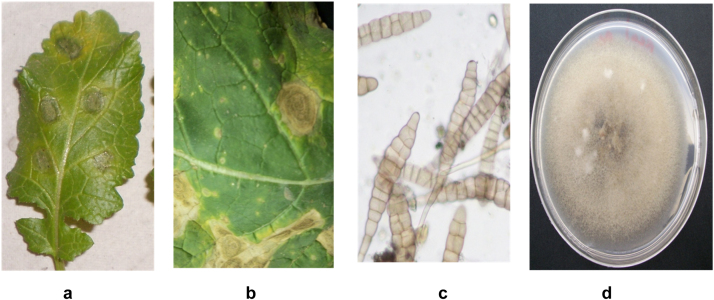
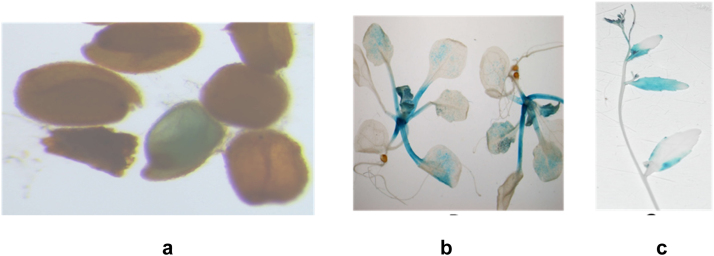
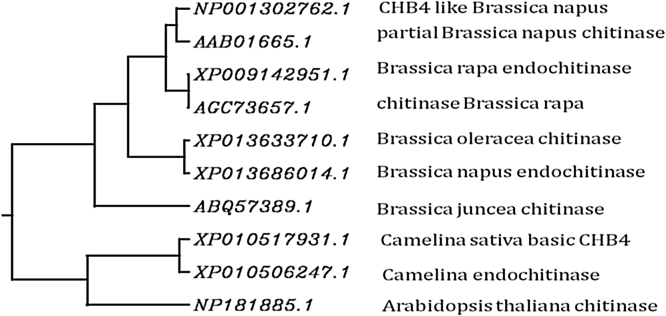
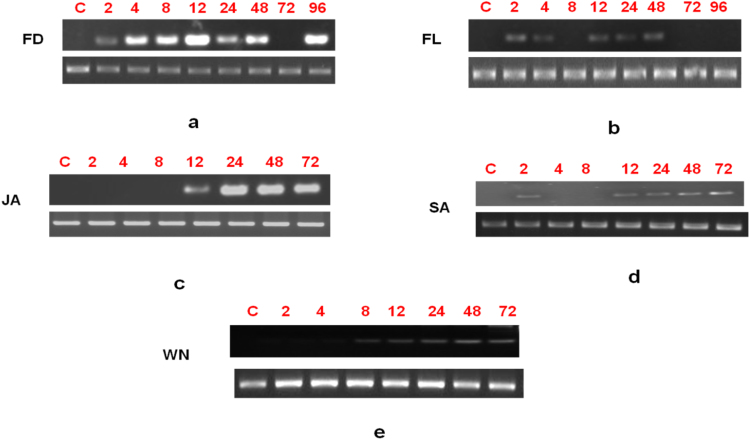
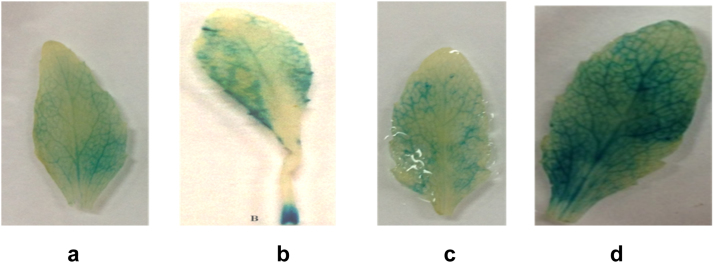
Chitinases are the hydrolytic enzymes which belong to the pathogenesis-related (PR) protein family and play an important role not only in plant defense but also in various abiotic stresses. However, only a limited number of chitinase genes have been characterised in . In this study, we have characterised class IV chitinase gene (accession no EF586206) in response to fungal infection, salicylic acid (SA), jasmonic acid (JA) treatments and wounding. Gene expression studies revealed that the transcript levels of () gene increases significantly both in local and distal tissues after infection. gene was also induced by jasmonic acid and wounding but moderately by salicylic acid. A 2.5 kb class IV chitinase promoter of this gene was isolated from by Genome walking (accession no KF055403.1). analysis of this promoter revealed a number of conserved -regulatory elements related to defense, wounding and signalling molecules like SA, and JA. For validation, chitinase promoter was fused to the GUS gene, and the resultant construct was then introduced into plants. Histochemical analysis of T transgenic Arabidopsis plants showed that higher GUS activity in leaves after fungal infection, wounding and JA treatment but weakly by SA. GUS activity was seen in meristematic tissues, young leaves, seeds and siliques. Finally investigation has led to the identification of a pathogen-inducible, developmentally regulated and organ-specific promoter. Present study revealed that () promoter is induced during biotic and environmental stress and it can be used in developing finely tuned transgenics.
几丁质酶是属于病程相关(PR)蛋白家族的水解酶,不仅在植物防御中起重要作用,而且在各种非生物胁迫中也发挥重要作用。然而,在[具体物种未提及]中,仅鉴定了有限数量的几丁质酶基因。在本研究中,我们鉴定了IV类几丁质酶基因(登录号EF586206)对真菌感染、水杨酸(SA)、茉莉酸(JA)处理和创伤的响应。基因表达研究表明,在[具体物种未提及]感染后,该基因在局部和远端组织中的转录水平均显著增加。该基因也被茉莉酸和创伤诱导,但被水杨酸中度诱导。通过基因组步移从[具体物种未提及]中分离出该基因2.5 kb的IV类几丁质酶启动子(登录号KF055403.1)。对该启动子的分析揭示了许多与防御、创伤以及与SA和JA等信号分子相关的保守顺式调控元件。为了进行验证,将几丁质酶启动子与GUS基因融合,并将所得构建体导入拟南芥植物中。对T代转基因拟南芥植物的组织化学分析表明,在真菌感染、创伤和JA处理后,叶片中的GUS活性较高,但受SA诱导较弱。在分生组织、幼叶、种子和角果中可见GUS活性。最终的研究导致鉴定出一种病原体诱导型、发育调控型和器官特异性启动子。目前的研究表明,该启动子在生物和环境胁迫期间被诱导,可用于培育精细调控的转基因植物。