Shikiya Ronald A, Langenfeld Katie A, Eckland Thomas E, Trinh Jonathan, Holec Sara A M, Mathiason Candace K, Kincaid Anthony E, Bartz Jason C
Department of Medical Microbiology and Immunology, Creighton University, Omaha, Nebraska, United States of America.
Department of Microbiology, Immunology and Pathology, Colorado State University, Fort Collins, Colorado, United States of America.
PLoS Pathog. 2017 Mar 29;13(3):e1006298. doi: 10.1371/journal.ppat.1006298. eCollection 2017 Mar.
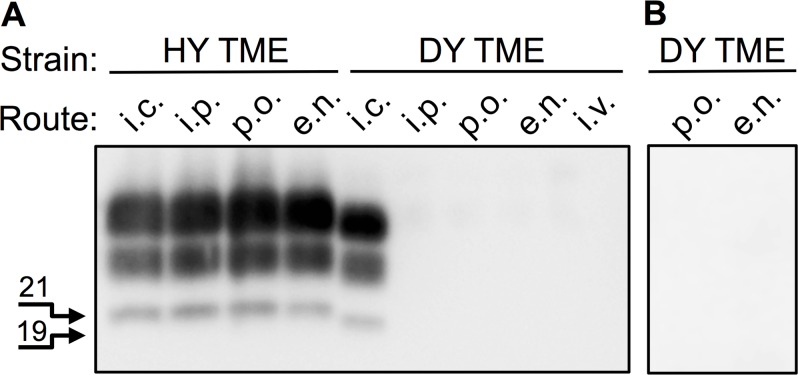
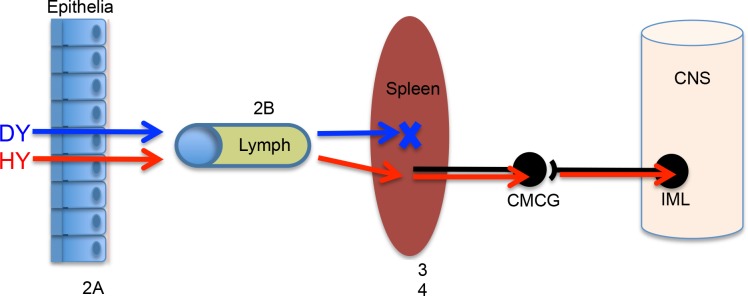
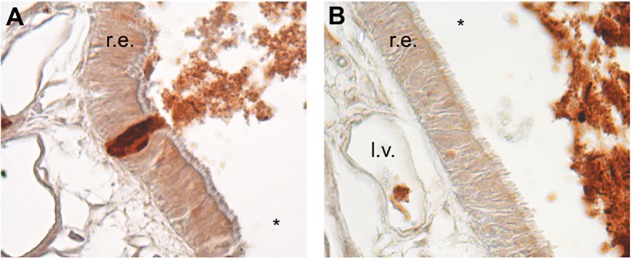
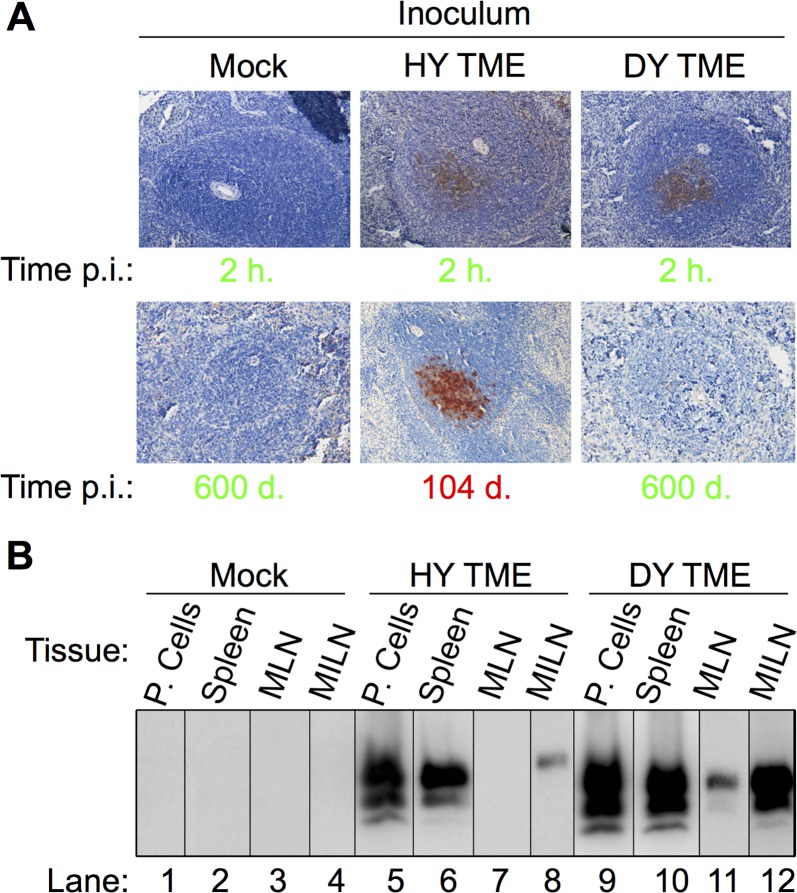
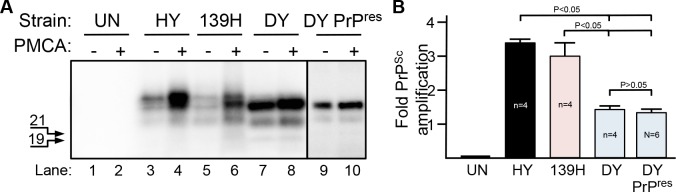
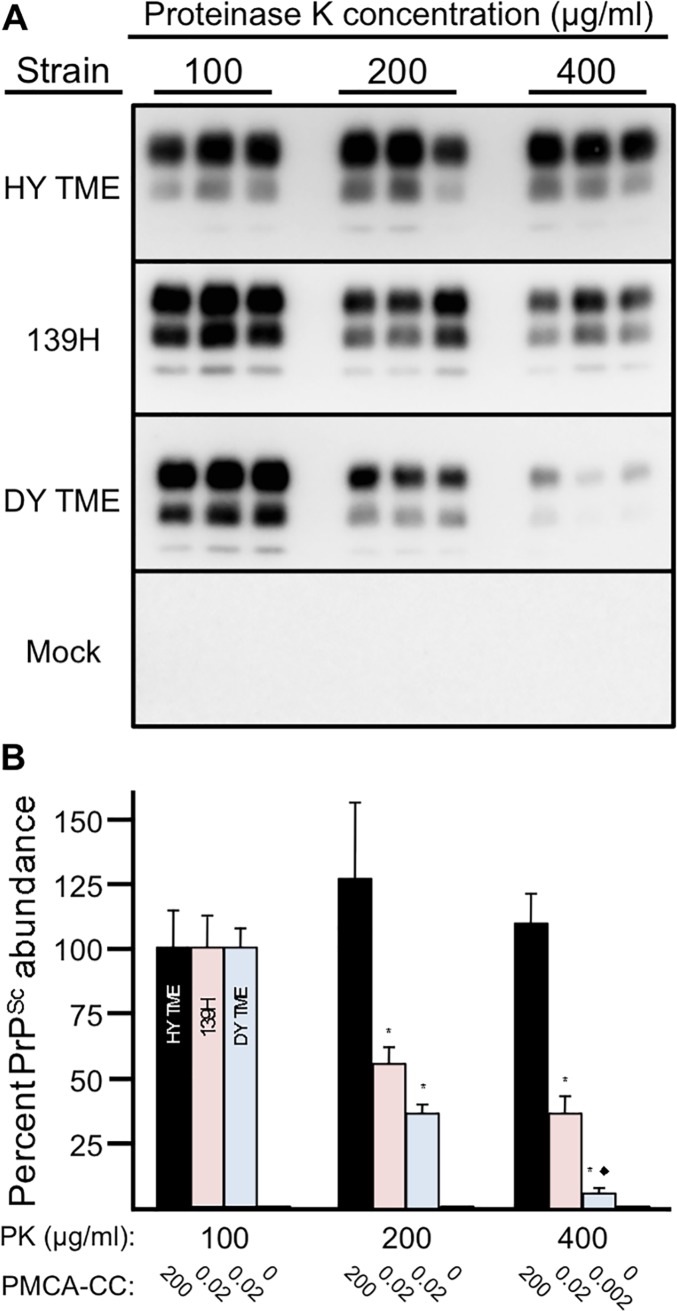
Prion strains are characterized by strain-specific differences in neuropathology but can also differ in incubation period, clinical disease, host-range and tissue tropism. The hyper (HY) and drowsy (DY) strains of hamster-adapted transmissible mink encephalopathy (TME) differ in tissue tropism and susceptibility to infection by extraneural routes of infection. Notably, DY TME is not detected in the secondary lymphoreticular system (LRS) tissues of infected hosts regardless of the route of inoculation. We found that similar to the lymphotropic strain HY TME, DY TME crosses mucosal epithelia, enters draining lymphatic vessels in underlying laminae propriae, and is transported to LRS tissues. Since DY TME causes disease once it enters the peripheral nervous system, the restriction in DY TME pathogenesis is due to its inability to establish infection in LRS tissues, not a failure of transport. To determine if LRS tissues can support DY TME formation, we performed protein misfolding cyclic amplification using DY PrPSc as the seed and spleen homogenate as the source of PrPC. We found that the spleen environment can support DY PrPSc formation, although at lower rates compared to lymphotropic strains, suggesting that the failure of DY TME to establish infection in the spleen is not due to the absence of a strain-specific conversion cofactor. Finally, we provide evidence that DY PrPSc is more susceptible to degradation when compared to PrPSc from other lymphotrophic strains. We hypothesize that the relative rates of PrPSc formation and clearance can influence prion tropism.
朊病毒株的特征在于神经病理学上的毒株特异性差异,但在潜伏期、临床疾病、宿主范围和组织嗜性方面也可能有所不同。仓鼠适应型传染性水貂脑病(TME)的高毒株(HY)和嗜睡毒株(DY)在组织嗜性和经非神经感染途径的感染易感性方面存在差异。值得注意的是,无论接种途径如何,在感染宿主的二级淋巴网状系统(LRS)组织中均未检测到DY TME。我们发现,与嗜淋巴毒株HY TME相似,DY TME穿过黏膜上皮,进入下方固有层中的引流淋巴管,并被转运至LRS组织。由于DY TME一旦进入外周神经系统就会引发疾病,因此DY TME发病机制中的限制因素是其无法在LRS组织中建立感染,而非转运失败。为了确定LRS组织是否能够支持DY TME的形成,我们以DY PrPSc为种子、脾匀浆为PrPC来源进行了蛋白质错误折叠循环扩增。我们发现,脾脏环境能够支持DY PrPSc的形成,尽管与嗜淋巴毒株相比速率较低,这表明DY TME无法在脾脏中建立感染并非由于缺乏毒株特异性转化辅因子。最后,我们提供证据表明,与其他嗜淋巴毒株的PrPSc相比,DY PrPSc更容易被降解。我们推测,PrPSc形成和清除的相对速率可能会影响朊病毒的嗜性。