Department of Medical Microbiology and Immunology, School of Medicine, Creighton University, Omaha, NE 68178, USA.
Department of Pharmacy Science, School of Pharmacy and Health Professions, Creighton University, Omaha, NE 68178, USA.
Viruses. 2022 Mar 18;14(3):630. doi: 10.3390/v14030630.
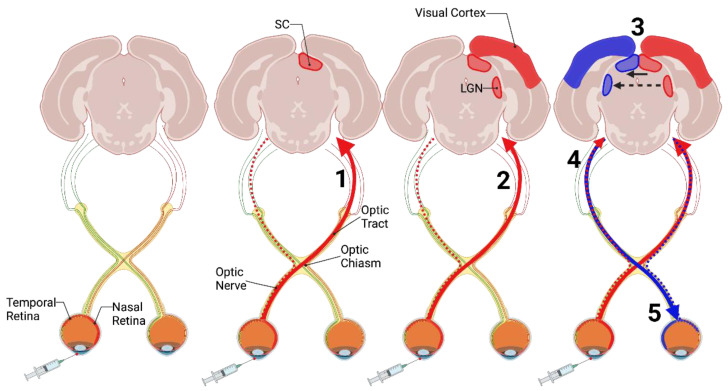
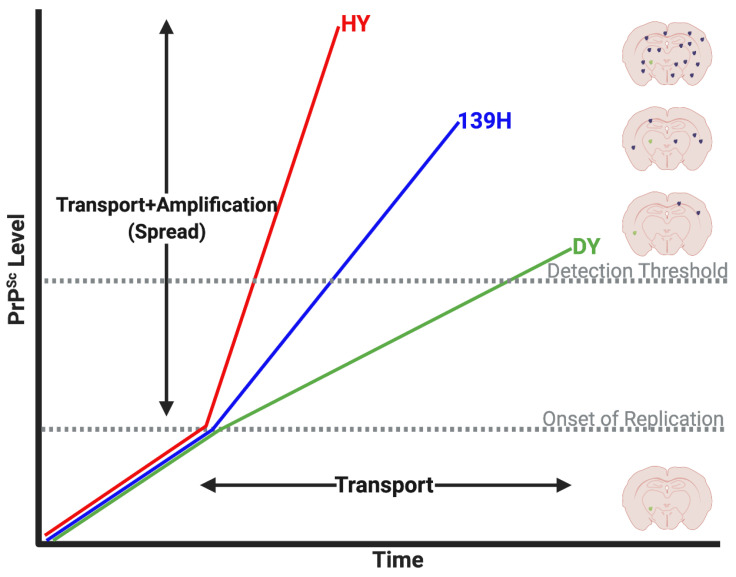
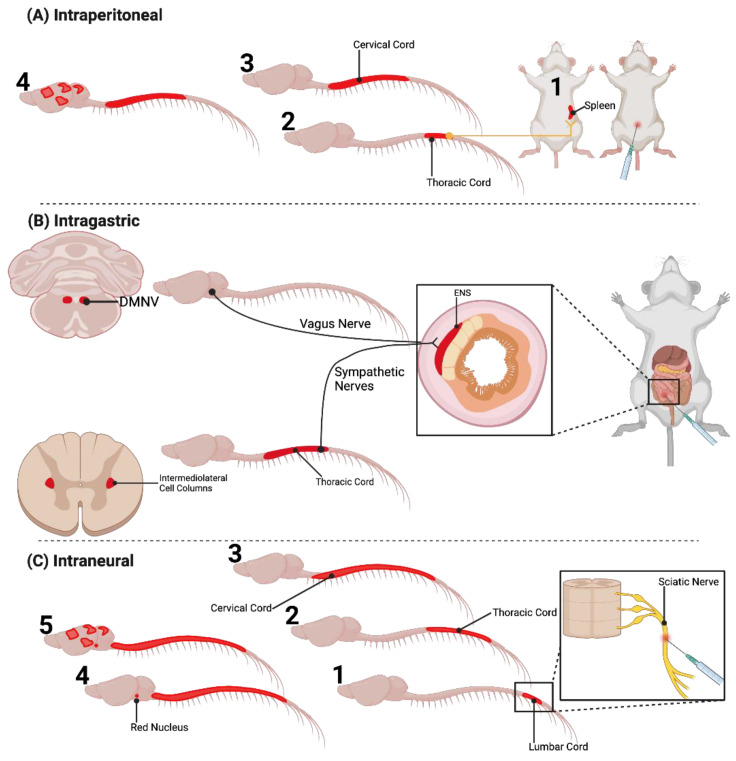
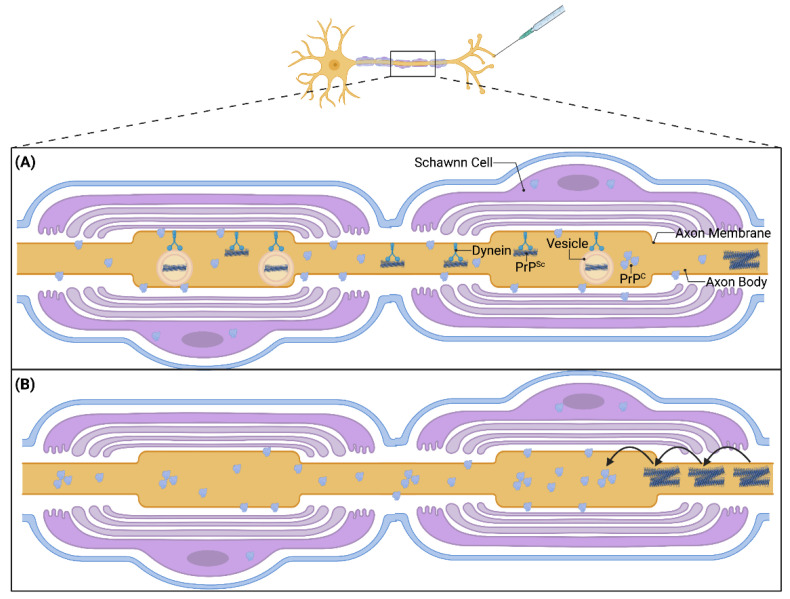
Prion diseases are transmissible protein misfolding disorders that occur in animals and humans where the endogenous prion protein, PrP, undergoes a conformational change into self-templating aggregates termed PrP. Formation of PrP in the central nervous system (CNS) leads to gliosis, spongiosis, and cellular dysfunction that ultimately results in the death of the host. The spread of prions from peripheral inoculation sites to CNS structures occurs through neuroanatomical networks. While it has been established that endogenous PrP is necessary for prion formation, and that the rate of prion spread is consistent with slow axonal transport, the mechanistic details of PrP transport remain elusive. Current research endeavors are primarily focused on the cellular mechanisms of prion transport associated with axons. This includes elucidating specific cell types involved, subcellular machinery, and potential cofactors present during this process.
朊病毒病是一种可传播的蛋白质错误折叠疾病,发生于动物和人类,其中内源性朊病毒蛋白 PrP 发生构象改变,形成自我模板聚集体,称为 PrP。PrP 在中枢神经系统 (CNS) 中的形成导致神经胶质增生、海绵状变性和细胞功能障碍,最终导致宿主死亡。朊病毒从外周接种部位向 CNS 结构的传播是通过神经解剖网络进行的。虽然已经确定内源性 PrP 是朊病毒形成所必需的,并且朊病毒的传播速度与缓慢的轴突运输一致,但 PrP 运输的机制细节仍然难以捉摸。目前的研究主要集中在与轴突相关的朊病毒运输的细胞机制上。这包括阐明在此过程中涉及的特定细胞类型、亚细胞机制和潜在的辅助因子。