Friedlander Alan M, Golbuu Yimnang, Ballesteros Enric, Caselle Jennifer E, Gouezo Marine, Olsudong Dawnette, Sala Enric
Pristine Seas, National Geographic Society, Washington, DC, United States of America.
Fisheries Ecology Research Laboratory, University of Hawaii, Honolulu, Hawaii, United States of America.
PLoS One. 2017 Mar 30;12(3):e0174787. doi: 10.1371/journal.pone.0174787. eCollection 2017.
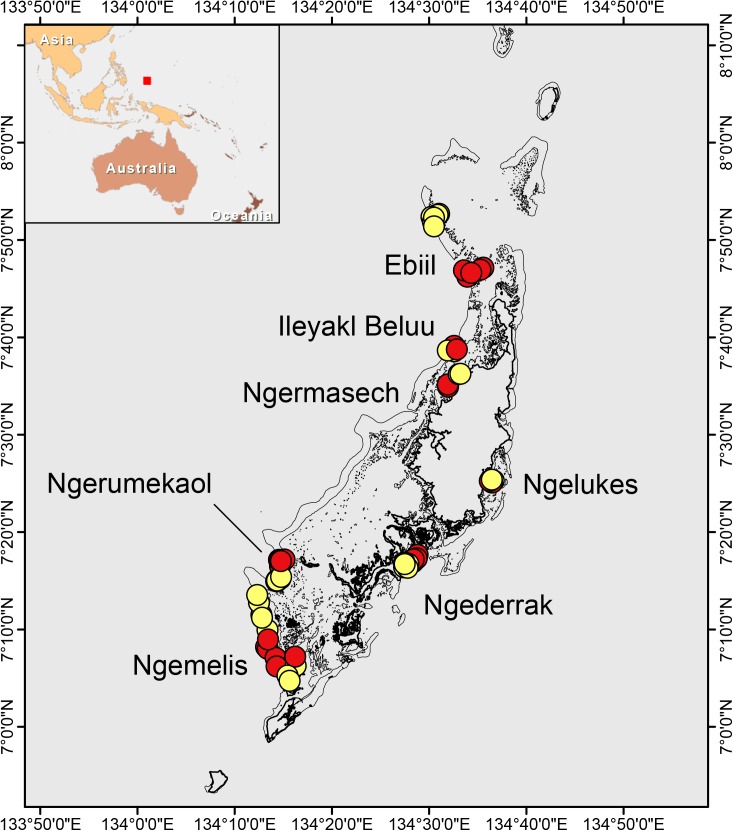
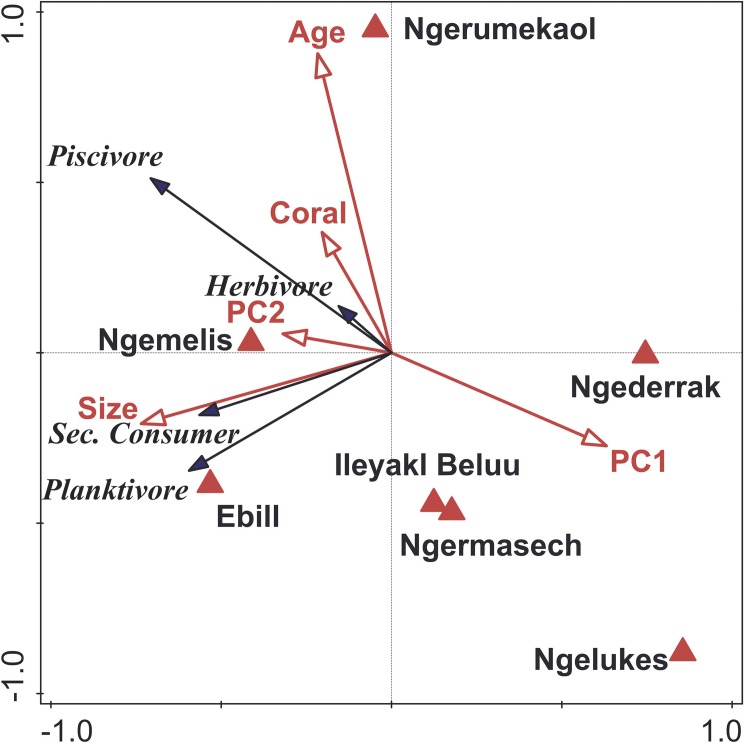
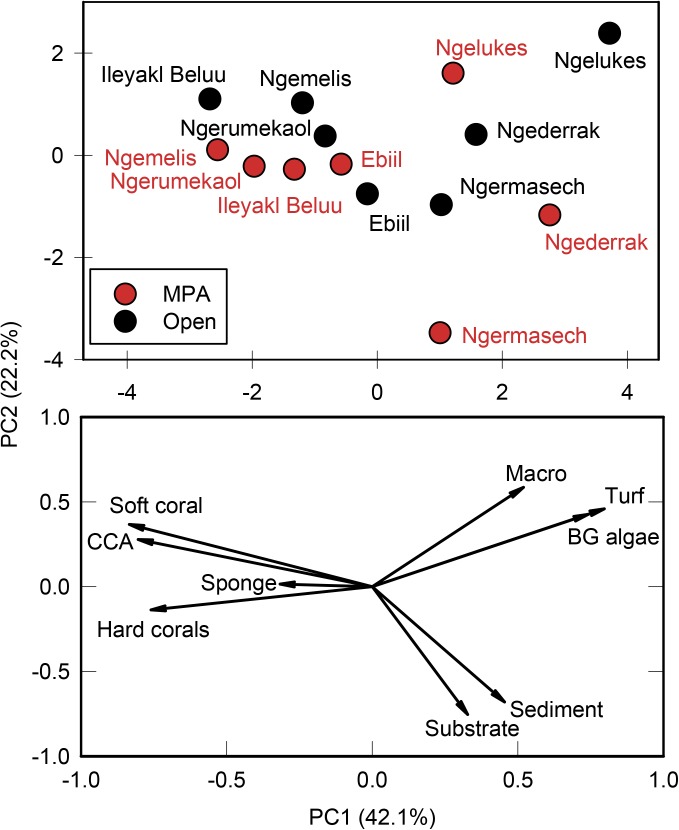
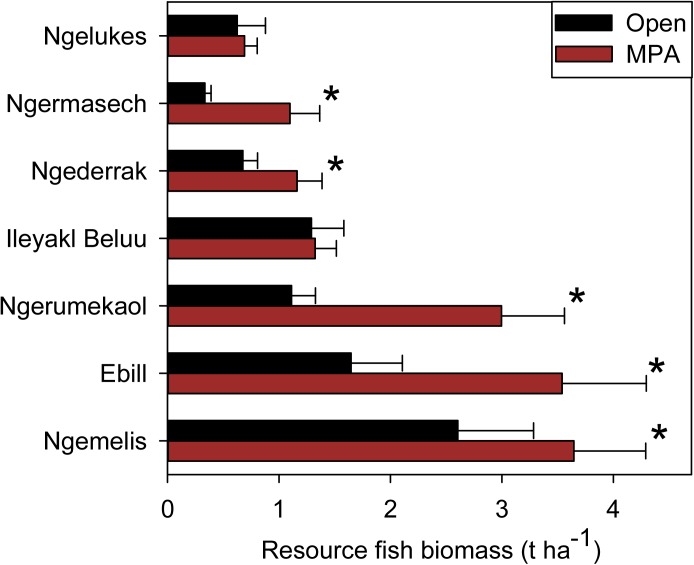
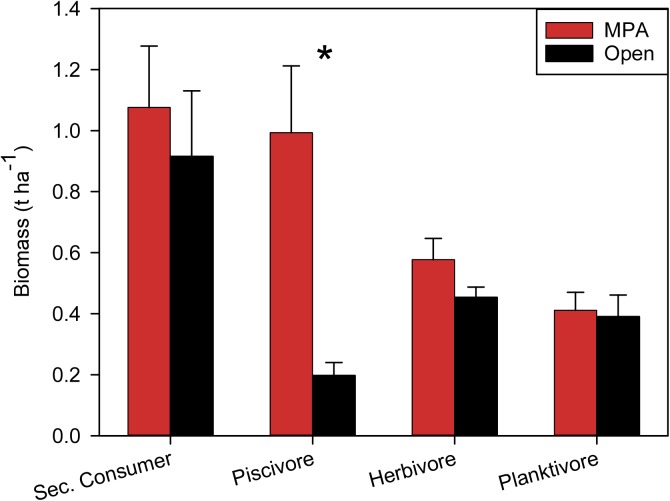
Palau has a rich heritage of conservation that has evolved from the traditional moratoria on fishing, or "bul", to more western Marine Protected Areas (MPAs), while still retaining elements of customary management and tenure. In 2003, the Palau Protected Areas Network (PAN) was created to conserve Palau's unique biodiversity and culture, and is the country's mechanism for achieving the goals of the Micronesia Challenge (MC), an initiative to conserve ≥30% of near-shore marine resources within the region by 2020. The PAN comprises a network of numerous MPAs within Palau that vary in age, size, level of management, and habitat, which provide an excellent opportunity to test hypotheses concerning MPA design and function using multiple discreet sampling units. Our sampling design provided a robust space for time comparison to evaluate the relative influence of potential drivers of MPA efficacy. Our results showed that no-take MPAs had, on average, nearly twice the biomass of resource fishes (i.e. those important commercially, culturally, or for subsistence) compared to nearby unprotected areas. Biomass of non-resource fishes showed no differences between no-take areas and areas open to fishing. The most striking difference between no-take MPAs and unprotected areas was the more than 5-fold greater biomass of piscivorous fishes in the MPAs compared to fished areas. The most important determinates of no-take MPA success in conserving resource fish biomass were MPA size and years of protection. Habitat and distance from shore had little effect on resource fish biomass. The extensive network of MPAs in Palau likely provides important conservation and tourism benefits to the Republic, and may also provide fisheries benefits by protecting spawning aggregation sites, and potentially through adult spillover.
帕劳有着丰富的保护传统,从传统的捕鱼禁令(即“布尔”)发展到更具西方特色的海洋保护区(MPA),同时仍保留着习惯管理和权属的元素。2003年,帕劳保护区网络(PAN)成立,旨在保护帕劳独特的生物多样性和文化,是该国实现密克罗尼西亚挑战(MC)目标的机制,该倡议旨在到2020年保护该地区至少30%的近岸海洋资源。PAN由帕劳境内众多不同年龄、大小、管理水平和栖息地的MPA组成,这为使用多个离散采样单元检验有关MPA设计和功能的假设提供了绝佳机会。我们的采样设计为时间比较提供了有力空间,以评估MPA成效潜在驱动因素的相对影响。我们的结果表明,平均而言,禁捕MPA的资源鱼类(即那些具有重要商业、文化或自给价值的鱼类)生物量几乎是附近未受保护区域的两倍。非资源鱼类的生物量在禁捕区和可捕鱼区之间没有差异。禁捕MPA与未受保护区域之间最显著的差异是,MPA中食鱼性鱼类的生物量比捕鱼区高出5倍多。禁捕MPA在保护资源鱼类生物量方面成功的最重要决定因素是MPA的大小和保护年限。栖息地和离海岸的距离对资源鱼类生物量影响很小。帕劳广泛的MPA网络可能为该国带来重要的保护和旅游效益,也可能通过保护产卵聚集区以及潜在地通过成鱼溢出带来渔业效益。