Wolff Florian, Leisch Michael, Greil Richard, Risch Angela, Pleyer Lisa
Department of Molecular Biology, University of Salzburg, Salzburg, Austria.
3rd Medical Department with Hematology and Medical Oncology, Hemostaseology, Rheumatology and Infectious Diseases, Laboratory for Immunological and Molecular Cancer Research, Oncologic Center, Paracelsus Medical University Salzburg, Müllner Hauptstraße 48, A-5020, Salzburg, Austria.
Cell Commun Signal. 2017 Mar 31;15(1):13. doi: 10.1186/s12964-017-0168-z.
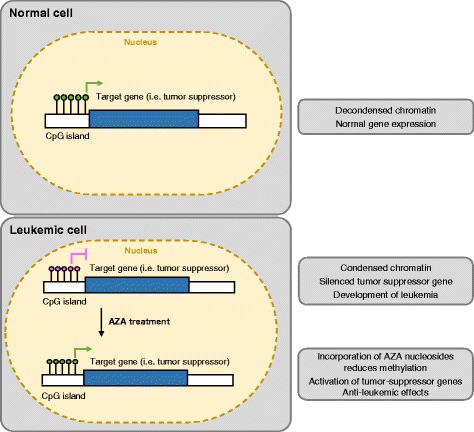
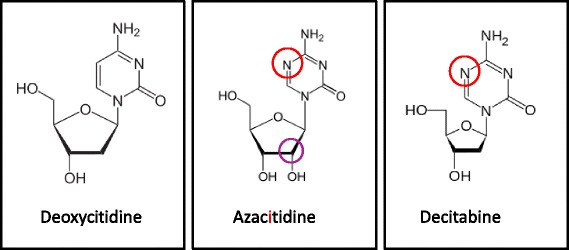
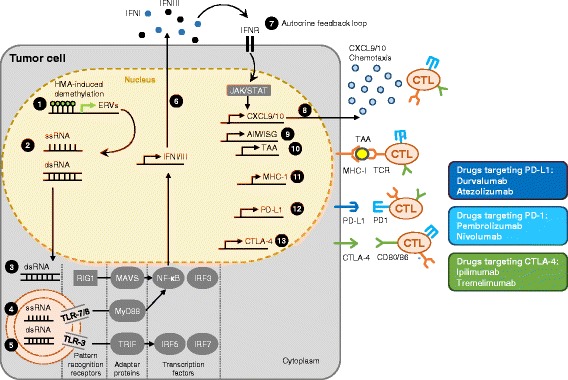
Hypomethylating agents (HMAs) have been widely used over the last decade, approved for use in myelodysplastic syndrome (MDS), chronic myelomonocytic leukemia (CMML) and acute myeloid leukemia (AML). The proposed central mechanism of action of HMAs, is the reversal of aberrant methylation in tumor cells, thus reactivating CpG-island promoters and leading to (re)expression of tumor suppressor genes. Recent investigations into the mode of action of azacitidine (AZA) and decitabine (DAC) have revealed new molecular mechanisms that impinge on tumor immunity via induction of an interferon response, through activation of endogenous retroviral elements (ERVs) that are normally epigenetically silenced. Although the global demethylation of DNA by HMAs can induce anti-tumor effects, it can also upregulate the expression of inhibitory immune checkpoint receptors and their ligands, resulting in secondary resistance to HMAs. Recent studies have, however, suggested that this could be exploited to prime or (re)sensitize tumors to immune checkpoint inhibitor therapies. In recent years, immune checkpoints have been targeted by novel therapies, with the aim of (re)activating the host immune system to specifically eliminate malignant cells. Antibodies blocking checkpoint receptors have been FDA-approved for some solid tumors and a plethora of clinical trials testing these and other checkpoint inhibitors are under way. This review will discuss AZA and DAC novel mechanisms of action resulting from the re-expression of pathologically hypermethylated promoters of gene sets that are related to interferon signaling, antigen presentation and inflammation. We also review new insights into the molecular mechanisms of action of transient, low-dose HMAs on various tumor types and discuss the potential of new treatment options and combinations.
在过去十年中,低甲基化剂(HMAs)已被广泛应用,并被批准用于治疗骨髓增生异常综合征(MDS)、慢性粒单核细胞白血病(CMML)和急性髓系白血病(AML)。HMAs的主要作用机制被认为是逆转肿瘤细胞中的异常甲基化,从而重新激活CpG岛启动子并导致肿瘤抑制基因的(重新)表达。最近对阿扎胞苷(AZA)和地西他滨(DAC)作用方式的研究揭示了新的分子机制,即通过激活通常在表观遗传上沉默的内源性逆转录病毒元件(ERVs)来诱导干扰素反应,从而影响肿瘤免疫。尽管HMAs引起的DNA整体去甲基化可诱导抗肿瘤作用,但它也可上调抑制性免疫检查点受体及其配体的表达,导致对HMAs产生继发性耐药。然而,最近的研究表明,可以利用这一点使肿瘤对免疫检查点抑制剂疗法产生初始敏感性或(重新)敏感性。近年来,新型疗法已针对免疫检查点,目的是(重新)激活宿主免疫系统以特异性消除恶性细胞。阻断检查点受体的抗体已获美国食品药品监督管理局(FDA)批准用于某些实体瘤,并且正在进行大量测试这些及其他检查点抑制剂的临床试验。本综述将讨论AZA和DAC因与干扰素信号传导、抗原呈递和炎症相关的基因集病理高甲基化启动子的重新表达而产生的新作用机制。我们还将综述关于瞬时低剂量HMAs对各种肿瘤类型作用机制的新见解,并讨论新治疗方案及联合治疗的潜力。