Seifu Daniel, Gustafsson Lars E, Chawla Rajinder, Genet Solomon, Debella Asfaw, Holst Mikael, Hellström Per M
Department of Biochemistry, College of Health Sciences, School of Medicine, Addis Ababa University, Addis Ababa, Ethiopia; Department of Medical Sciences, Uppsala University, Uppsala.
Department of Physiology and Pharmacology, Karolinska Institutet, Stockholm, Sweden.
J Exp Pharmacol. 2017 Mar 20;9:23-29. doi: 10.2147/JEP.S126146. eCollection 2017.
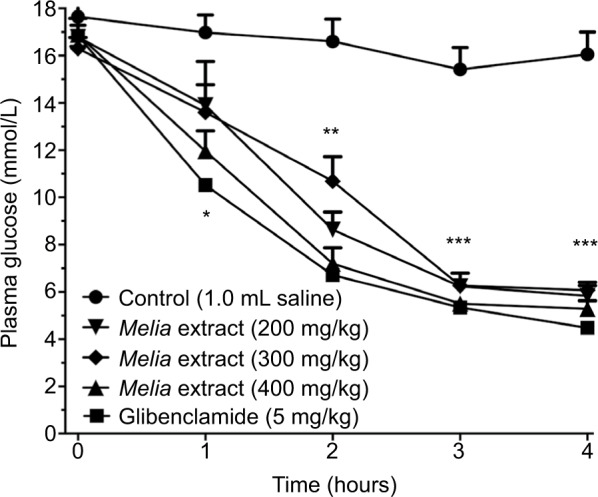
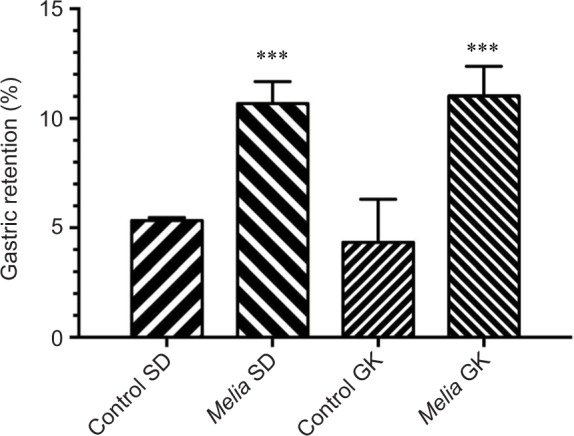
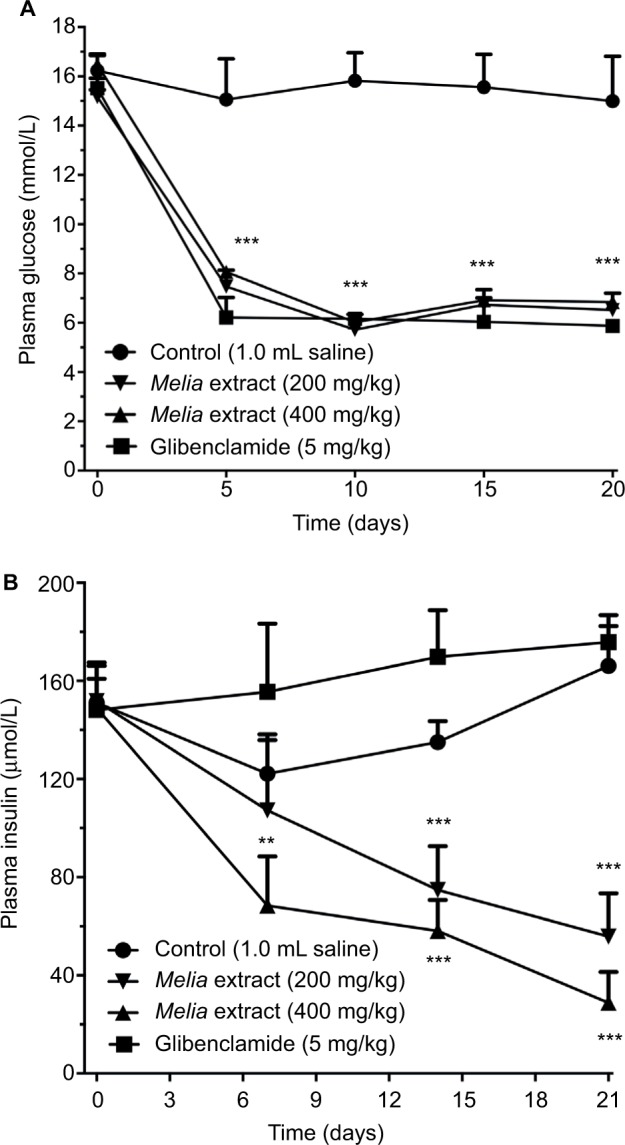
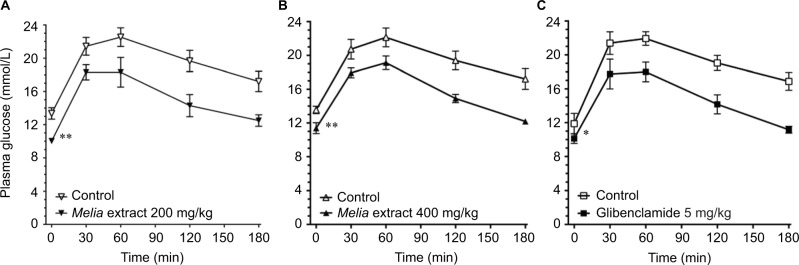
Diabetes type 2 is associated with impaired insulin production and increased insulin resistance. Treatment with antidiabetic drugs and insulin strives for normalizing glucose homeostasis. In Ethiopian traditional medicine, plant extracts of are used to control diabetes mellitus and various gastrointestinal disorders. The objective of this study was to clarify the antidiabetic effects of leaf extracts in diabetic type 2 experimental animals. In this study, mice were injected with extract intraperitoneally. Plasma glucose was studied by using tail vein sampling in acute experiments over 4 h and chronic experiments over 21 days with concurrent insulin and body weight assessments. Glucose tolerance was studied by using intraperitoneal glucose (2 mg/g) tolerance test over 120 min. Gastric emptying of a metabolically inert meal was studied by the gastric retention of a radioactive marker over 20 min. extracts displayed acute, dose-dependent antidiabetic effects in ob/ob mice similar to glibenclamide (<0.05-0.001). Long-term administration of extract reduced plasma glucose (<0.001) and insulin (<0.01-0.001) levels over 21 days, concurrent with body weight loss. Glucose tolerance test showed reduced basal glucose levels (<0.05-0.01), but no difference was found in glucose disposal after long-term treatment with extract. In addition, the extract at 400 mg/kg slowed gastric emptying rate of normal Sprague-Dawley (<0.001) and diabetic Goto-Kakizaki rats (<0.001) compared with controls. It is concluded that the leaf extract elicits diabetic activity through a multitargeted action. Primarily an increased insulin-sensitizing effect is at hand, resulting in blood glucose reduction and improved peripheral glucose disposal, but also through reduced gastric emptying and decreased insulin demand.
2型糖尿病与胰岛素分泌受损和胰岛素抵抗增加有关。使用抗糖尿病药物和胰岛素进行治疗旨在使葡萄糖稳态正常化。在埃塞俄比亚传统医学中,[植物名称]的植物提取物被用于控制糖尿病和各种胃肠道疾病。本研究的目的是阐明[植物名称]叶提取物对2型糖尿病实验动物的抗糖尿病作用。在本研究中,给小鼠腹腔注射[植物名称]提取物。在急性实验(4小时)和慢性实验(21天)中,通过尾静脉采血研究血浆葡萄糖,并同时评估胰岛素和体重。通过腹腔注射葡萄糖(2mg/g)耐量试验在120分钟内研究葡萄糖耐量。通过放射性标记物在胃内的滞留情况在20分钟内研究代谢惰性餐的胃排空。[植物名称]提取物在ob/ob小鼠中显示出急性、剂量依赖性的抗糖尿病作用,类似于格列本脲(<0.05 - 0.001)。长期给予[植物名称]提取物在21天内降低了血浆葡萄糖(<0.001)和胰岛素(<0.01 - 0.001)水平,同时伴有体重减轻。葡萄糖耐量试验显示基础葡萄糖水平降低(<0.05 - 0.01),但长期用[植物名称]提取物治疗后葡萄糖处置方面未发现差异。此外,与对照组相比,400mg/kg的[植物名称]提取物减慢了正常Sprague - Dawley大鼠(<0.001)和糖尿病Goto - Kakizaki大鼠(<0.001)的胃排空率。得出的结论是,[植物名称]叶提取物通过多靶点作用引发抗糖尿病活性。主要是增加了胰岛素敏感性作用,导致血糖降低和外周葡萄糖处置改善,同时也通过减慢胃排空和降低胰岛素需求来实现。