IEEE Trans Biomed Eng. 2017 Dec;64(12):2803-2812. doi: 10.1109/TBME.2016.2638918. Epub 2017 Mar 1.
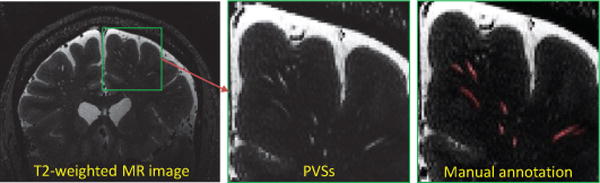
The goal of this paper is to automatically segment perivascular spaces (PVSs) in brain from high-resolution 7T magnetic resonance (MR) images.
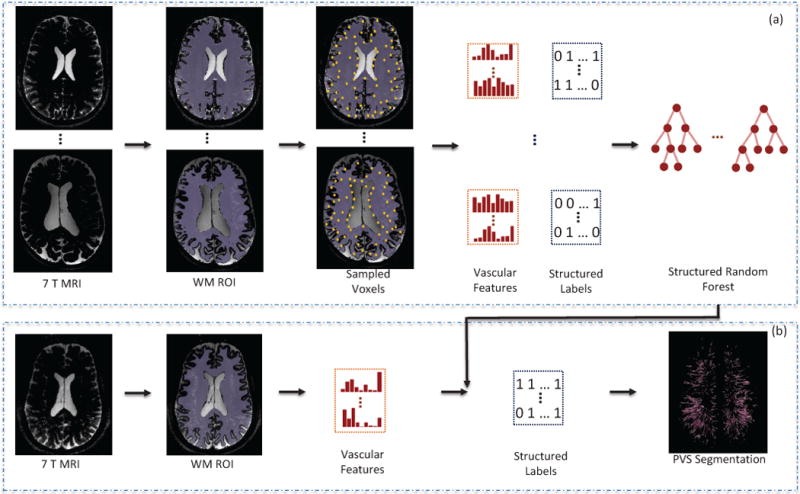
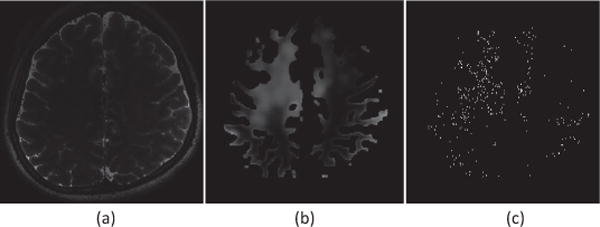
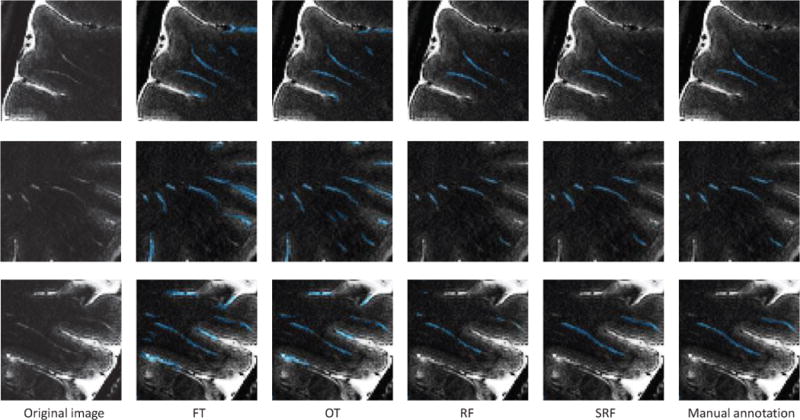
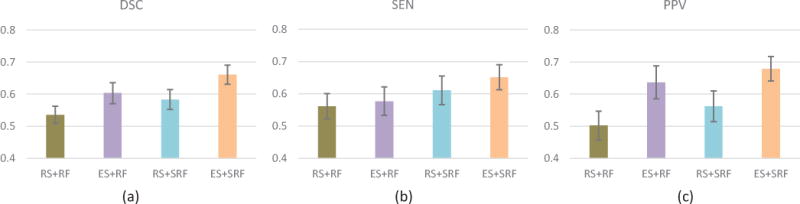
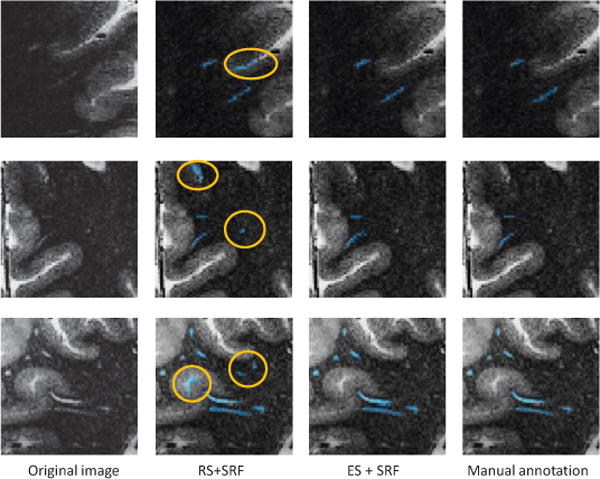
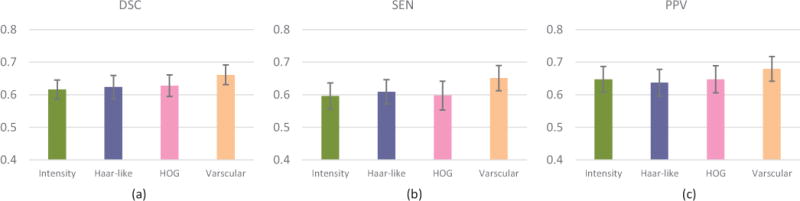
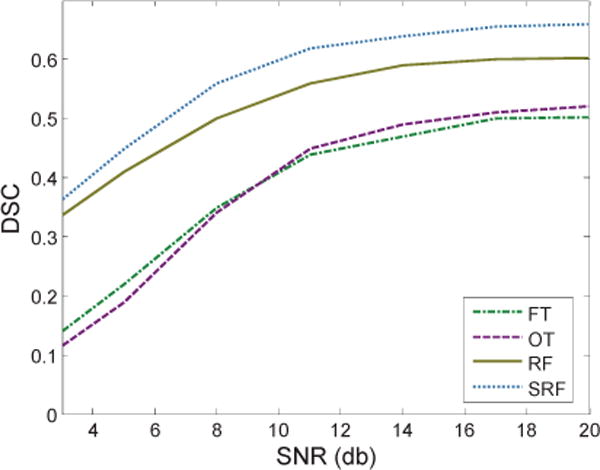
We propose a structured-learning-based segmentation framework to extract the PVSs from high-resolution 7T MR images. Specifically, we integrate three types of vascular filter responses into a structured random forest for classifying voxels into two categories, i.e., PVS and background. In addition, we propose a novel entropy-based sampling strategy to extract informative samples in the background for training an explicit classification model. Since the vascular filters can extract various vascular features, even thin and low-contrast structures can be effectively extracted from noisy backgrounds. Moreover, continuous and smooth segmentation results can be obtained by utilizing patch-based structured labels.
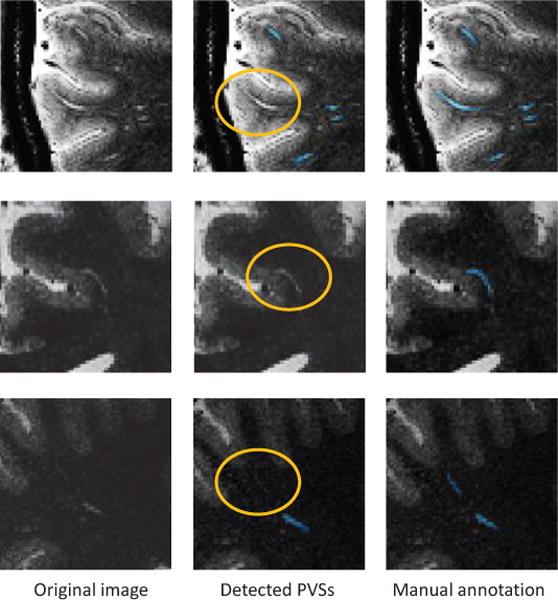
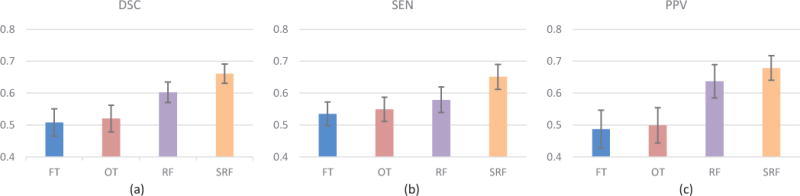
The performance of our proposed method is evaluated on 19 subjects with 7T MR images, with the Dice similarity coefficient reaching 66%.
The joint use of entropy-based sampling strategy, vascular features, and structured learning can improve the segmentation accuracy.
Instead of manual annotation, our method provides an automatic way for PVS segmentation. Moreover, our method can be potentially used for other vascular structure segmentation because of its data-driven property.
本文旨在从高分辨率 7T 磁共振(MR)图像中自动分割脑内血管周围间隙(PVS)。
我们提出了一种基于结构学习的分割框架,从高分辨率 7T MR 图像中提取 PVS。具体来说,我们将三种类型的血管滤波器响应集成到一个结构随机森林中,将体素分类为 PVS 和背景两类。此外,我们提出了一种新的基于熵的采样策略,从背景中提取信息丰富的样本,以训练显式分类模型。由于血管滤波器可以提取各种血管特征,即使是薄的和低对比度的结构也可以从噪声背景中有效提取。此外,通过利用基于补丁的结构标签,可以获得连续平滑的分割结果。
我们在 19 名受试者的 7T MR 图像上评估了所提出方法的性能,Dice 相似系数达到 66%。
基于熵的采样策略、血管特征和结构学习的联合使用可以提高分割准确性。
与手动标注相比,我们的方法为 PVS 分割提供了一种自动的方法。此外,由于其数据驱动的特性,我们的方法可以潜在地用于其他血管结构的分割。