Ye Cunqi, Sutter Benjamin M, Wang Yun, Kuang Zheng, Tu Benjamin P
Department of Biochemistry, University of Texas Southwestern Medical Center, 5323 Harry Hines Boulevard, Dallas, TX 75390-9038, USA.
Department of Immunology, University of Texas Southwestern Medical Center, 5323 Harry Hines Boulevard, Dallas, TX 75390-9038, USA.
Mol Cell. 2017 Apr 20;66(2):180-193.e8. doi: 10.1016/j.molcel.2017.02.026. Epub 2017 Mar 30.
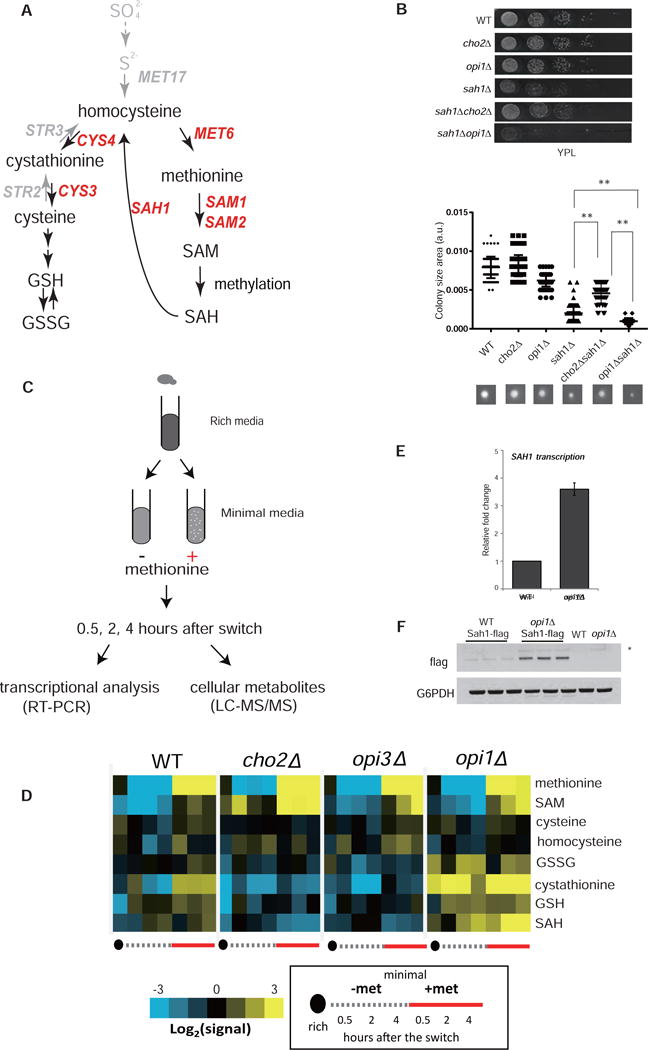
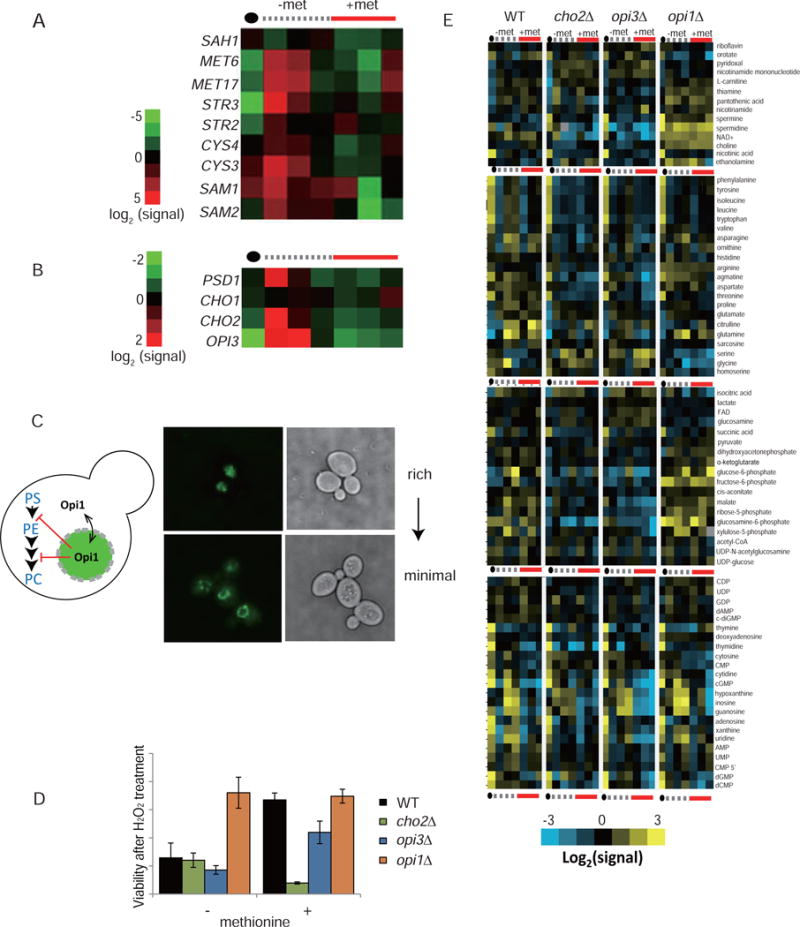
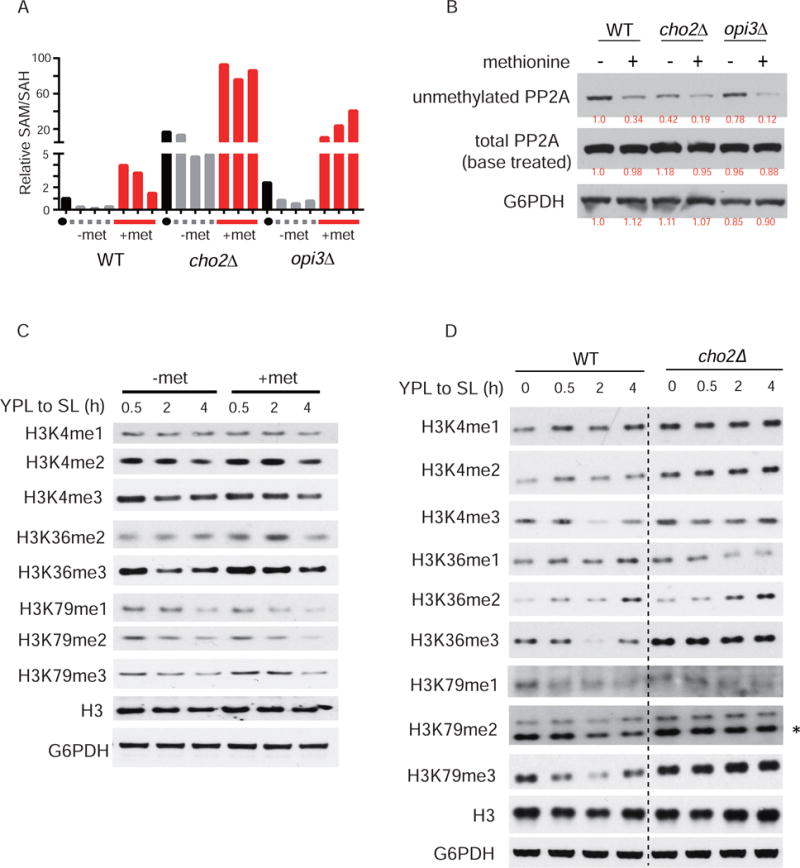
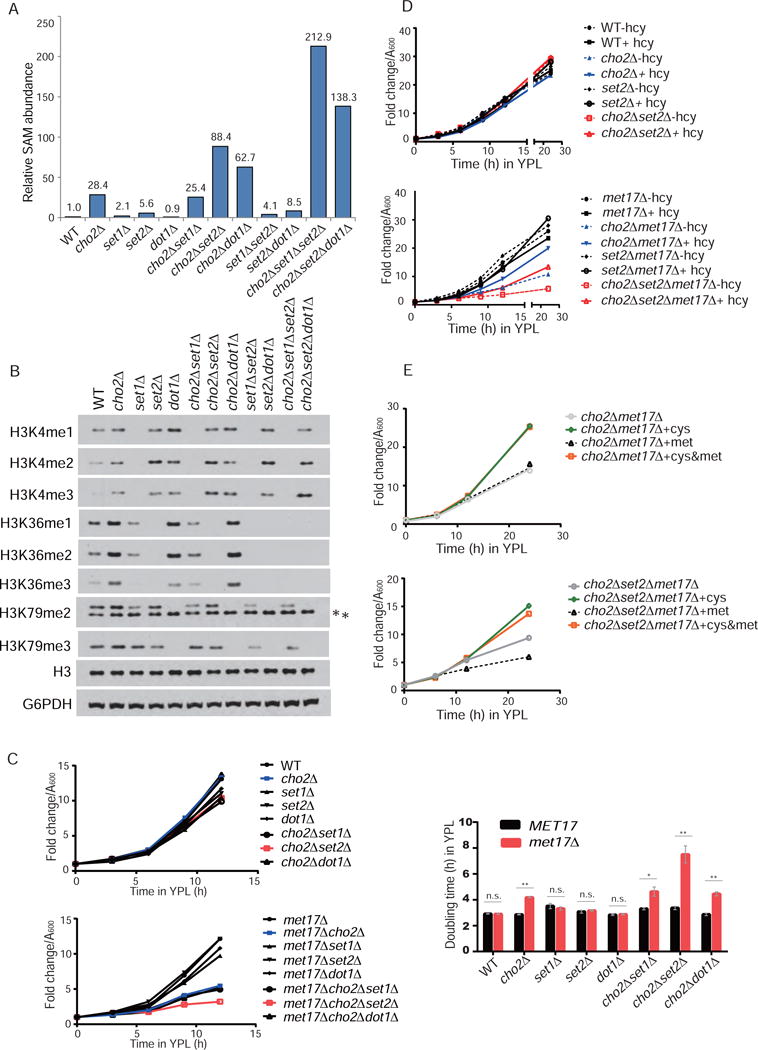
S-adenosylmethionine (SAM) is the methyl donor for biological methylation modifications that regulate protein and nucleic acid functions. Here, we show that methylation of a phospholipid, phosphatidylethanolamine (PE), is a major consumer of SAM. The induction of phospholipid biosynthetic genes is accompanied by induction of the enzyme that hydrolyzes S-adenosylhomocysteine (SAH), a product and inhibitor of methyltransferases. Beyond its function for the synthesis of phosphatidylcholine (PC), the methylation of PE facilitates the turnover of SAM for the synthesis of cysteine and glutathione through transsulfuration. Strikingly, cells that lack PE methylation accumulate SAM, which leads to hypermethylation of histones and the major phosphatase PP2A, dependency on cysteine, and sensitivity to oxidative stress. Without PE methylation, particular sites on histones then become methyl sinks to enable the conversion of SAM to SAH. These findings reveal an unforeseen metabolic function for phospholipid and histone methylation intrinsic to the life of a cell.
S-腺苷甲硫氨酸(SAM)是用于调节蛋白质和核酸功能的生物甲基化修饰的甲基供体。在此,我们表明磷脂酰乙醇胺(PE)的甲基化是SAM的主要消耗途径。磷脂生物合成基因的诱导伴随着水解S-腺苷同型半胱氨酸(SAH,甲基转移酶的产物和抑制剂)的酶的诱导。除了其在磷脂酰胆碱(PC)合成中的功能外,PE的甲基化还通过转硫作用促进SAM的周转以合成半胱氨酸和谷胱甘肽。引人注目的是,缺乏PE甲基化的细胞会积累SAM,这会导致组蛋白和主要磷酸酶PP2A的高甲基化、对半胱氨酸的依赖性以及对氧化应激的敏感性。没有PE甲基化,组蛋白上的特定位点就会成为甲基汇,从而使SAM转化为SAH。这些发现揭示了细胞生命中固有的磷脂和组蛋白甲基化的一种意想不到的代谢功能。