Kim Chang-Kyung, He Ping, Bialkowska Agnieszka B, Yang Vincent W
Department of Medicine, Stony Brook University School of Medicine, Stony Brook, New York.
Department of Medicine, Stony Brook University School of Medicine, Stony Brook, New York.
Gastroenterology. 2017 Jun;152(8):1845-1875. doi: 10.1053/j.gastro.2017.03.035. Epub 2017 Mar 30.
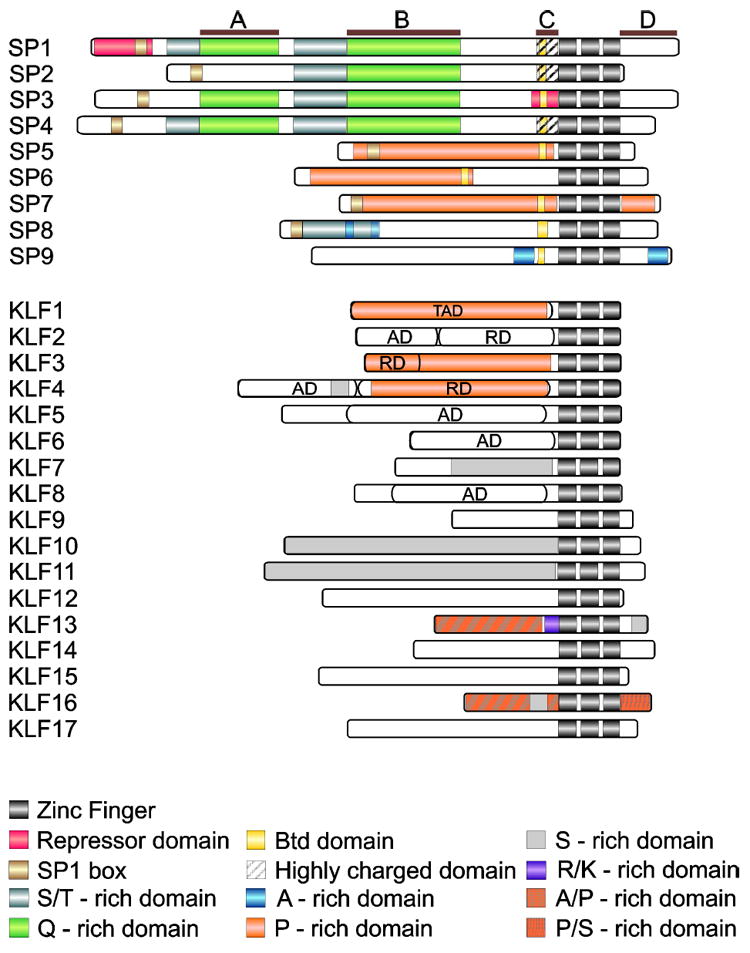
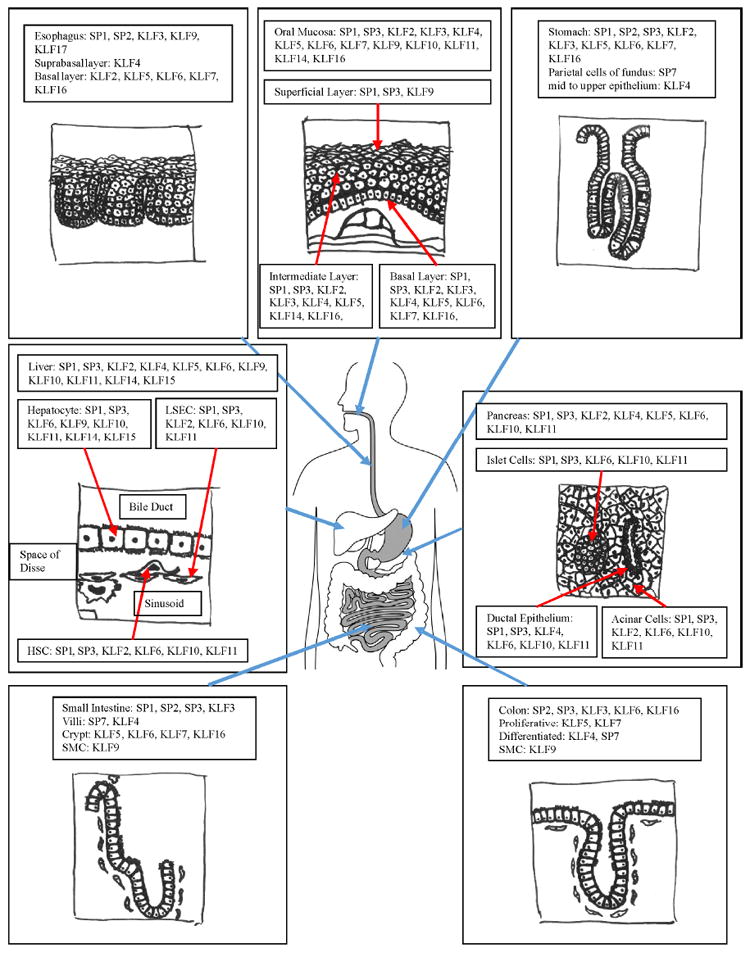
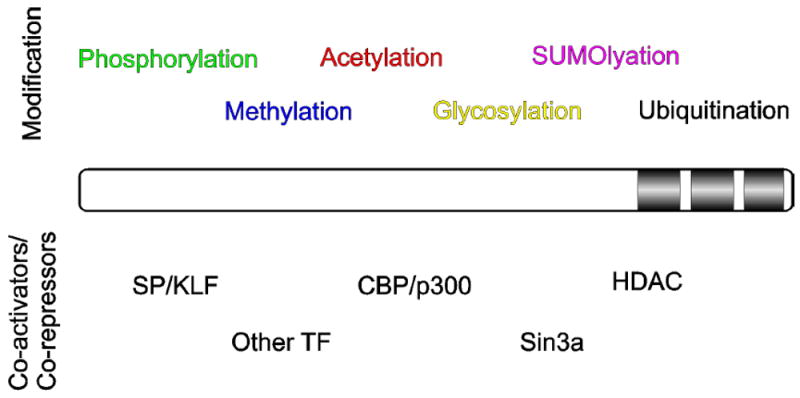
Specificity proteins (SPs) and Krüppel-like factors (KLFs) belong to the family of transcription factors that contain conserved zinc finger domains involved in binding to target DNA sequences. Many of these proteins are expressed in different tissues and have distinct tissue-specific activities and functions. Studies have shown that SPs and KLFs regulate not only physiological processes such as growth, development, differentiation, proliferation, and embryogenesis, but pathogenesis of many diseases, including cancer and inflammatory disorders. Consistently, these proteins have been shown to regulate normal functions and pathobiology in the digestive system. We review recent findings on the tissue- and organ-specific functions of SPs and KLFs in the digestive system including the oral cavity, esophagus, stomach, small and large intestines, pancreas, and liver. We provide a list of agents under development to target these proteins.
特异性蛋白(SPs)和Krüppel样因子(KLFs)属于转录因子家族,它们含有与靶DNA序列结合相关的保守锌指结构域。这些蛋白中的许多在不同组织中表达,并具有独特的组织特异性活性和功能。研究表明,SPs和KLFs不仅调节生长、发育、分化、增殖和胚胎发生等生理过程,还调节包括癌症和炎症性疾病在内的许多疾病的发病机制。同样,这些蛋白已被证明可调节消化系统的正常功能和病理生物学。我们综述了关于SPs和KLFs在包括口腔、食管、胃、小肠和大肠、胰腺和肝脏在内的消化系统中的组织和器官特异性功能的最新研究结果。我们列出了正在开发的针对这些蛋白的药物。