Department of Nutrition and Health, Research Centre of Biomedical Technology Co. Ltd., Yancheng Vocational Institute of Health Sciences (YIHS), Jiangsu 224005, China; Research Center for Food Safety and Nutrition, Key Lab of Urban Agriculture (South), Bor S. Luh Food Safety Research Center, School of Agriculture & Biology, Shanghai Jiao Tong University, Shanghai 200240, China.
Research Center for Food Safety and Nutrition, Key Lab of Urban Agriculture (South), Bor S. Luh Food Safety Research Center, School of Agriculture & Biology, Shanghai Jiao Tong University, Shanghai 200240, China.
J Immunol Res. 2017;2017:2197975. doi: 10.1155/2017/2197975. Epub 2017 Mar 6.
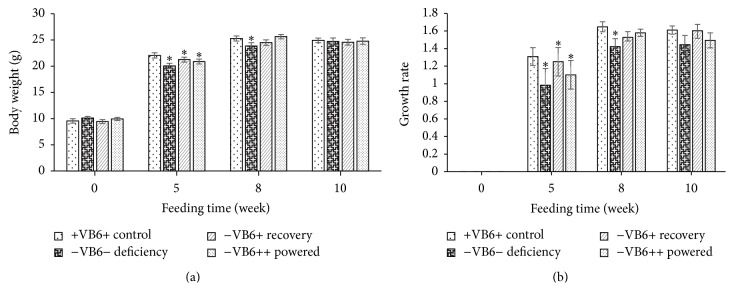
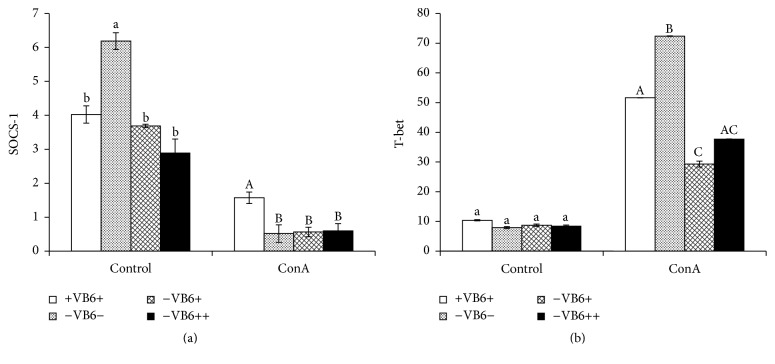
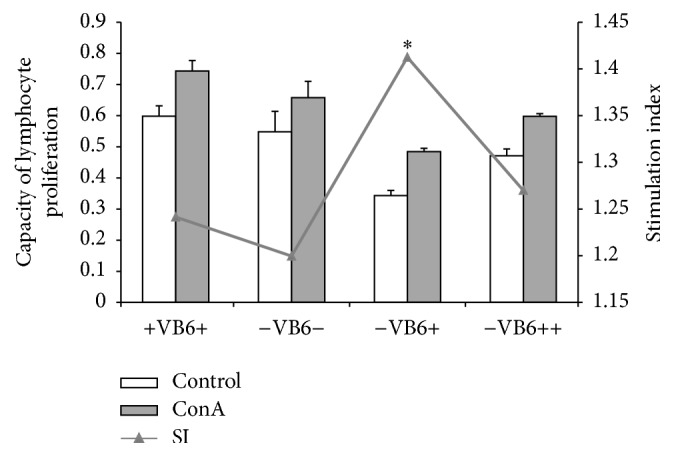
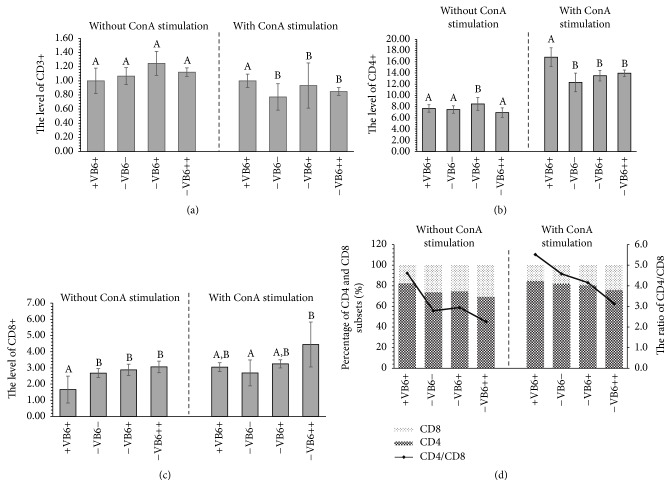
The immune system is critical in preventing infection and cancer, and malnutrition can weaken different aspects of the immune system to undermine immunity. Previous studies suggested that vitamin B6 deficiency could decrease serum antibody production with concomitant increase in IL4 expression. However, evidence on whether vitamin B6 deficiency would impair immune cell differentiation, cytokines secretion, and signal molecule expression involved in JAK/STAT signaling pathway to regulate immune response remains largely unknown. The aim of this study is to investigate the effects of vitamin B6 deficiency on the immune system through analysis of T lymphocyte differentiation, IL-2, IL-4, and INF- secretion, and and gene transcription. We generated a vitamin B6-deficient mouse model via vitamin B6-depletion diet. The results showed that vitamin B6 deficiency retards growth, inhibits lymphocyte proliferation, and interferes with its differentiation. After ConA stimulation, vitamin B6 deficiency led to decrease in IL-2 and increase in IL-4 but had no influence on IFN-. Real-time PCR analysis showed that vitamin B6 deficiency downregulated and upregulated transcription. This study suggested that vitamin B6 deficiency influenced the immunity in organisms. Meanwhile, the appropriate supplement of vitamin B6 could benefit immunity of the organism.
免疫系统对于预防感染和癌症至关重要,而营养不良会削弱免疫系统的各个方面,从而损害免疫力。先前的研究表明,维生素 B6 缺乏会降低血清抗体的产生,同时增加 IL4 的表达。然而,维生素 B6 缺乏是否会损害参与 JAK/STAT 信号通路的免疫细胞分化、细胞因子分泌和信号分子表达,从而调节免疫反应,这方面的证据仍然知之甚少。本研究旨在通过分析 T 淋巴细胞分化、IL-2、IL-4 和 INF-的分泌以及基因转录,来研究维生素 B6 缺乏对免疫系统的影响。我们通过维生素 B6 耗竭饮食生成了维生素 B6 缺乏的小鼠模型。结果表明,维生素 B6 缺乏会减缓生长、抑制淋巴细胞增殖并干扰其分化。在 ConA 刺激后,维生素 B6 缺乏会导致 IL-2 减少和 IL-4 增加,但对 IFN-没有影响。实时 PCR 分析表明,维生素 B6 缺乏会下调转录因子和上调转录因子的转录。本研究表明,维生素 B6 缺乏会影响机体的免疫功能。同时,适当补充维生素 B6 可能有益于机体的免疫功能。