Department of Biomedical Engineering, Boston University, 44 Cummington Mall, Boston, 02215, Massachusetts, USA.
Sci Rep. 2017 Apr 5;7:45653. doi: 10.1038/srep45653.
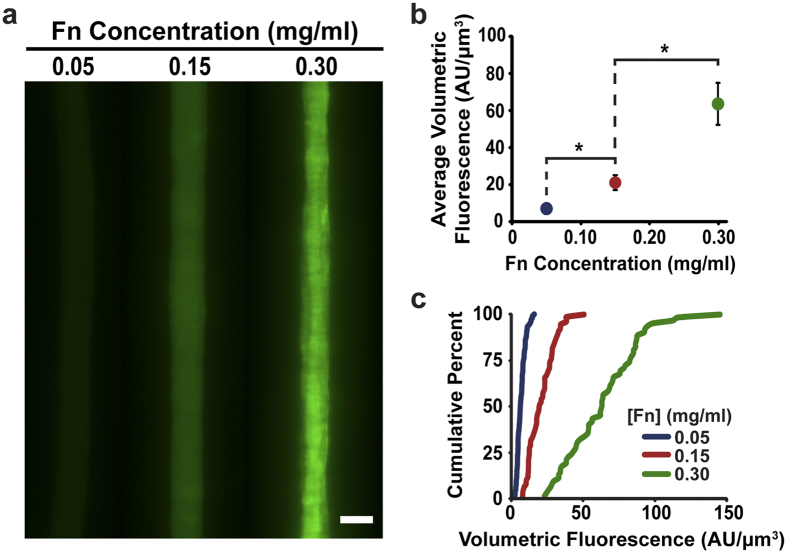
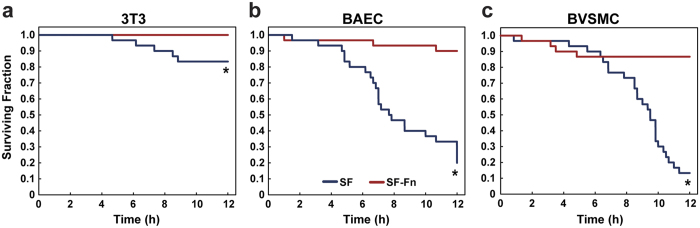
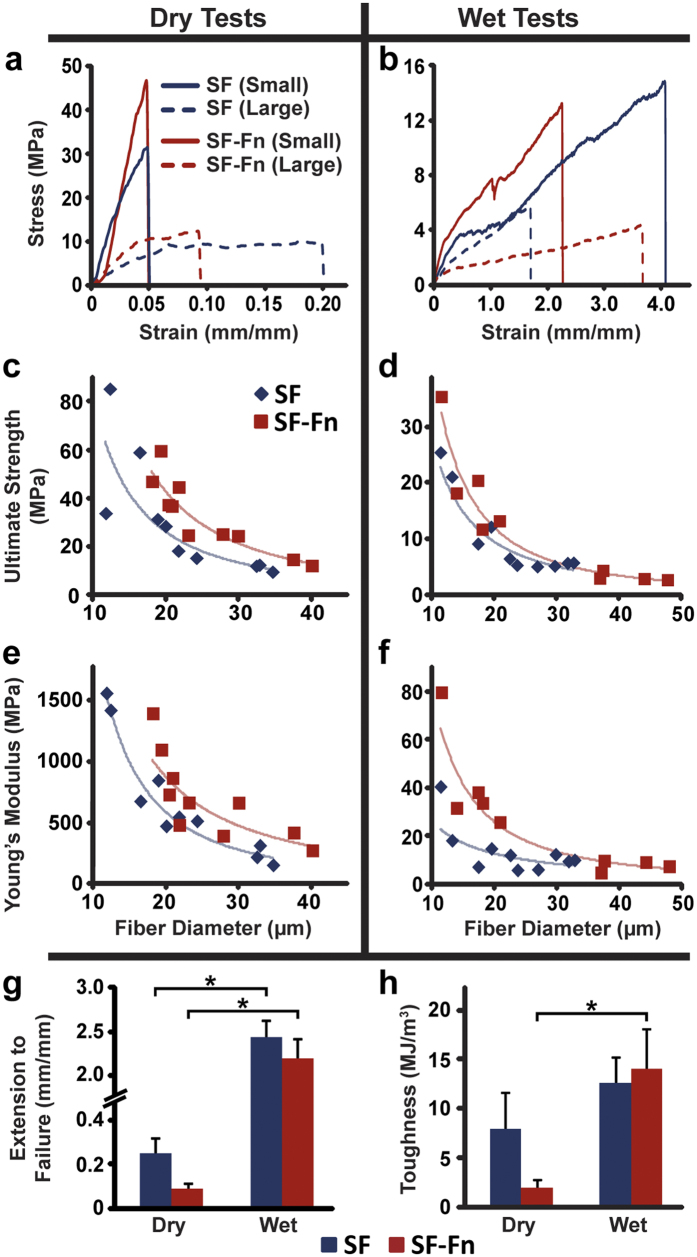
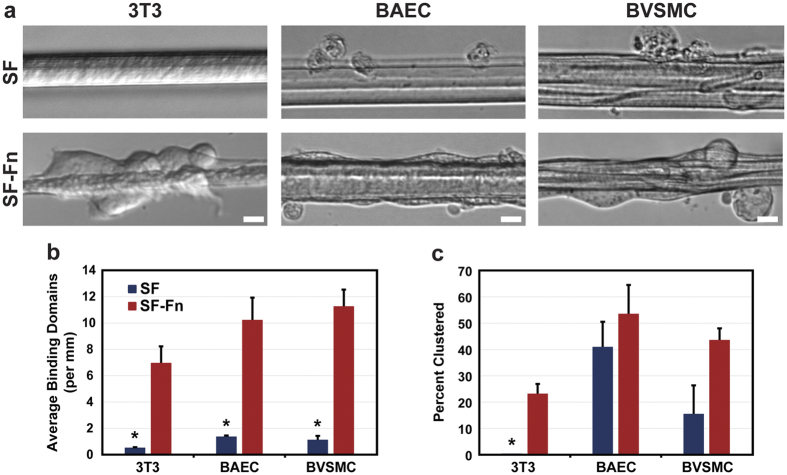
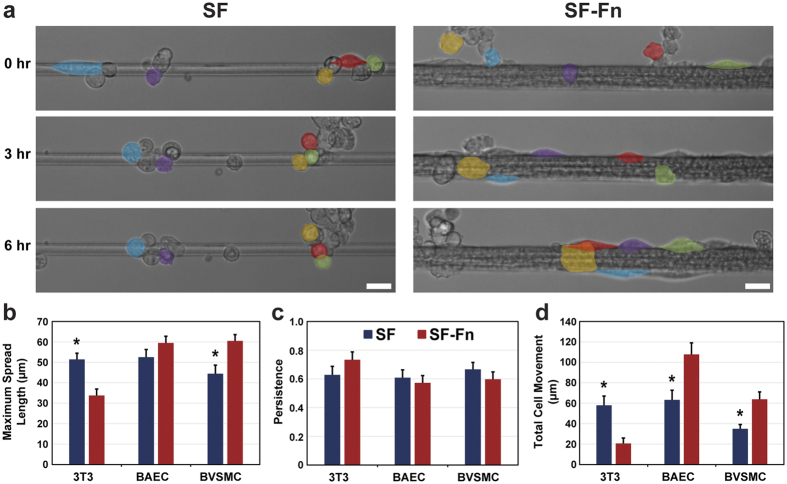
Silk is a natural polymer with broad utility in biomedical applications because it exhibits general biocompatibility and high tensile material properties. While mechanical integrity is important for most biomaterial applications, proper function and integration also requires biomaterial incorporation into complex surrounding tissues for many physiologically relevant processes such as wound healing. In this study, we spin silk fibroin into a protein alloy fibre with whole fibronectin using wet spinning approaches in order to synergize their respective strength and cell interaction capabilities. Results demonstrate that silk fibroin alone is a poor adhesive surface for fibroblasts, endothelial cells, and vascular smooth muscle cells in the absence of serum. However, significantly improved cell attachment is observed to silk-fibronectin alloy fibres without serum present while not compromising the fibres' mechanical integrity. Additionally, cell viability is improved up to six fold on alloy fibres when serum is present while migration and spreading generally increase as well. These findings demonstrate the utility of composite protein alloys as inexpensive and effective means to create durable, biologically active biomaterials.
丝绸是一种具有广泛应用的天然聚合物,因为它具有良好的生物相容性和高拉伸材料性能。虽然机械完整性对于大多数生物材料应用很重要,但对于许多与生理相关的过程,如伤口愈合,生物材料的适当功能和整合也需要将其纳入复杂的周围组织中。在这项研究中,我们使用湿法纺丝方法将丝素蛋白与整联蛋白制成蛋白质合金纤维,以协同发挥它们各自的强度和细胞相互作用能力。结果表明,在没有血清的情况下,丝素蛋白本身对于成纤维细胞、内皮细胞和血管平滑肌细胞来说是一种不良的黏附表面。然而,在没有血清的情况下,观察到丝素-整联蛋白合金纤维的细胞黏附显著改善,而不会损害纤维的机械完整性。此外,当存在血清时,合金纤维上的细胞活力提高了六倍,而迁移和扩展通常也会增加。这些发现表明,复合蛋白合金作为一种廉价有效的方法,可以用来制造耐用、具有生物活性的生物材料。