Liu Rongjun, Gao Caifeng, Chen Huijin, Li Yaxin, Jin Ying, Qi Hong
Department of Ophthalmology, Peking University Third Hospital, Beijing, China.
Guangdong Women and Children Hospital, Guangzhou, China.
PLoS One. 2017 Apr 5;12(4):e0173301. doi: 10.1371/journal.pone.0173301. eCollection 2017.
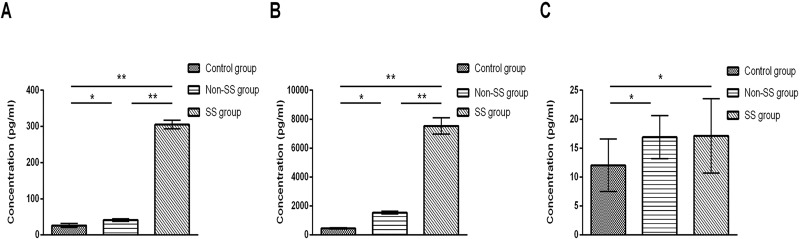
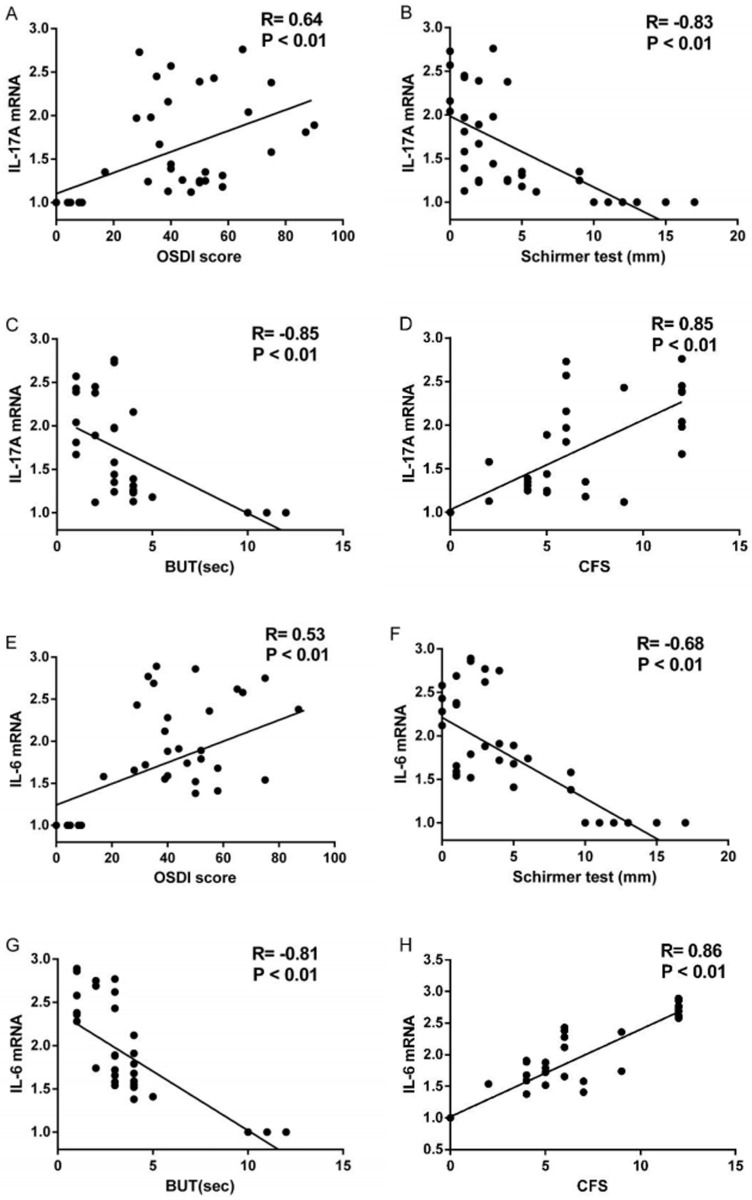
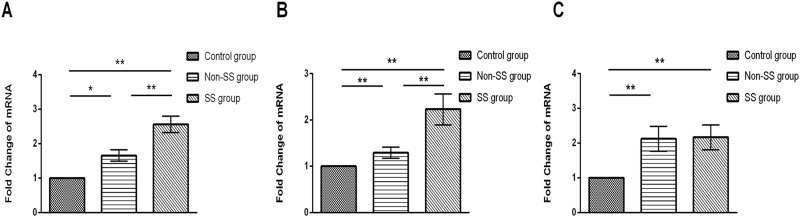
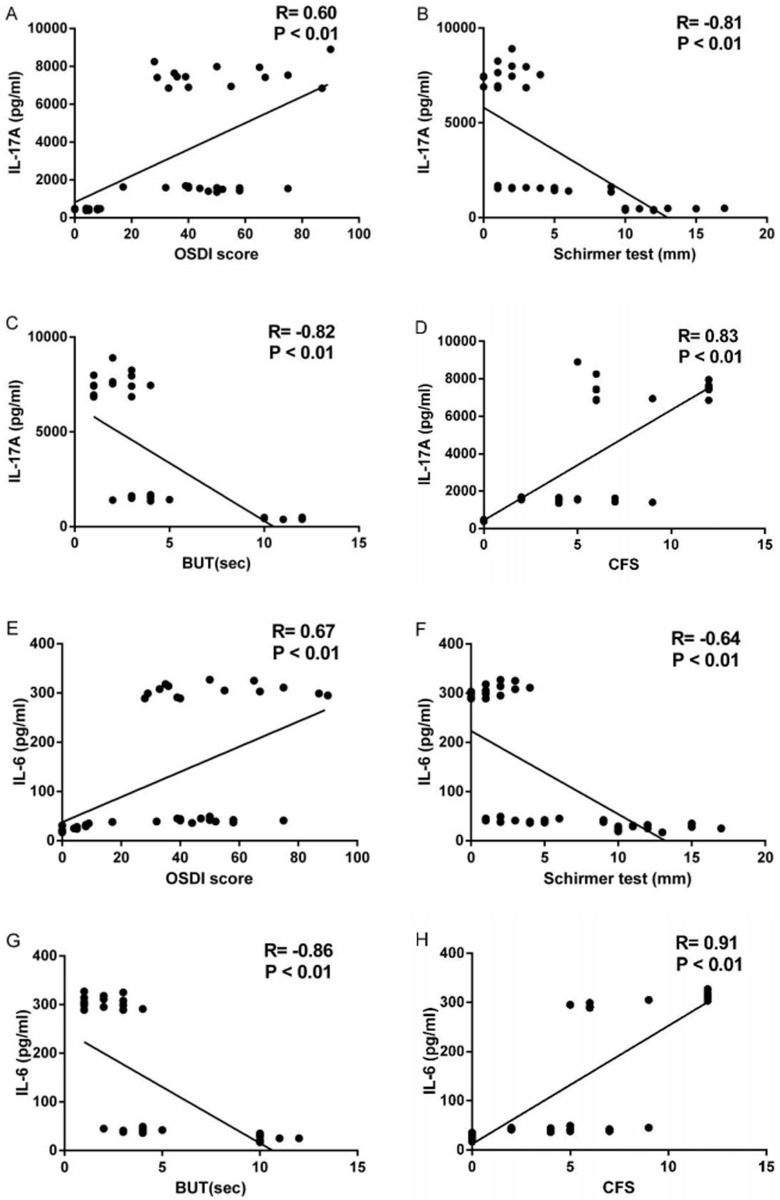
We aimed to investigate the expressions of three Th17-associated cytokines, interleukin (IL)-17A, IL-6 and IL-23, in protein and mRNA levels and their correlations with ocular surface parameters in patients with dry eye disease (DED) through a small sample size case control study. A total of 45 female subjects were divided into Sjögren's syndrome (SS) DED group, non-Sjögren's syndrome (non-SS) DED group and control group. Ocular surface disease index (OSDI) was self-answered and clinical tests including tear-film breakup time (BUT), Schirmer I test, cornea fluorescein staining (CFS) were performed. The conjunctival mRNA expressions of these cytokines were investigated by real-time polymerase chain reaction (PCR) and the levels of protein in tears were measured by mutiplex bead analysis. The correlations between cytokines and ocular surface parameters were analyzed. Results show that the expressions of IL-17A and IL-6 in protein and mRNA levels were both significantly increased in the DED group (P<0.05), and also higher in SS group comparing to the non-SS group (P<0.05). Moreover, IL-17A and IL-6 correlated well with ocular surface parameters (all P<0.05, R values range from 0.5-0.8). Despite the expression of IL-23 was significantly increased in the DED group (P<0.05), there was no significant difference found between the expressions of IL-23 in SS group and non-SS group (P>0.05) and no correlation found between the IL-23 and any ocular surface parameter (P>0.05). These findings indicates that the three Th17-associated cytokines, IL-17A, IL-6 and IL-23, play roles in the pathogenesis of DED and the expressions of IL-17A and IL-6 in tears have potential to be diagnostic biomarkers for DED.
我们旨在通过一项小样本病例对照研究,调查三种与Th17相关的细胞因子,即白细胞介素(IL)-17A、IL-6和IL-23在蛋白质和mRNA水平的表达情况,以及它们与干眼症(DED)患者眼表参数的相关性。总共45名女性受试者被分为干燥综合征(SS)-DED组、非干燥综合征(非SS)-DED组和对照组。受试者自行回答眼表疾病指数(OSDI),并进行包括泪膜破裂时间(BUT)、Schirmer I试验、角膜荧光素染色(CFS)在内的临床检查。通过实时聚合酶链反应(PCR)研究这些细胞因子在结膜中的mRNA表达,并通过多重微珠分析测量泪液中的蛋白质水平。分析细胞因子与眼表参数之间的相关性。结果显示,DED组中IL-17A和IL-6在蛋白质和mRNA水平的表达均显著增加(P<0.05),并且SS组中的表达高于非SS组(P<0.05)。此外,IL-17A和IL-6与眼表参数密切相关(所有P<0.05,R值范围为0.5 - 0.8)。尽管DED组中IL-23的表达显著增加(P<0.05),但SS组和非SS组中IL-23的表达之间没有显著差异(P>0.05),并且IL-23与任何眼表参数之间均未发现相关性(P>0.05)。这些发现表明,三种与Th17相关的细胞因子IL-17A、IL-6和IL-23在DED的发病机制中起作用,并且泪液中IL-17A和IL-6的表达有可能成为DED的诊断生物标志物。