Park Jun-Hyeong, Choi Seong-Hun, Park Soo-Jin, Lee Young Joon, Park Jong Hyun, Song Phil Hyun, Cho Chang-Mo, Ku Sae-Kwang, Song Chang-Hyun
Department of Anatomy and Histology, College of Korean Medicine, Daegu Haany University, Gyeongsan 38610, Korea.
Department of Preventive Medicine, College of Korean Medicine, Daegu Haany University, Gyeongsan 38610, Korea.
Mar Drugs. 2017 Apr 7;15(4):112. doi: 10.3390/md15040112.
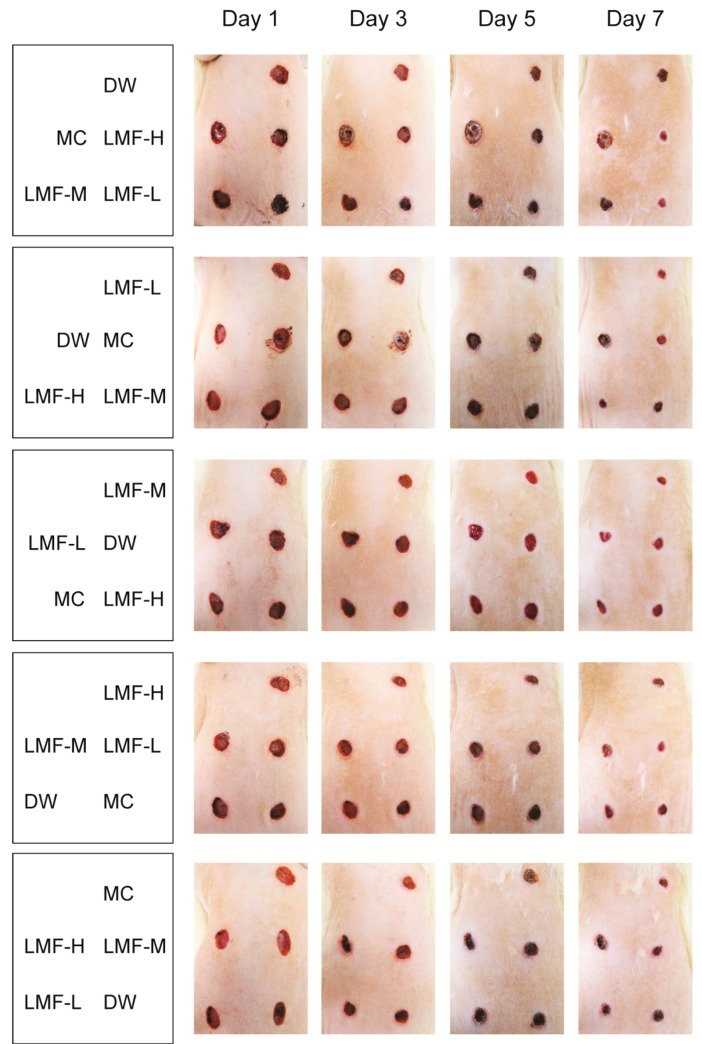
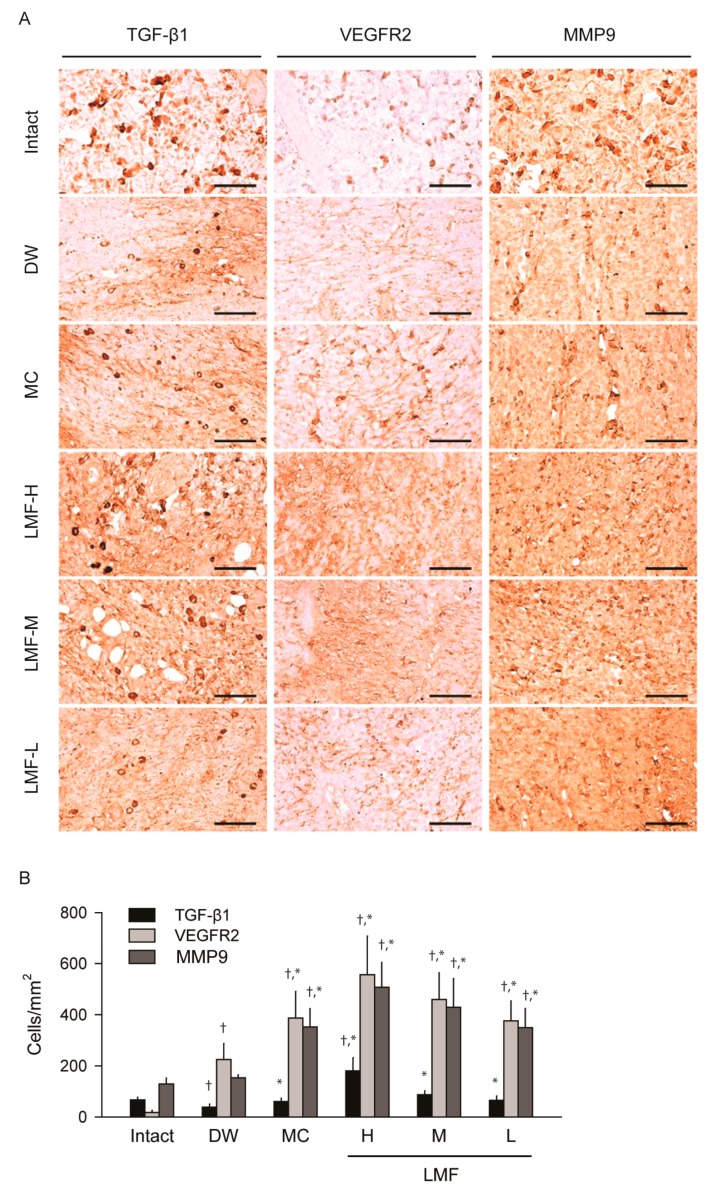
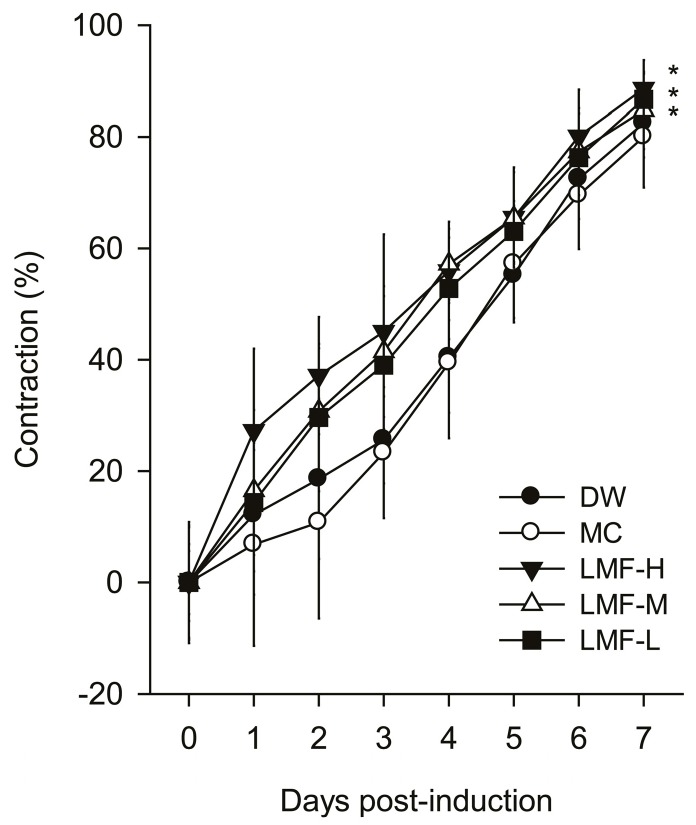
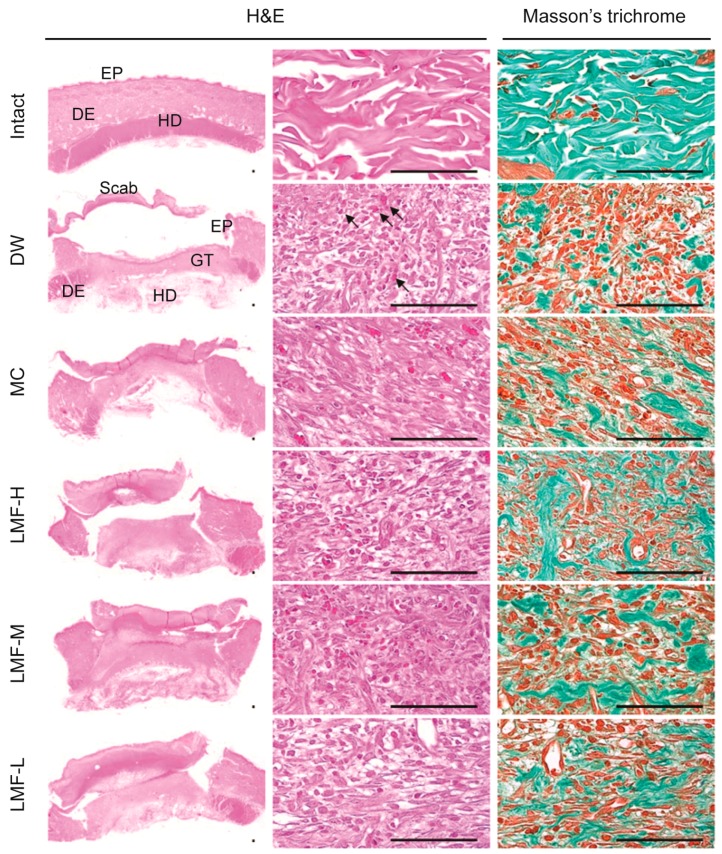
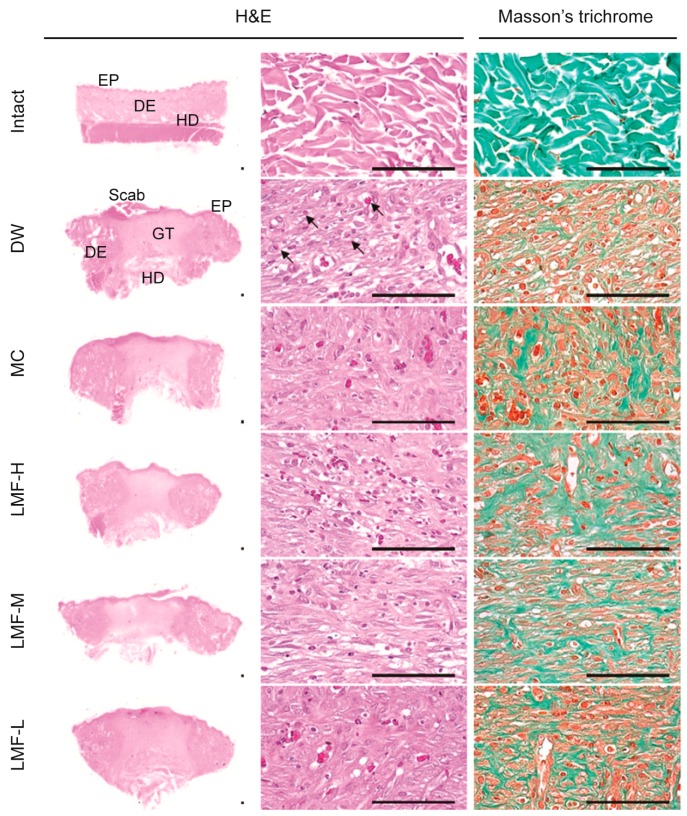
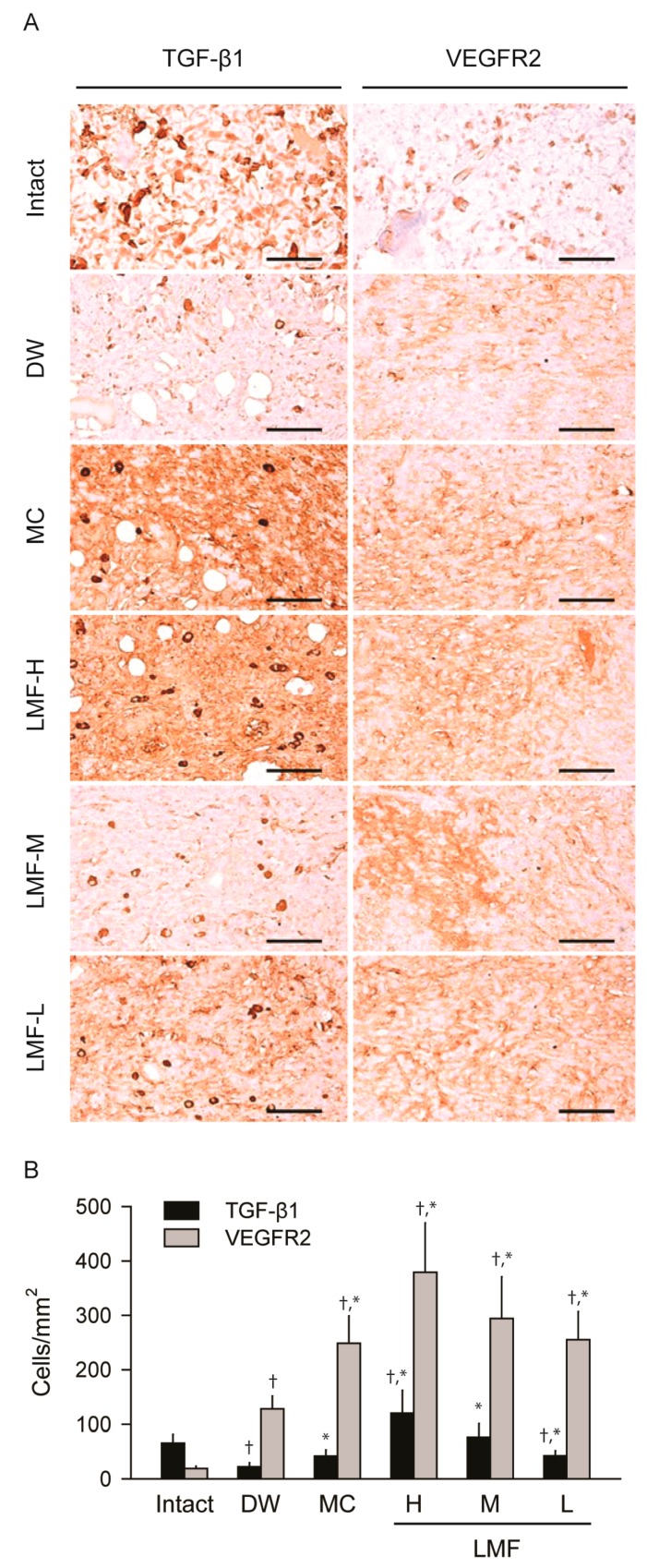
Low molecular weight fucoidan (LMF) has been reported to possess anti-inflammatory and antioxidant activities. Thus, we examined the effects of LMF extracted from on dermal wounds. Five round dermal wounds were created on the dorsal back of rats, and they were then treated topically with distilled water (DW), Madecasol Care™ (MC) or LMF at 200, 100 and 50 mg/mL, twice a day for a week. There were dose-dependent increases in wound contraction in the groups receiving LMF but not in the MC group, compared with the DW. Histopathological examination revealed that LMF treatment accelerated wound healing, which was supported by increases in granular tissue formation on day four post-treatment but a decrease on day seven, accompanied by an evident reduction in inflammatory cells. In the LMF-treated wounds, collagen distribution and angiogenesis were increased in the granular tissue on days four and seven post-treatment. Immunoreactive cells for transforming growth factor-β1, vascular endothelial growth factor receptor-2 or matrix metalloproteinases 9 were also increased, probably due to tissue remodeling. Furthermore, LMF treatment reduced lipid peroxidation and increased antioxidant activities. These suggested that LMF promotes dermal wound healing via complex and coordinated antioxidant, anti-inflammatory and growth factor-dependent activities.
据报道,低分子量岩藻依聚糖(LMF)具有抗炎和抗氧化活性。因此,我们研究了从[具体来源未提及]提取的LMF对皮肤伤口的影响。在大鼠背部创建五个圆形皮肤伤口,然后分别用蒸馏水(DW)、Madecasol Care™(MC)或浓度为200、100和50 mg/mL的LMF进行局部治疗,每天两次,持续一周。与DW组相比,接受LMF治疗的组伤口收缩呈剂量依赖性增加,而MC组则无此现象。组织病理学检查显示,LMF治疗加速了伤口愈合,治疗后第四天肉芽组织形成增加,而第七天减少,同时炎症细胞明显减少,这支持了上述结果。在LMF治疗的伤口中,治疗后第四天和第七天肉芽组织中的胶原蛋白分布和血管生成增加。转化生长因子-β1、血管内皮生长因子受体-2或基质金属蛋白酶9的免疫反应细胞也增加,这可能是由于组织重塑所致。此外,LMF治疗减少了脂质过氧化并增加了抗氧化活性。这些结果表明,LMF通过复杂且协调的抗氧化、抗炎和生长因子依赖性活动促进皮肤伤口愈合。