Centre for Reviews and Dissemination, University of York, York, UK.
York Trials Unit, University of York, York, UK.
BMJ Open. 2017 Apr 7;7(4):e013384. doi: 10.1136/bmjopen-2016-013384.
Social prescribing is a way of linking patients in primary care with sources of support within the community to help improve their health and well-being. Social prescribing programmes are being widely promoted and adopted in the UK National Health Service and so we conducted a systematic review to assess the evidence for their effectiveness.
SETTING/DATA SOURCES: Nine databases were searched from 2000 to January 2016 for studies conducted in the UK. Relevant reports and guidelines, websites and reference lists of retrieved articles were scanned to identify additional studies. All the searches were restricted to English language only.
Systematic reviews and any published evaluation of programmes where patient referral was made from a primary care setting to a link worker or facilitator of social prescribing were eligible for inclusion. Risk of bias for included studies was undertaken independently by two reviewers and a narrative synthesis was performed.
Primary outcomes of interest were any measures of health and well-being and/or usage of health services.
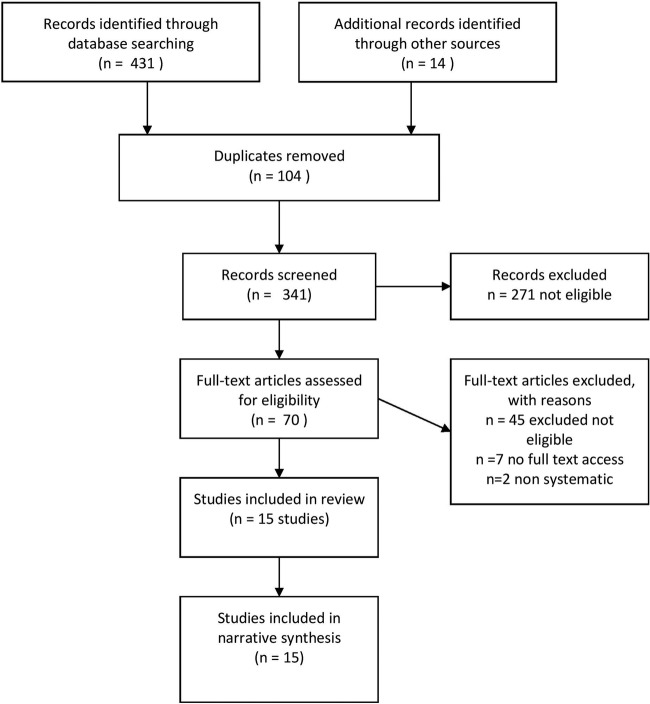
We included a total of 15 evaluations of social prescribing programmes. Most were small scale and limited by poor design and reporting. All were rated as a having a high risk of bias. Common design issues included a lack of comparative controls, short follow-up durations, a lack of standardised and validated measuring tools, missing data and a failure to consider potential confounding factors. Despite clear methodological shortcomings, most evaluations presented positive conclusions.
Social prescribing is being widely advocated and implemented but current evidence fails to provide sufficient detail to judge either success or value for money. If social prescribing is to realise its potential, future evaluations must be comparative by design and consider when, by whom, for whom, how well and at what cost.
PROSPERO Registration: CRD42015023501.
社会处方是将初级保健中的患者与社区内的支持资源联系起来的一种方式,以帮助改善他们的健康和福祉。社会处方计划在英国国民保健制度中得到广泛推广和采用,因此我们进行了系统评价,以评估其有效性的证据。
设定/数据来源:从 2000 年到 2016 年 1 月,在英国进行的研究中,搜索了 9 个数据库。扫描相关报告和指南、网站以及检索文章的参考文献列表,以确定其他研究。所有搜索均仅限于英文。
系统评价和任何对从初级保健环境向社会处方联络人或促进者转介患者的方案进行发表评估的研究都有资格入选。两名评审员独立进行了纳入研究的偏倚风险评估,并进行了叙述性综合。
主要结果为任何健康和福祉措施以及/或健康服务使用情况的措施。
我们共纳入了 15 项社会处方计划的评估。大多数研究规模较小,设计和报告质量较差。所有研究都被评为高偏倚风险。常见的设计问题包括缺乏对照、随访时间短、缺乏标准化和验证的测量工具、数据缺失以及未能考虑潜在的混杂因素。尽管存在明显的方法学缺陷,但大多数评估都得出了积极的结论。
社会处方正在得到广泛的倡导和实施,但目前的证据未能提供足够的细节来判断成功与否或物有所值。如果社会处方要发挥其潜力,未来的评估必须具有设计上的可比性,并考虑何时、由谁、为谁、效果如何以及成本如何。
PROSPERO 注册:CRD42015023501。