Colell Johannes F P, Logan Angus W J, Zhou Zijian, Shchepin Roman V, Barskiy Danila A, Ortiz Gerardo X, Wang Qiu, Malcolmson Steven J, Chekmenev Eduard Y, Warren Warren S, Theis Thomas
Department of Chemistry, Duke University , Durham, North Carolina 27708, United States.
Vanderbilt University Institute of Imaging Science (VUIIS), Department of Radiology, Department of Biomedical Engineering, Vanderbilt Ingram Cancer Center (VICC), Vanderbilt University , Nashville, Tennessee 37232, United States.
J Phys Chem C Nanomater Interfaces. 2017 Mar 30;121(12):6626-6634. doi: 10.1021/acs.jpcc.6b12097. Epub 2017 Feb 2.
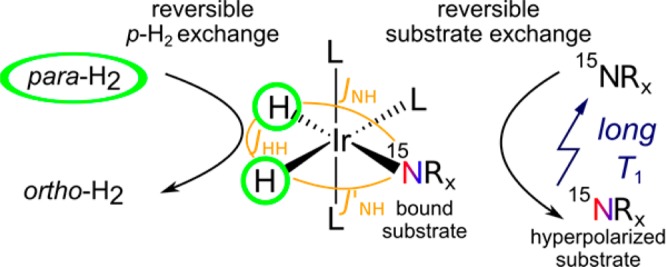
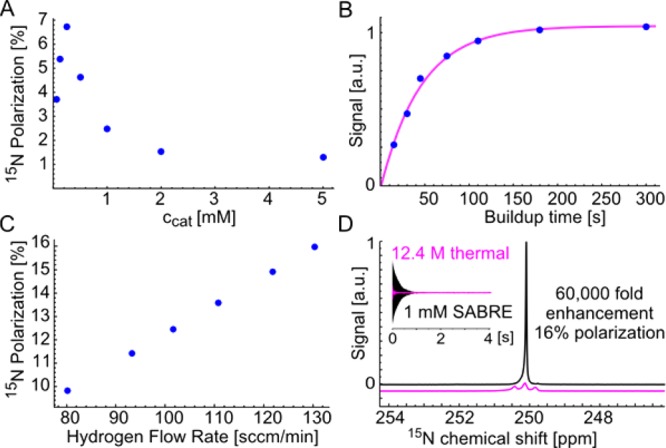
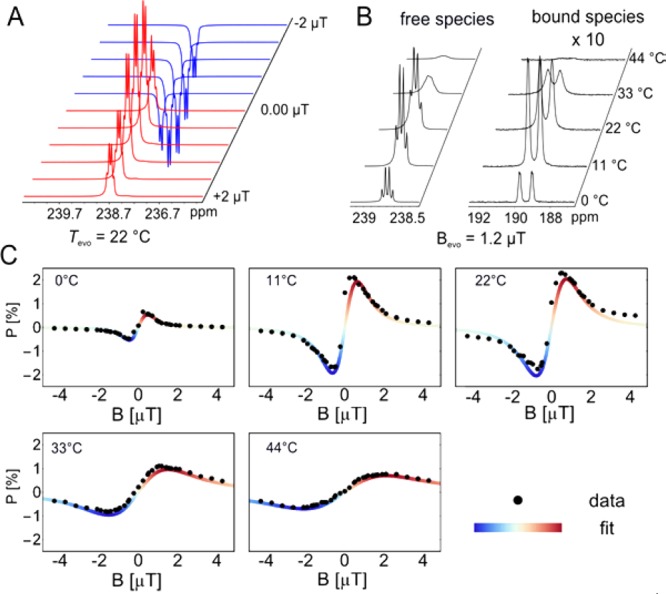
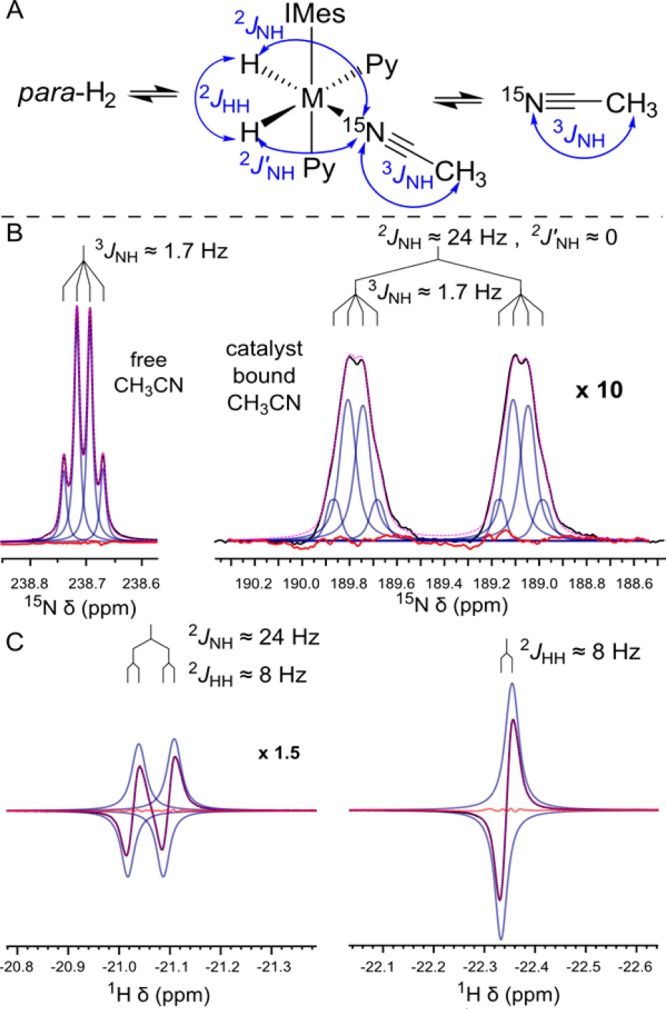
Signal Amplification by Reversible Exchange (SABRE) is a fast and convenient NMR hyperpolarization method that uses cheap and readily available -hydrogen as a hyperpolarization source. SABRE can hyperpolarize protons and heteronuclei. Here we focus on the heteronuclear variant introduced as SABRE-SHEATH (SABRE in SHield Enables Alignment Transfer to Heteronuclei) and nitrogen-15 targets in particular. We show that N-SABRE works more efficiently and on a wider range of substrates than H-SABRE, greatly generalizing the SABRE approach. In addition, we show that nitrogen-15 offers significantly extended times of up to 12 minutes. Long times enable higher hyperpolarization levels but also hold the promise of hyperpolarized molecular imaging for several tens of minutes. Detailed characterization and optimization are presented, leading to nitrogen-15 polarization levels in excess of 10% on several compounds.
可逆交换信号放大(SABRE)是一种快速便捷的核磁共振超极化方法,它使用廉价且易于获取的氢作为超极化源。SABRE可以使质子和异核超极化。在这里,我们重点关注作为SABRE-SHEATH(屏蔽中的SABRE能够将取向转移到异核)引入的异核变体,特别是针对氮-15目标。我们表明,N-SABRE比H-SABRE工作效率更高,适用的底物范围更广,极大地推广了SABRE方法。此外,我们表明氮-15的弛豫时间显著延长,可达12分钟。长弛豫时间能够实现更高的超极化水平,同时也为数十分钟的超极化分子成像带来了希望。本文给出了详细的表征和优化,使得几种化合物的氮-15极化水平超过10%。