Mohabbati Mobarez Ashraf, Bagheri Amiri Fahimeh, Esmaeili Saber
Department of Bacteriology, Faculty of Medical Sciences, Tarbiat Modares University, Tehran, Iran.
Department of Epidemiology, Faculty of Veterinary Medicine, University of Tehran, Tehran, Iran.
PLoS Negl Trop Dis. 2017 Apr 10;11(4):e0005521. doi: 10.1371/journal.pntd.0005521. eCollection 2017 Apr.
Q fever is a main zoonotic disease around the world. The aim of this meta-analysis was to estimate the overall seroprevalence of Coxiella burnetii among human and animal population in Iran.
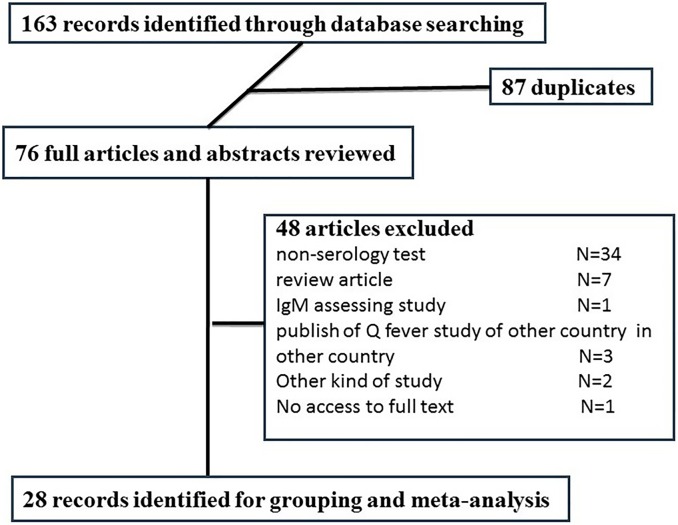
Major national and international databases were searched from 2005 up to August 2016. We extracted the prevalence of Q fever antibodies (IgG) as the main primary outcome. We reported the prevalence of the seropositivity as point and 95% confidence intervals.
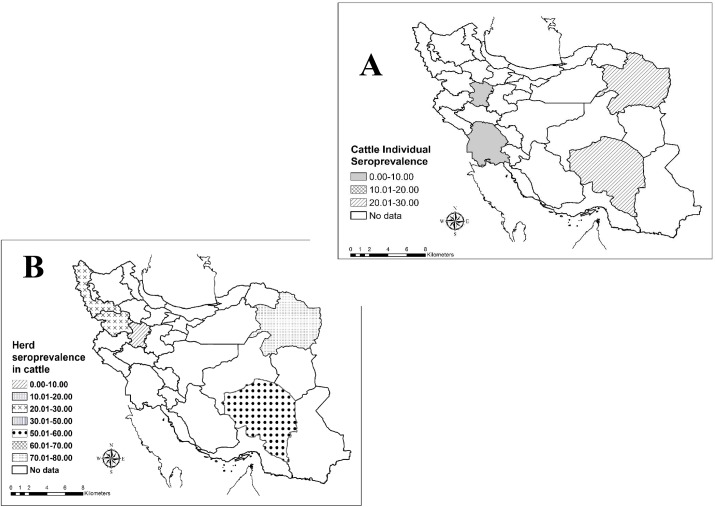
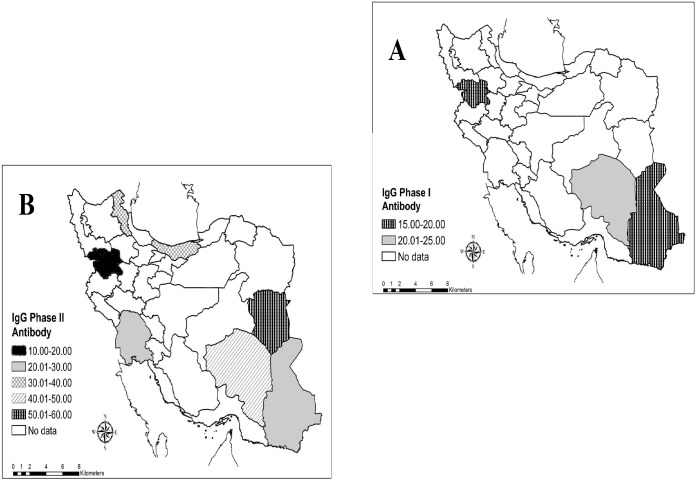
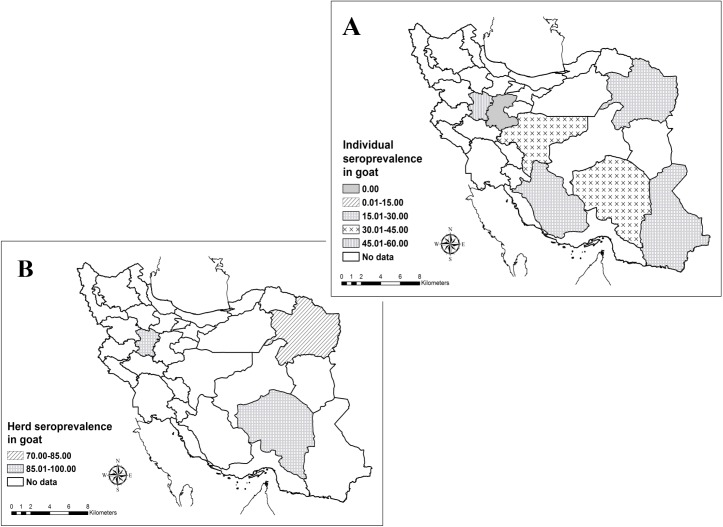
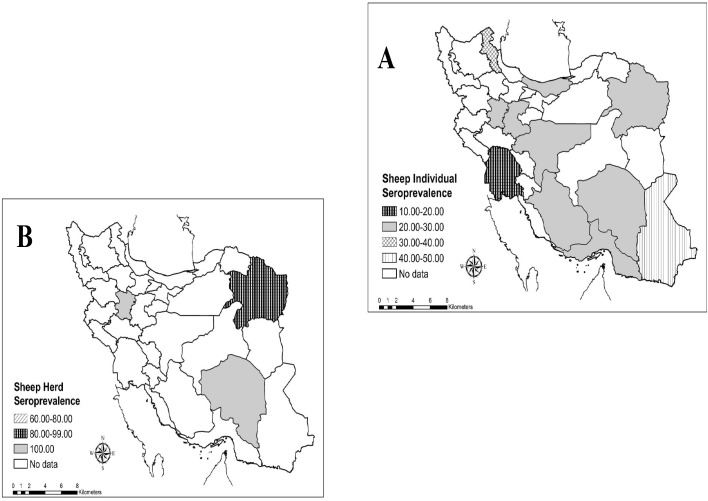
The overall seroprevalence of IgG phase I and II antibodies of Q fever in human was 19.80% (95% CI: 16.35-23.25%) and 32.86% (95% CI: 23.80-41.92%), respectively. The herd and individual prevalence of C. burnetii antibody in goat were 93.42% (95% CI: 80.23-100.00) and 31.97% (95% CI: 20.96-42.98%), respectively. The herd and individual prevalence of Q fever antibody in sheep's were 96.07% (95% CI: 89.11-100.00%) and 24.66% (95% CI: 19.81-29.51%), respectively. The herd and individual prevalence of C. burnetii antibody in cattle were 41.37% (95% CI: 17.88-64.86%) and 13.30% (95% CI: 2.98-23.62%), respectively. Individual seropositivity of Q fever in camel and dog were 28.26% (95% CI: 21.47-35.05) and 0.55% (0.03-2.68), respectively.
Seroprevalence of Q fever among human and domestic animals is considerable. Preventative planning and control of C. burnetii infections in Iran is necessary. Active surveillance and further research studies are recommended, to more clearly define the epidemiology and importance of C. burnetii infections in animals and people in Iran.
Q热是一种全球主要的人畜共患病。本荟萃分析的目的是估计伊朗人和动物群体中伯氏考克斯体的总体血清阳性率。
检索了2005年至2016年8月期间主要的国内和国际数据库。我们提取了Q热抗体(IgG)的阳性率作为主要的主要结局。我们将血清阳性率报告为点估计值和95%置信区间。
人类Q热I期和II期IgG抗体的总体血清阳性率分别为19.80%(95%CI:16.35 - 23.25%)和32.86%(95%CI:23.80 - 41.92%)。山羊中伯氏考克斯体抗体的群体和个体阳性率分别为93.42%(95%CI:80.23 - 100.00)和31.97%(95%CI:20.96 - 42.98%)。绵羊中Q热抗体的群体和个体阳性率分别为96.07%(95%CI:89.11 - 100.00%)和24.66%(95%CI:19.81 - 29.51%)。牛中伯氏考克斯体抗体的群体和个体阳性率分别为41.37%(95%CI:17.88 - 64.86%)和13.30%(95%CI:2.98 - 23.62%)。骆驼和狗中Q热的个体血清阳性率分别为28.26%(95%CI:21.47 - 35.05)和0.55%(0.03 - 2.68)。
人类和家畜中Q热的血清阳性率相当可观。伊朗有必要制定预防计划并控制伯氏考克斯体感染。建议进行主动监测和进一步的研究,以更清楚地界定伊朗动物和人群中伯氏考克斯体感染的流行病学和重要性。