Yum Mun Jeong, Koppula Sushruta, Kim Jin Seoub, Shin Gwang Mo, Chae Yun Jin, Yoon Tony, Chun Chi Su, Lee Jae Dong, Song MinDong
a Department of Applied Life Science , Graduate School of Konkuk University , Chungju-si , Chungcheongbuk-do , South Korea.
b R&D center Korean Drug Co., Ltd , Seoul , South Korea.
Pharm Biol. 2017 Dec;55(1):1577-1585. doi: 10.1080/13880209.2017.1311928.
Ampelopsis brevipedunculata Maxim (Vitaceae) is a traditional medicinal herb used for treating liver disorders.
The hepatoprotective effects of A. brevipedunculata ethanol extract (ABE) was investigated in experimental models of fibrosis.
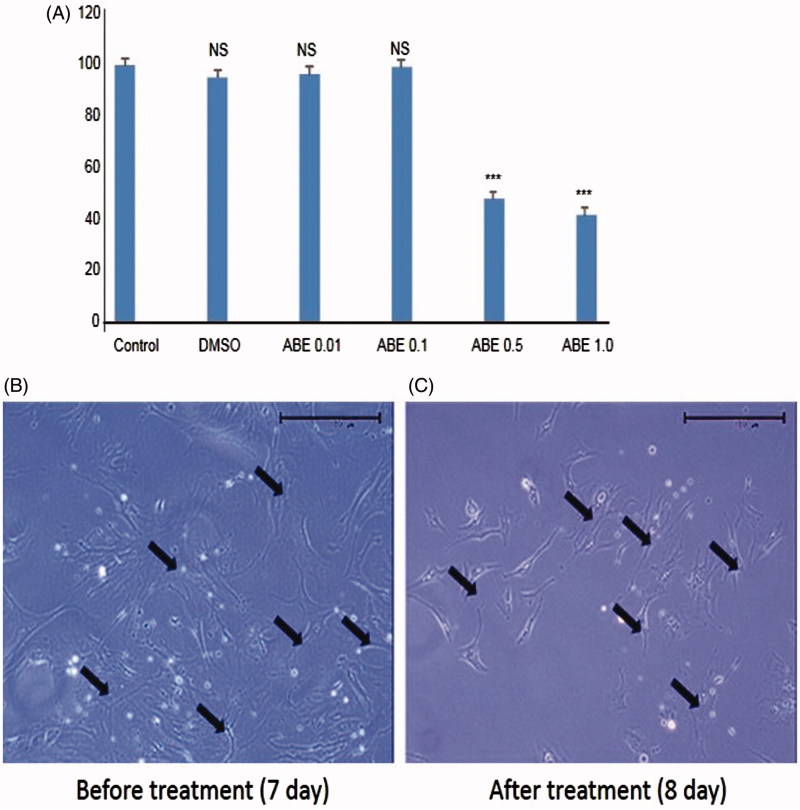
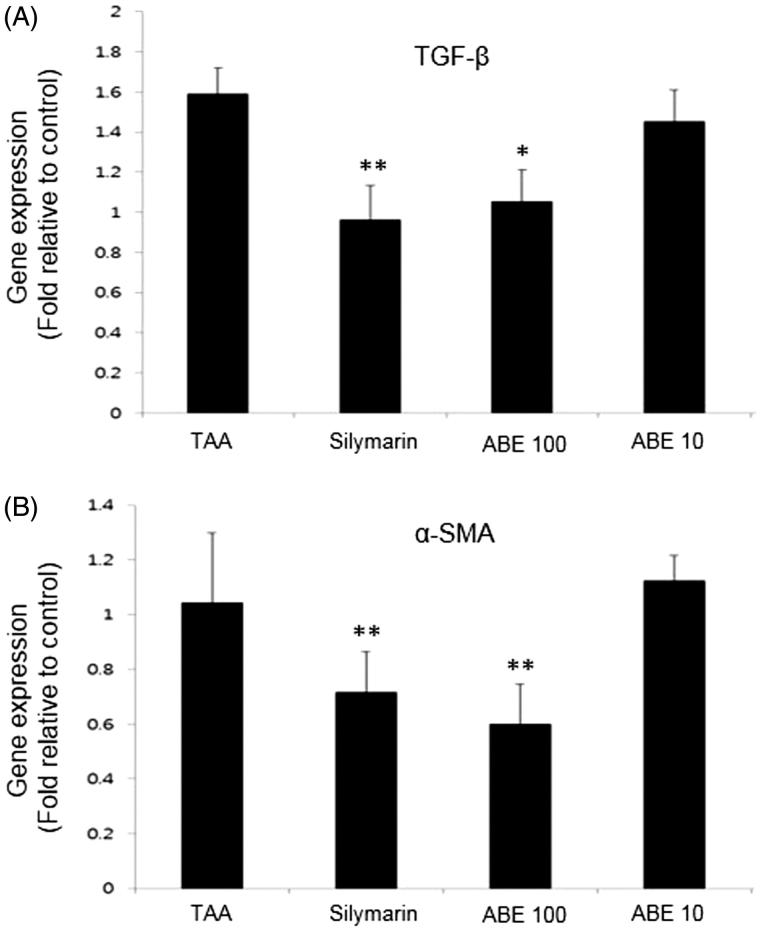
Hepatic stellate cells (HSCs) system in vitro and thioacetamide (TAA)-induced liver fibrosis rat model in vivo were used. Sprague-Dawley rats were divided into five groups of eight each (control, TAA, TAA with ABE 10 mg/kg, ABE 100 mg/kg and silymarin 50 mg/kg groups, respectively). Fibrosis was induced except to the control group by TAA (200 mg/kg, i.p.) twice per week for 13 weeks. ABE and silymarin was administered orally six times per week from the 7th week to the 13th week.
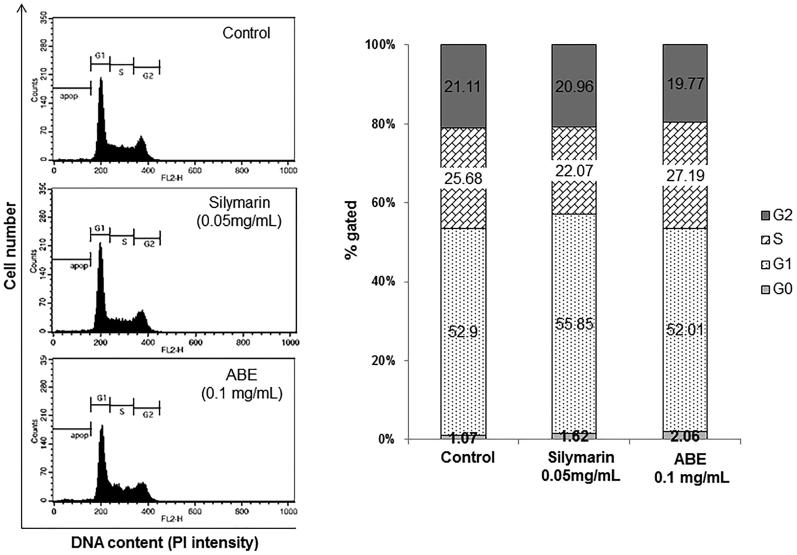
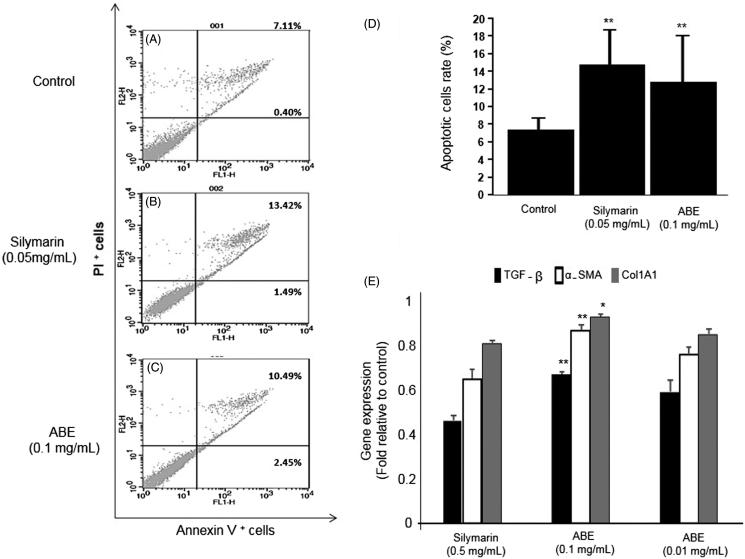
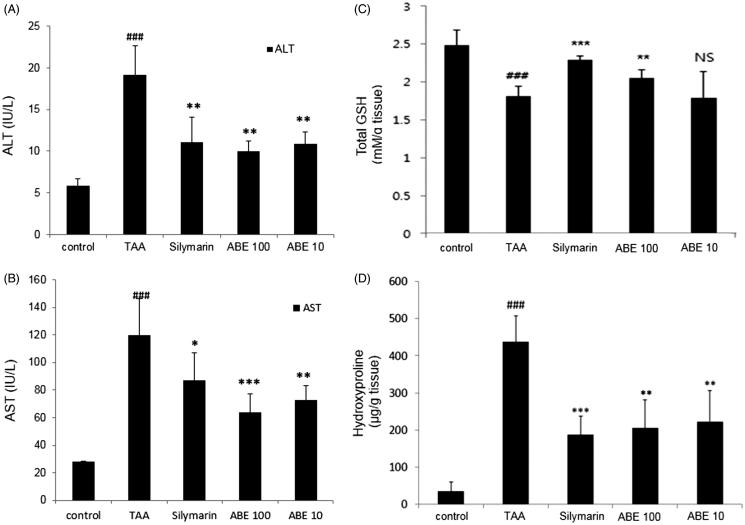
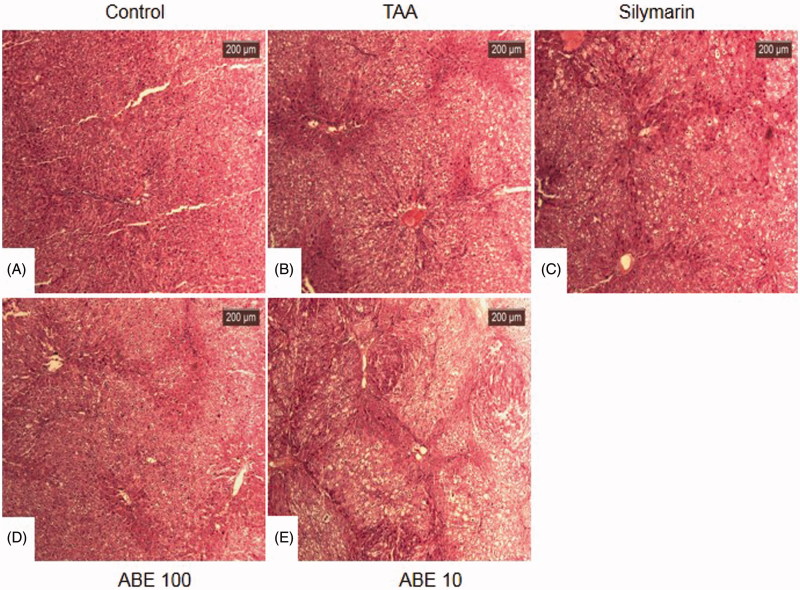
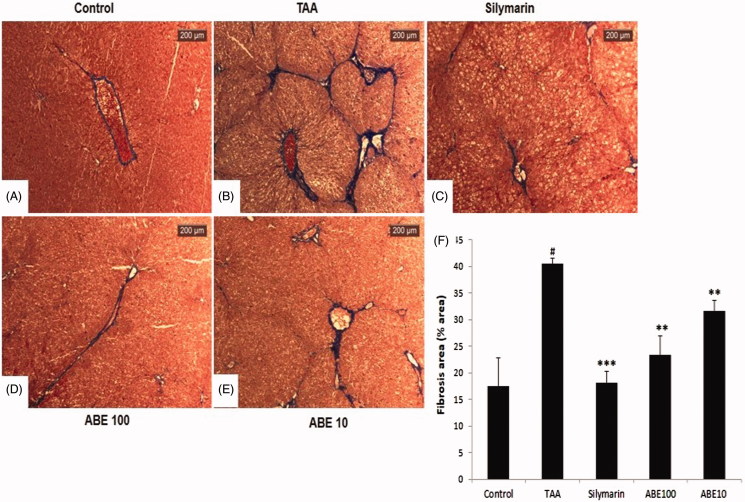
In HSC-T6 cells, ABE (0.1 mg/mL) and silymarin (0.05 mg/mL) significantly (p < 0.01) induced apoptosis (12.94 ± 5.72% and 14.9 ± 3.8%, respectively) compared with control group (7.51 ± 1.26%). The expression of fibrosis related genes (TGF-β, α-SMA and Col1A1) in HSC-T6 cells were significantly (p < 0.01) downregulated in ABE-treated groups compared with control group. In in vivo studies, ABE (10 and 100 mg/kg) treatment ameliorated the altered levels of serum biomarkers significantly (p < 0.01 and p < 0.001) in TAA-induced groups. Further, ABE (10 and 100 mg/kg) significantly (p < 0.01) attenuated the altered histopathological findings, glutathione content and the accumulation of hydroxyproline.
These results collectively indicate that ABE can potentially be developed as a therapeutic agent in the treatment of hepatic fibrosis.
短梗蛇葡萄(葡萄科)是一种用于治疗肝脏疾病的传统草药。
在纤维化实验模型中研究短梗蛇葡萄乙醇提取物(ABE)的肝保护作用。
采用体外肝星状细胞(HSCs)系统和体内硫代乙酰胺(TAA)诱导的肝纤维化大鼠模型。将Sprague-Dawley大鼠分为五组,每组八只(分别为对照组、TAA组、TAA+ABE 10mg/kg组、ABE 100mg/kg组和水飞蓟宾50mg/kg组)。除对照组外,每周两次腹腔注射TAA(200mg/kg),持续13周以诱导纤维化。从第7周开始至第13周,每周口服ABE和水飞蓟宾6次。
在HSC-T6细胞中,与对照组(7.51±1.26%)相比,ABE(0.1mg/mL)和水飞蓟宾(0.05mg/mL)显著(p<0.01)诱导细胞凋亡(分别为12.94±5.72%和14.9±3.8%)。与对照组相比,ABE处理组HSC-T6细胞中纤维化相关基因(TGF-β、α-SMA和Col1A1)的表达显著(p<0.01)下调。在体内研究中,ABE(10和100mg/kg)处理显著(p<0.01和p<0.001)改善了TAA诱导组血清生物标志物水平的改变。此外,ABE(10和100mg/kg)显著(p<0.01)减轻了组织病理学改变、谷胱甘肽含量和羟脯氨酸的积累。
这些结果共同表明,ABE有可能开发成为治疗肝纤维化的治疗剂。