Ma Sai, Murphy Travis W, Lu Chang
Department of Biomedical Engineering and Mechanics, Virginia Tech , Blacksburg, Virginia 24061, USA.
Department of Chemical Engineering, Virginia Tech , Blacksburg, Virginia 24061, USA.
Biomicrofluidics. 2017 Mar 10;11(2):021501. doi: 10.1063/1.4978426. eCollection 2017 Mar.
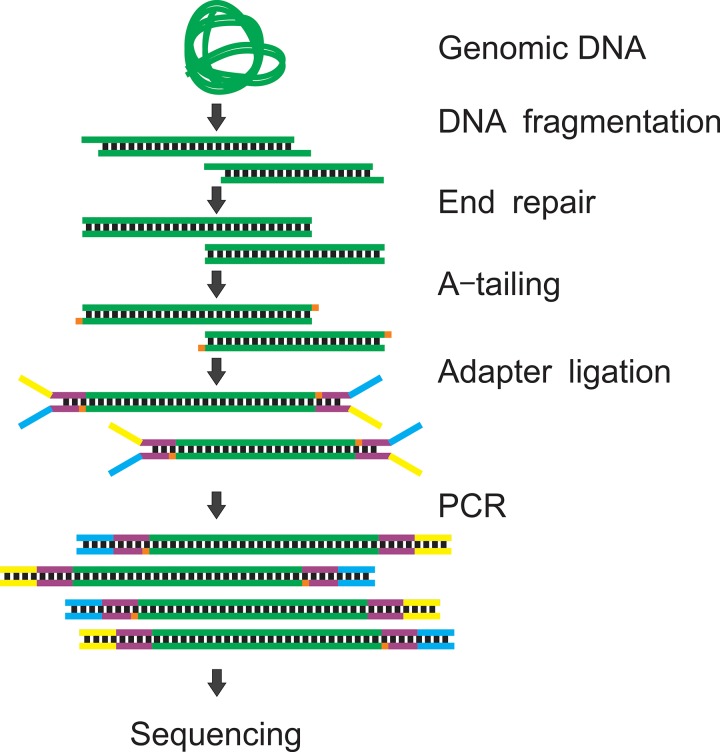
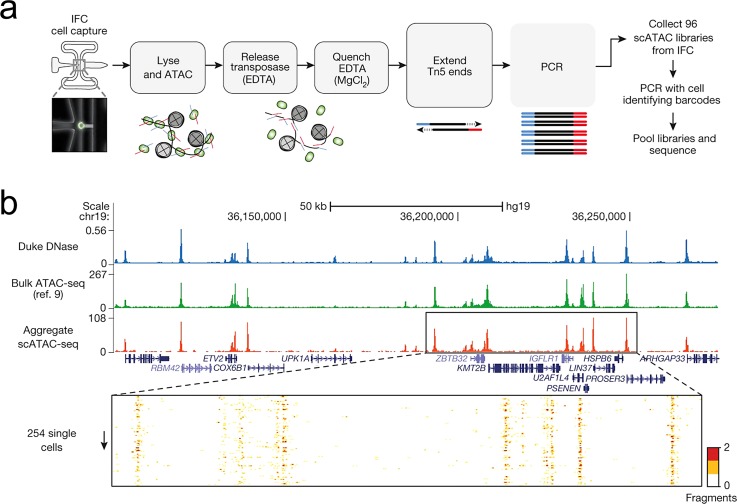
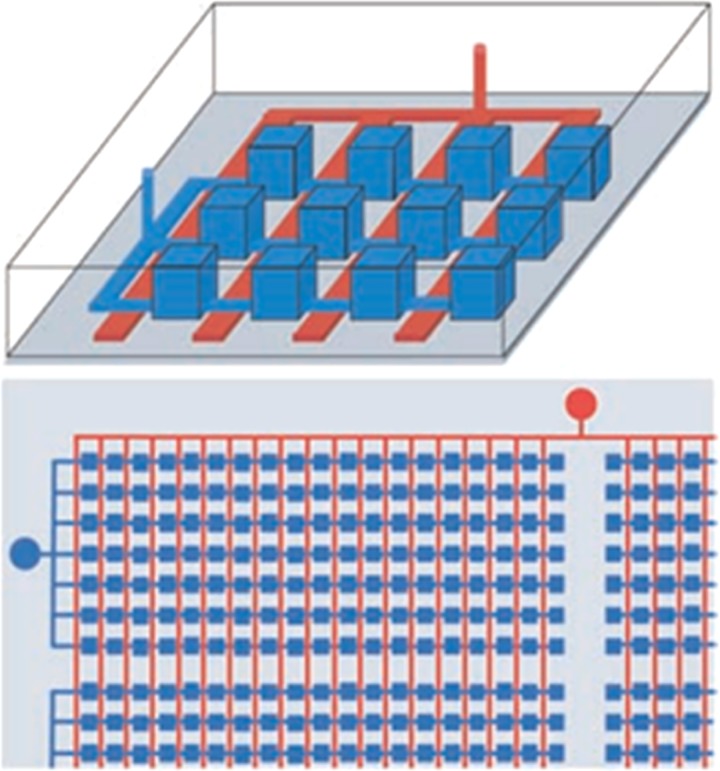
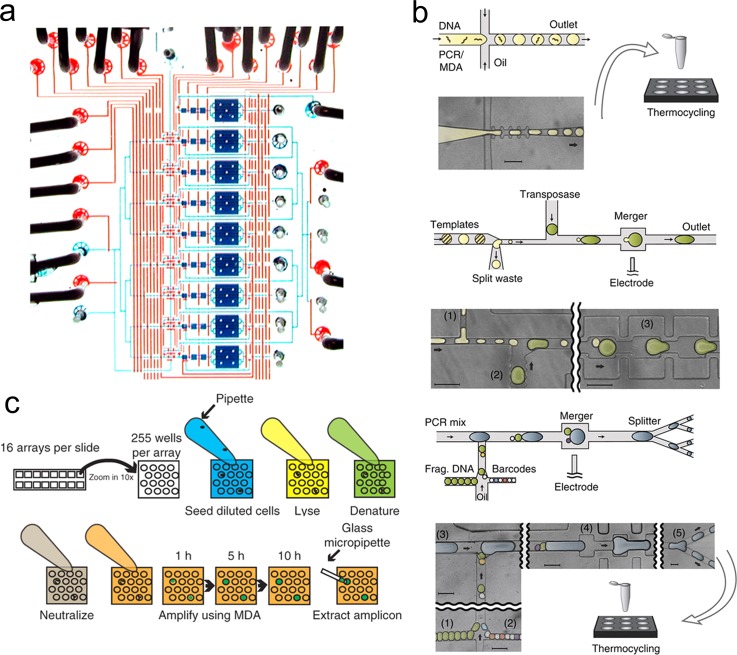
Next-generation sequencing (NGS) has revolutionized how molecular biology studies are conducted. Its decreasing cost and increasing throughput permit profiling of genomic, transcriptomic, and epigenomic features for a wide range of applications. Microfluidics has been proven to be highly complementary to NGS technology with its unique capabilities for handling small volumes of samples and providing platforms for automation, integration, and multiplexing. In this article, we review recent progress on applying microfluidics to facilitate genome-wide studies. We emphasize on several technical aspects of NGS and how they benefit from coupling with microfluidic technology. We also summarize recent efforts on developing microfluidic technology for genomic, transcriptomic, and epigenomic studies, with emphasis on single cell analysis. We envision rapid growth in these directions, driven by the needs for testing scarce primary cell samples from patients in the context of precision medicine.
新一代测序(NGS)彻底改变了分子生物学研究的开展方式。其成本的降低和通量的增加使得能够对多种应用的基因组、转录组和表观基因组特征进行分析。微流控技术凭借其处理少量样品以及提供自动化、集成化和多重化平台的独特能力,已被证明与NGS技术具有高度互补性。在本文中,我们回顾了将微流控技术应用于促进全基因组研究的最新进展。我们着重介绍了NGS的几个技术方面以及它们如何从与微流控技术的结合中受益。我们还总结了近期在开发用于基因组、转录组和表观基因组研究的微流控技术方面所做的努力,重点是单细胞分析。我们预计,在精准医学背景下对患者稀缺原代细胞样本进行检测的需求将推动这些方向的快速发展。