Müller Heinz-Dieter, Eick Sigrun, Moritz Andreas, Lussi Adrian, Gruber Reinhard
Department of Preventive, Restorative and Pediatric Dentistry, School of Dental Medicine, University of Bern, Bern, Switzerland; Department of Oral Biology, Medical University of Vienna, Vienna, Austria.
Department of Periodontology, School of Dental Medicine, University of Bern, Bern, Switzerland.
Biomed Res Int. 2017;2017:4019723. doi: 10.1155/2017/4019723. Epub 2017 Mar 19.
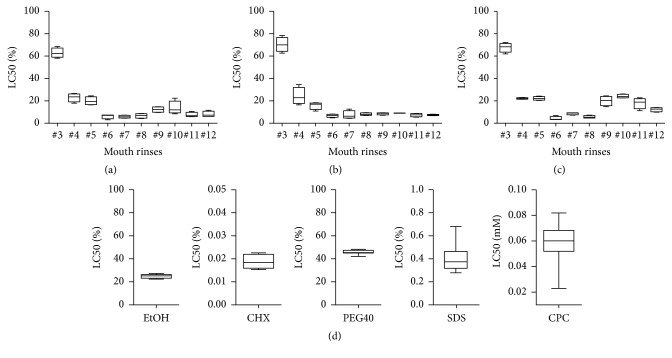
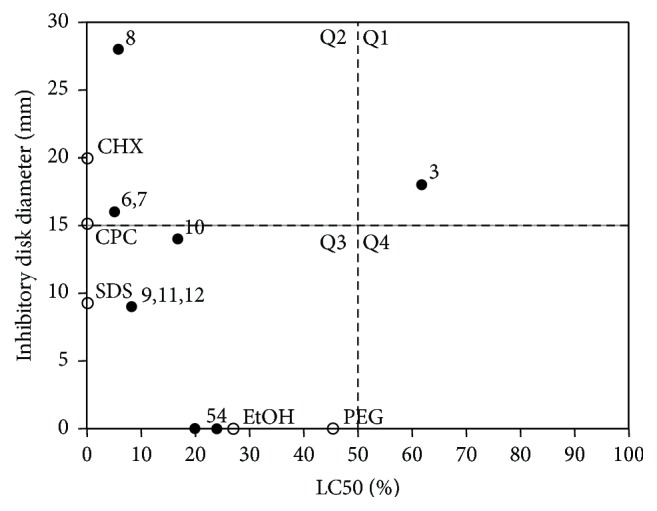
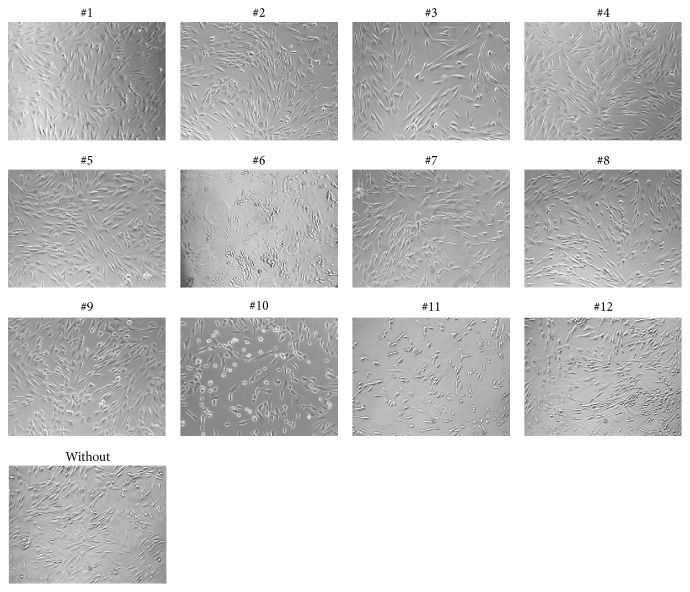
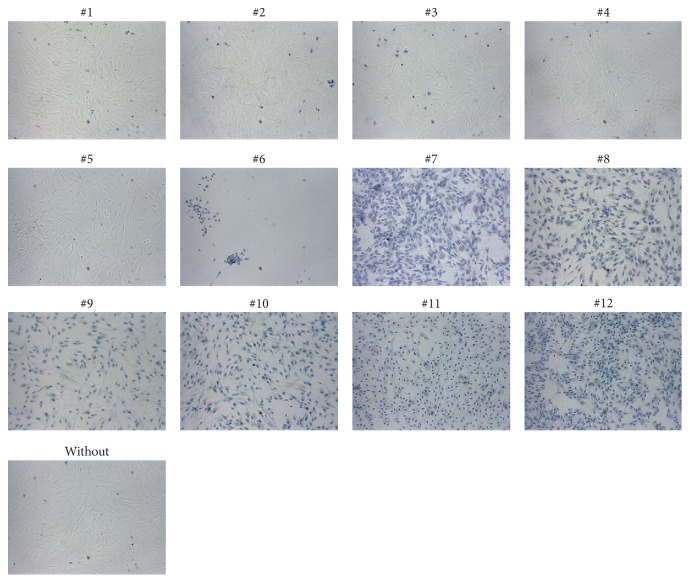
While oral rinses used for cosmetic purposes only do not necessarily have to be antiseptic, antimicrobial activity is required for medical indications, including oral and periodontal surgery. So the question arises-is the antimicrobial activity of oral rinses associated with any destructive changes in cell viability in vitro? To answer this question, we examined twelve oral rinses with respect to their antimicrobial and cytotoxic activity. Antimicrobial activity was screened against five bacterial strains using disc diffusion. Cytotoxicity was determined by mitochondrial reductase activity with primary gingival fibroblasts, L929 cells, and HSC-2 epithelial cells. Phase contrast microscopy and trypan blue staining were then performed to reveal cell morphology. Cells remained vital after exposure to oral rinses that were only used for cosmetic purposes. Moderate cytotoxic effects were observed for oral rinses containing 0.05% chlorhexidine, ethanol, or pegylated hydrogenated castor oil and sodium dodecyl sulfate. Other oral rinses containing 0.2% chlorhexidine and cocamidopropyl betaine exhibited strong cytotoxic and antimicrobial activity. Strong cytotoxic but moderate antimicrobial activity was observed in oral rinses containing cetylpyridinium chloride. The in vitro data show that oral rinses are heterogeneous with respect to their cytotoxic and antimicrobial effects. Based on their respective properties, oral rinses can be selected either to reduce the microbial load or for cosmetic purposes.
仅用于美容目的的口腔含漱液不一定必须具有抗菌性,但对于包括口腔和牙周手术在内的医学适应症,则需要有抗菌活性。于是问题来了——口腔含漱液的抗菌活性与体外细胞活力的任何破坏性变化有关吗?为了回答这个问题,我们检测了十二种口腔含漱液的抗菌和细胞毒性活性。使用纸片扩散法针对五种细菌菌株筛选抗菌活性。通过原代牙龈成纤维细胞、L929细胞和HSC-2上皮细胞的线粒体还原酶活性来测定细胞毒性。然后进行相差显微镜检查和台盼蓝染色以揭示细胞形态。暴露于仅用于美容目的的口腔含漱液后,细胞仍保持活力。对于含有0.05%氯己定、乙醇、聚乙二醇化氢化蓖麻油和十二烷基硫酸钠的口腔含漱液,观察到中度细胞毒性作用。其他含有0.2%氯己定和椰油酰胺丙基甜菜碱的口腔含漱液表现出强烈的细胞毒性和抗菌活性。在含有西吡氯铵的口腔含漱液中观察到强烈的细胞毒性但中度的抗菌活性。体外数据表明,口腔含漱液在细胞毒性和抗菌作用方面具有异质性。根据其各自的特性,可以选择口腔含漱液来减少微生物负荷或用于美容目的。