Hamdoun Sami, Efferth Thomas
Department of Pharmaceutical Biology, Institute of Pharmacy and Biochemistry, Johannes Gutenberg University, Mainz, Germany.
Oncotarget. 2017 May 23;8(21):35103-35115. doi: 10.18632/oncotarget.16626.
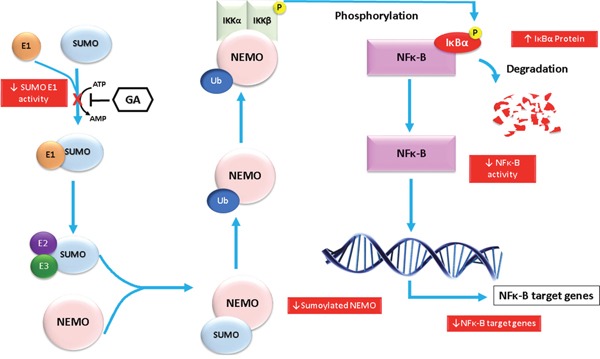
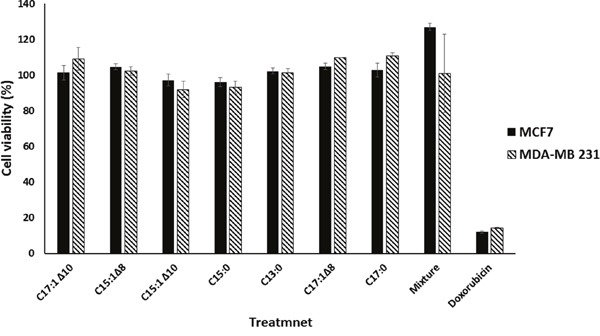
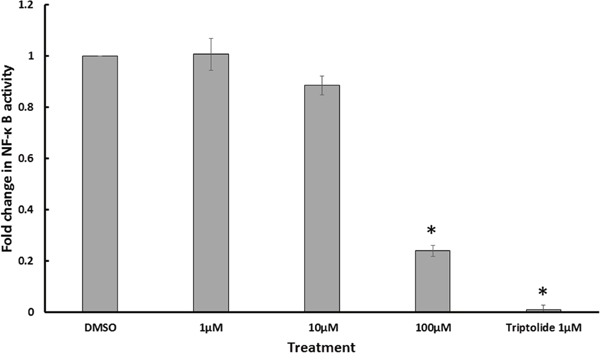
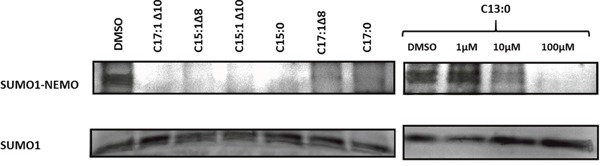
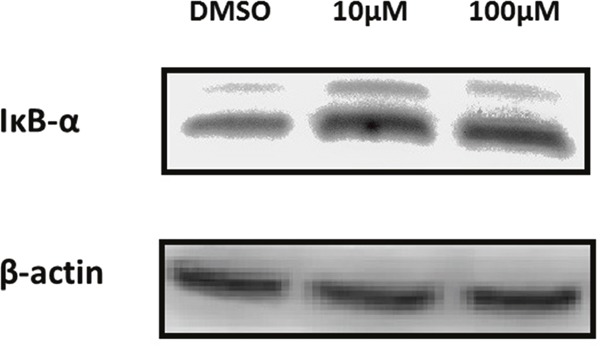
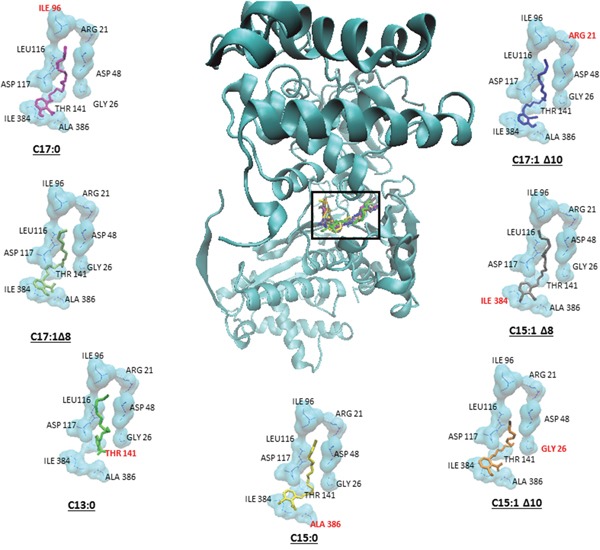
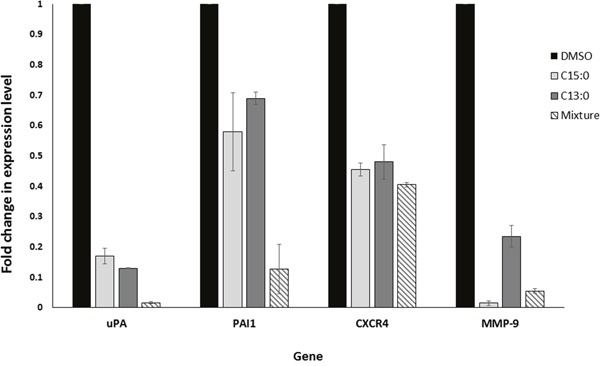
Ginkgolic acids (GA), a group of alkyl phenols found in crude extracts of Ginkgo biloba leaves, are known to have anticancer activity, but their mode of action is not well understood. Our aim in this study was to investigate the anti-migratory activity of seven GA against breast cancer cells and to determine the molecular mechanism behind this activity. All seven GA and their mixture inhibited wound healing in MCF-7 and MDA-MB 231 breast cancer cells. None of the compounds nor the mixture showed cytotoxicity towards the two cell lines, if tested by the resazurin assay. C13:0 inhibited NF-κB activity in the HEK Blue Null 1 reporter cell line. Furthermore, C13:0 inhibited degradation of nuclear factor of κ-light polypeptide gene enhancer in B-cells inhibitor α (IκBα). Sumoylation assay revealed that GA inhibited sumoylation of NF-κB essential modulator (NEMO). Molecular docking on SUMO-activating enzyme E1 showed that the seven GA bound to the active adenylation site with high calculated affinities ranging from -10.28 to -12.27 kcal/mol. Quantitative RT-PCR using C15:0, C13:0 and the mixture showed a significant down-regulation of urokinase plasminogen activator (uPA), plasminogen activator inhibitor-1 (PAI-1), C-X-C chemokine receptor type 4 (CXCR4) and matrix metalloproteinase 9 (MMP-9). We conclude that GA revealed considerable anti-migratory activity at non-cytotoxic concentrations, indicating anti-metastatic activity with low toxicity. This effect can be explained by the inhibition of NEMO sumoylation leading to inhibition of IκBα degradation and consequently a reduction of NF-κB activity, leading to the down-regulation of metastasis related genes including uPA, PAI-1, CXCR4, and MMP-9.
银杏酸(GA)是在银杏叶粗提物中发现的一组烷基酚,已知具有抗癌活性,但其作用方式尚不完全清楚。本研究的目的是研究七种GA对乳腺癌细胞的抗迁移活性,并确定这种活性背后的分子机制。所有七种GA及其混合物均抑制MCF-7和MDA-MB 231乳腺癌细胞的伤口愈合。如果通过刃天青测定法进行测试,这些化合物及其混合物均未对这两种细胞系显示出细胞毒性。C13:0抑制HEK Blue Null 1报告细胞系中的NF-κB活性。此外,C13:0抑制B细胞κ轻链多肽基因增强子抑制剂α(IκBα)中核因子的降解。SUMO化分析表明,GA抑制NF-κB必需调节剂(NEMO)的SUMO化。对SUMO激活酶E1的分子对接显示,七种GA以-10.28至-12.27 kcal/mol的高计算亲和力与活性腺苷化位点结合。使用C15:0、C13:0及其混合物进行的定量RT-PCR显示,尿激酶型纤溶酶原激活剂(uPA)、纤溶酶原激活剂抑制剂-1(PAI-1)、C-X-C趋化因子受体4(CXCR4)和基质金属蛋白酶9(MMP-9)显著下调。我们得出结论,GA在非细胞毒性浓度下显示出相当大的抗迁移活性,表明具有低毒性的抗转移活性。这种作用可以通过抑制NEMO SUMO化来解释,导致IκBα降解受到抑制,从而降低NF-κB活性,导致包括uPA、PAI-1、CXCR4和MMP-9在内的转移相关基因下调。