Godinho Cláudia P, Mira Nuno P, Cabrito Tânia R, Teixeira Miguel C, Alasoo Kaur, Guerreiro Joana F, Sá-Correia Isabel
Institute for Bioengineering and Biosciences (iBB), Department of Bioengineering, Instituto Superior Técnico, Universidade de Lisboa, Avenida Rovisco Pais, 1049-001, Lisbon, Portugal.
Appl Microbiol Biotechnol. 2017 Jun;101(12):5005-5018. doi: 10.1007/s00253-017-8277-6. Epub 2017 Apr 13.
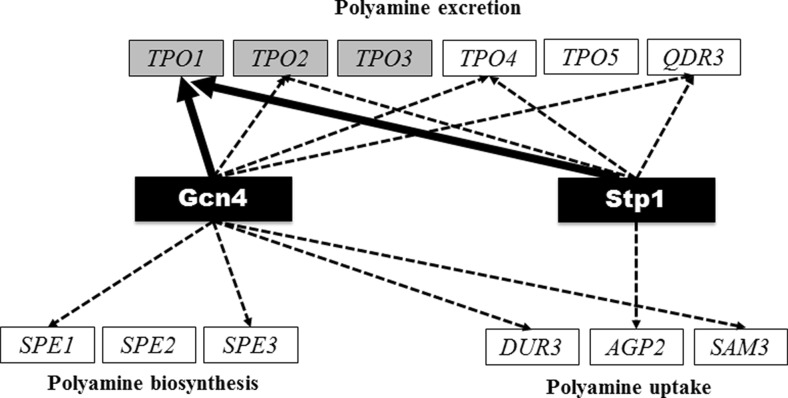
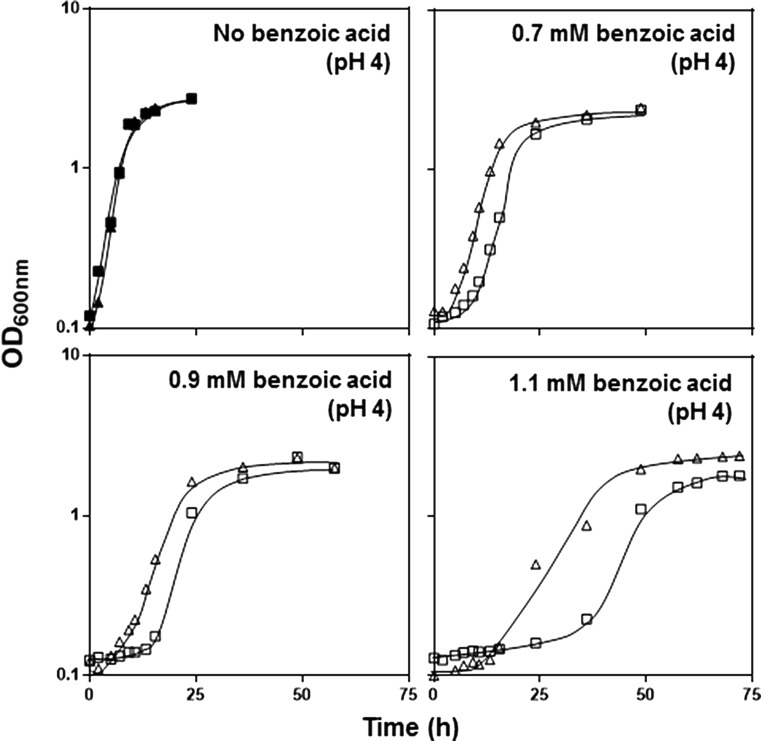
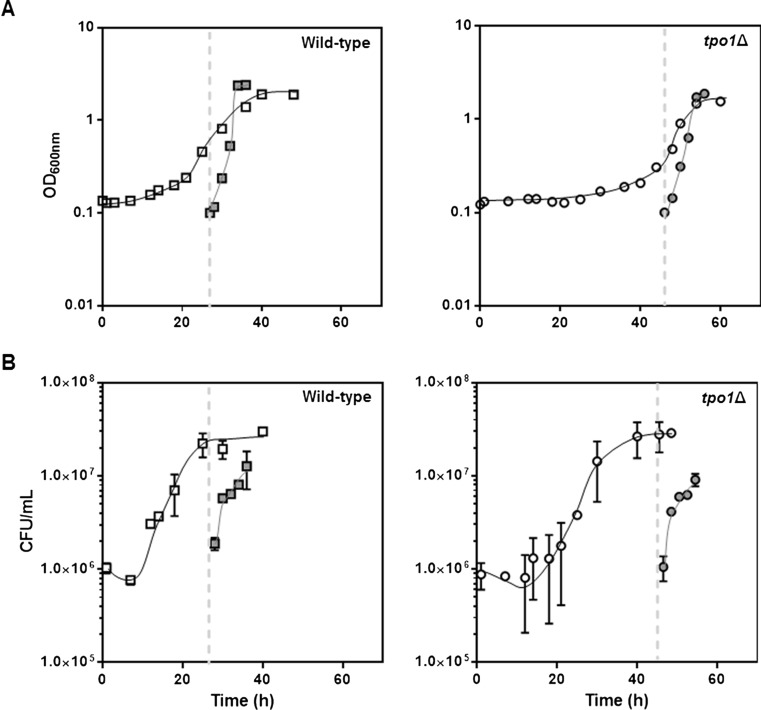
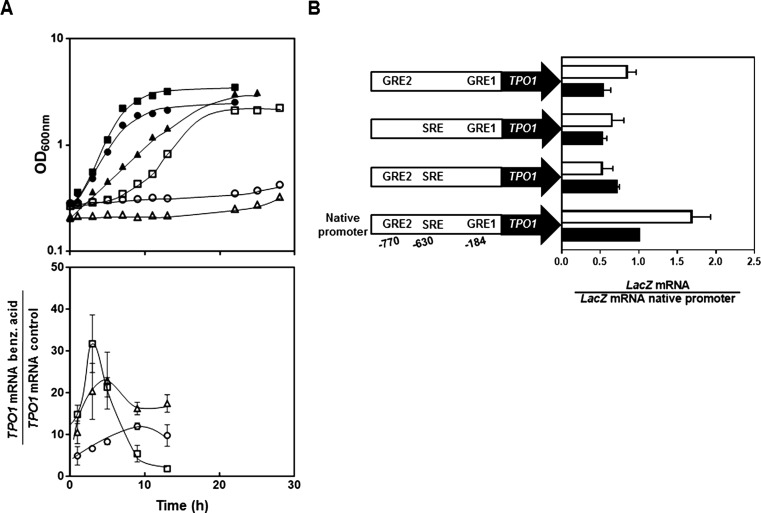
The action of benzoic acid in the food and beverage industries is compromised by the ability of spoilage yeasts to cope with this food preservative. Benzoic acid occurs naturally in many plants and is an intermediate compound in the biosynthesis of many secondary metabolites. The understanding of the mechanisms underlying the response and resistance to benzoic acid stress in the eukaryotic model yeast is thus crucial to design more suitable strategies to deal with this toxic lipophilic weak acid. In this study, the Saccharomyces cerevisiae multidrug transporter Tpo1 was demonstrated to confer resistance to benzoic acid. TPO1 transcript levels were shown to be up-regulated in yeast cells suddenly exposed to this stress agent. This up-regulation is under the control of the Gcn4 and Stp1 transcription factors, involved in the response to amino acid availability, but not under the regulation of the multidrug resistance transcription factors Pdr1 and Pdr3 that have binding sites in TPO1 promoter region. Benzoic acid stress was further shown to affect the intracellular pool of amino acids and polyamines. The observed decrease in the concentration of these nitrogenous compounds, registered upon benzoic acid stress exposure, was not found to be dependent on Tpo1, although the limitation of yeast cells on nitrogenous compounds was found to activate Tpo1 expression. Altogether, the results described in this study suggest that Tpo1 is one of the key players standing in the crossroad between benzoic acid stress response and tolerance and the control of the intracellular concentration of nitrogenous compounds. Also, results can be useful to guide the design of more efficient preservation strategies and the biotechnological synthesis of benzoic acid or benzoic acid-derived compounds.
食品和饮料行业中苯甲酸的作用受到腐败酵母应对这种食品防腐剂能力的影响。苯甲酸天然存在于许多植物中,是许多次生代谢产物生物合成的中间化合物。因此,了解真核模式酵母中对苯甲酸胁迫的响应和抗性机制,对于设计更合适的策略来应对这种有毒的亲脂性弱酸至关重要。在本研究中,酿酒酵母多药转运蛋白Tpo1被证明赋予对苯甲酸的抗性。在突然暴露于这种胁迫剂的酵母细胞中,TPO1转录水平显示上调。这种上调受参与对氨基酸可用性响应的Gcn4和Stp1转录因子的控制,但不受在TPO1启动子区域具有结合位点的多药抗性转录因子Pdr1和Pdr3的调节。进一步表明,苯甲酸胁迫会影响细胞内氨基酸和多胺库。在苯甲酸胁迫暴露后观察到的这些含氮化合物浓度的降低,虽然发现酵母细胞对含氮化合物的限制会激活Tpo1表达,但并不依赖于Tpo1。总之,本研究中描述的结果表明,Tpo1是处于苯甲酸胁迫响应和耐受性与细胞内含氮化合物浓度控制之间交叉路口的关键参与者之一。此外,这些结果可用于指导更有效的保存策略的设计以及苯甲酸或苯甲酸衍生化合物的生物技术合成。