Mira Nuno P, Münsterkötter Martin, Dias-Valada Filipa, Santos Júlia, Palma Margarida, Roque Filipa C, Guerreiro Joana F, Rodrigues Fernando, Sousa Maria João, Leão Cecília, Güldener Ulrich, Sá-Correia Isabel
IBB-Institute for Biotechnology and Bioengineering, Center for Biological and Chemical Engineering, Instituto Superior Técnico, Department of Bioengineering, Universidade de Lisboa, Avenida Rovisco Pais, Lisbon 1049-001, Portugal.
Institute of Bioinformatics and Systems Biology, Helmholtz Zentrum München, German Research Center for Environmental Health (GmbH), Ingolstädter Landstrasse 1, Neuherberg D-85764, Germany.
DNA Res. 2014 Jun;21(3):299-313. doi: 10.1093/dnares/dst058. Epub 2014 Jan 21.
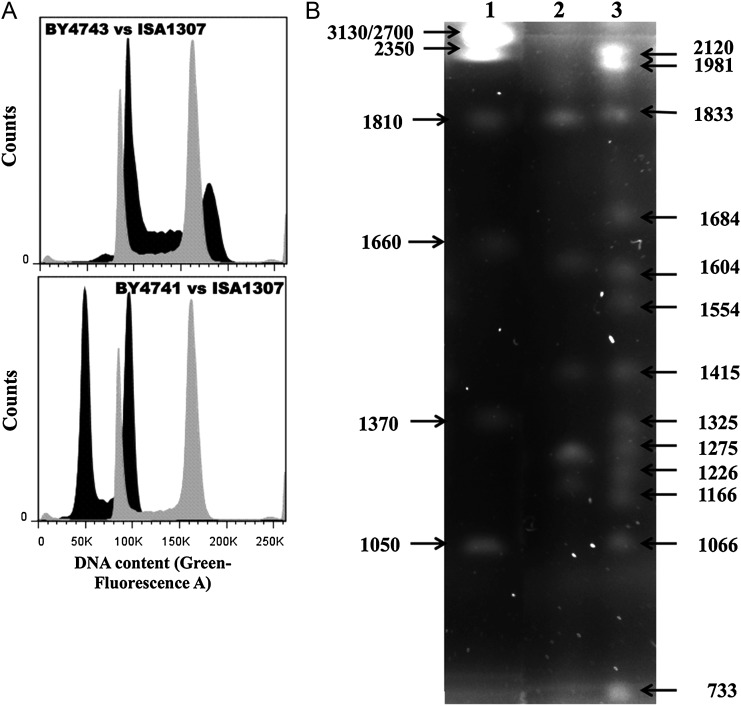
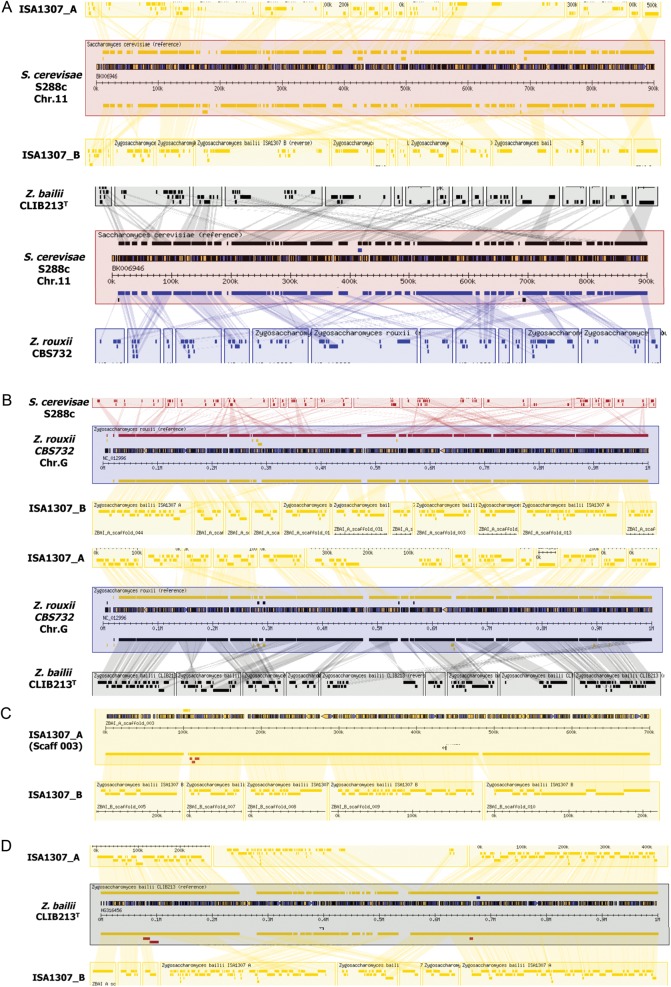
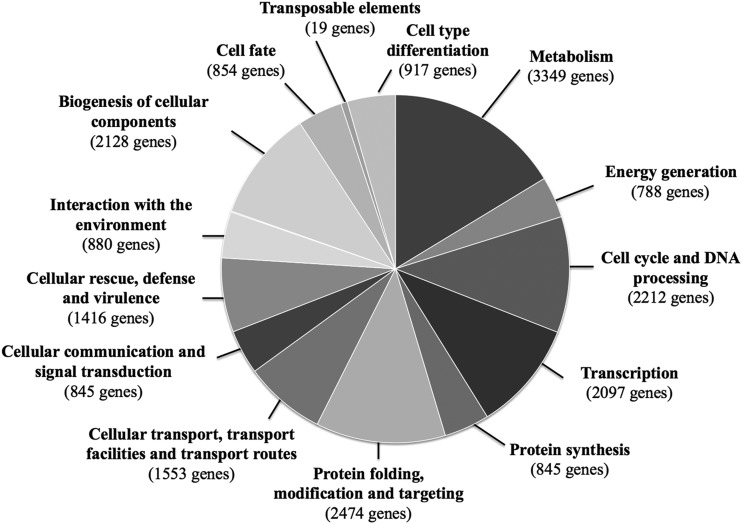
In this work, it is described the sequencing and annotation of the genome of the yeast strain ISA1307, isolated from a sparkling wine continuous production plant. This strain, formerly considered of the Zygosaccharomyces bailii species, has been used to study Z. bailii physiology, in particular, its extreme tolerance to acetic acid stress at low pH. The analysis of the genome sequence described in this work indicates that strain ISA1307 is an interspecies hybrid between Z. bailii and a closely related species. The genome sequence of ISA1307 is distributed through 154 scaffolds and has a size of around 21.2 Mb, corresponding to 96% of the genome size estimated by flow cytometry. Annotation of ISA1307 genome includes 4385 duplicated genes (∼ 90% of the total number of predicted genes) and 1155 predicted single-copy genes. The functional categories including a higher number of genes are 'Metabolism and generation of energy', 'Protein folding, modification and targeting' and 'Biogenesis of cellular components'. The knowledge of the genome sequence of the ISA1307 strain is expected to contribute to accelerate systems-level understanding of stress resistance mechanisms in Z. bailii and to inspire and guide novel biotechnological applications of this yeast species/strain in fermentation processes, given its high resilience to acidic stress. The availability of the ISA1307 genome sequence also paves the way to a better understanding of the genetic mechanisms underlying the generation and selection of more robust hybrid yeast strains in the stressful environment of wine fermentations.
在这项工作中,描述了从起泡酒连续生产工厂分离出的酵母菌株ISA1307的基因组测序和注释。该菌株以前被认为是拜耳接合酵母物种,已被用于研究拜耳接合酵母的生理学,特别是其在低pH值下对醋酸胁迫的极端耐受性。这项工作中描述的基因组序列分析表明,菌株ISA1307是拜耳接合酵母和一个密切相关物种之间的种间杂种。ISA1307的基因组序列分布在154个支架上,大小约为21.2 Mb,相当于通过流式细胞术估计的基因组大小的96%。ISA1307基因组的注释包括4385个重复基因(约占预测基因总数的90%)和1155个预测的单拷贝基因。基因数量较多的功能类别是“能量代谢与产生”、“蛋白质折叠、修饰与靶向”和“细胞成分的生物合成”。鉴于ISA1307菌株对酸性胁迫具有高恢复力,预计其基因组序列知识将有助于加速对拜耳接合酵母抗逆机制的系统水平理解,并激发和指导该酵母物种/菌株在发酵过程中的新型生物技术应用。ISA1307基因组序列的可用性也为更好地理解葡萄酒发酵压力环境中更强壮的杂种酵母菌株的产生和选择的遗传机制铺平了道路。