Turelli Michael, Barton Nicholas H
Department of Evolution and Ecology, University of California, Davis, CA, USA.
Institute of Science and Technology, Am Campus 1, A-3400 Klosterneuburg, Austria.
Theor Popul Biol. 2017 Jun;115:45-60. doi: 10.1016/j.tpb.2017.03.003. Epub 2017 Apr 12.
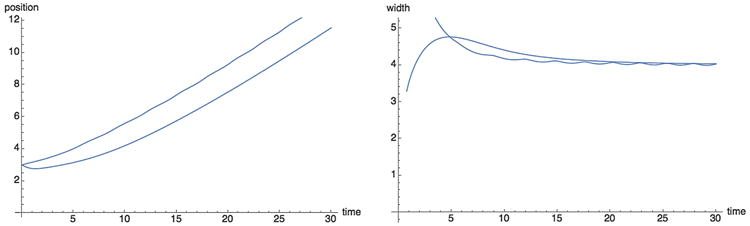
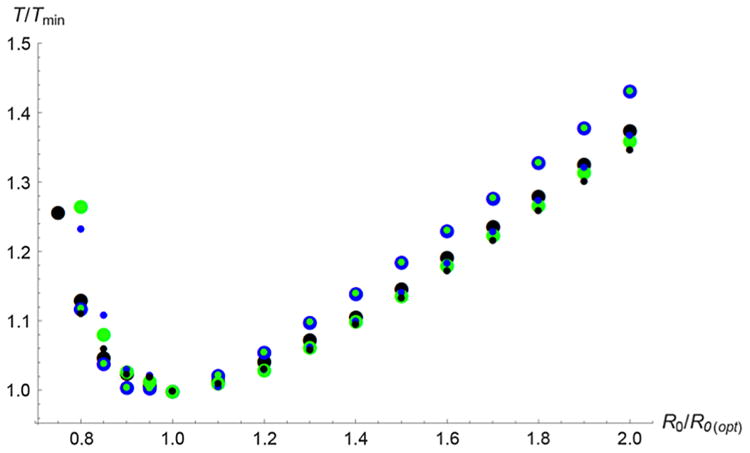
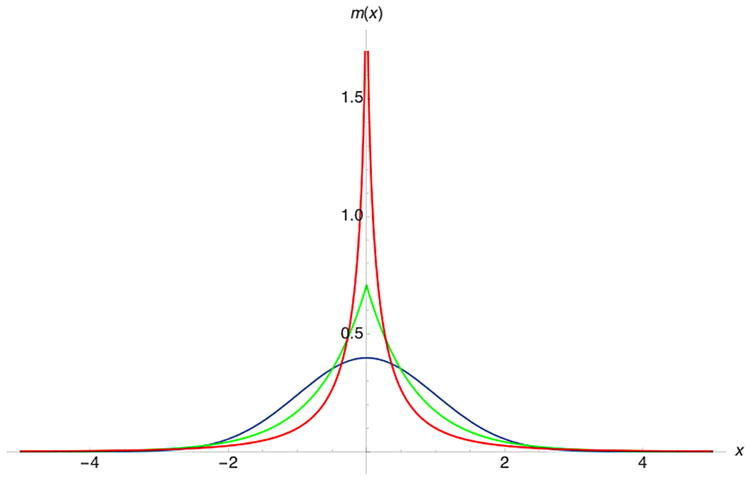
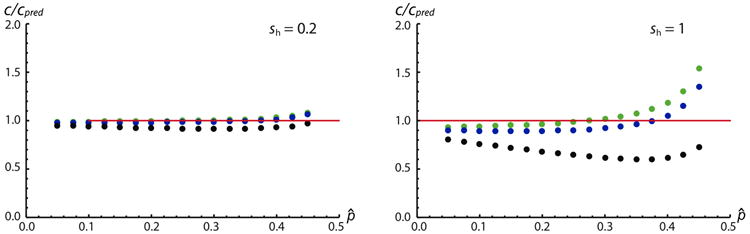
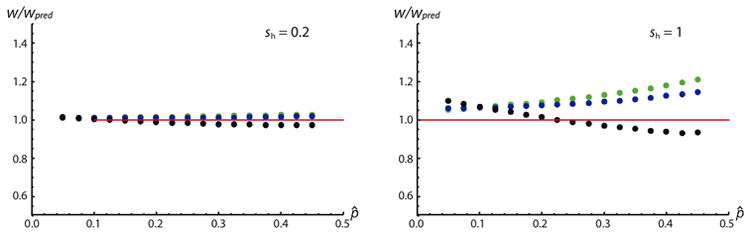
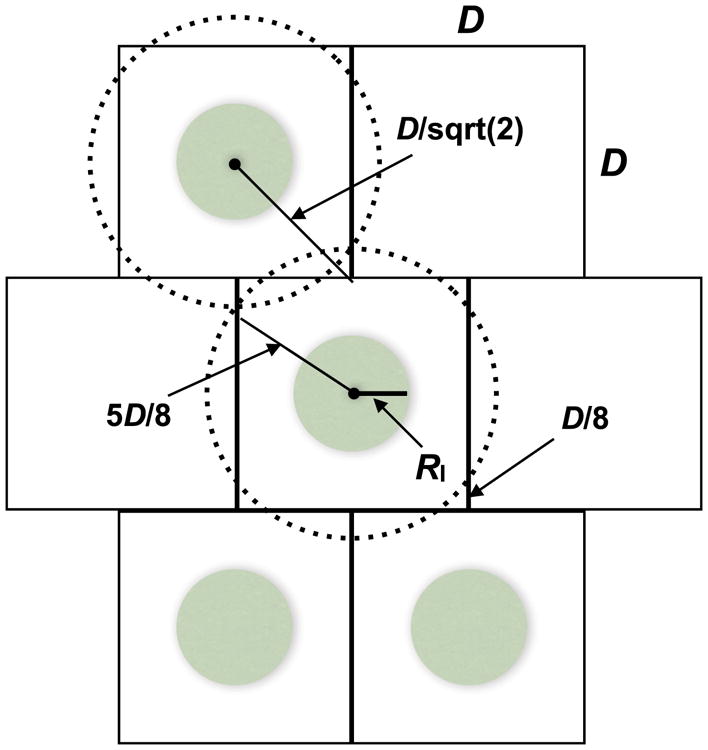
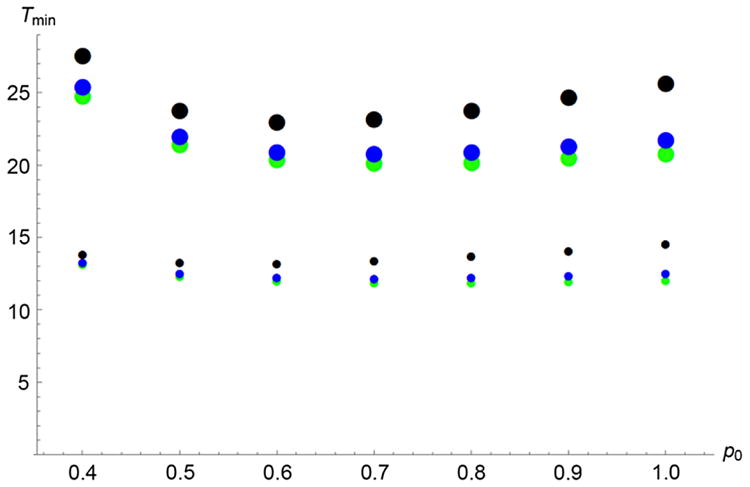
A novel strategy for controlling the spread of arboviral diseases such as dengue, Zika and chikungunya is to transform mosquito populations with virus-suppressing Wolbachia. In general, Wolbachia transinfected into mosquitoes induce fitness costs through lower viability or fecundity. These maternally inherited bacteria also produce a frequency-dependent advantage for infected females by inducing cytoplasmic incompatibility (CI), which kills the embryos produced by uninfected females mated to infected males. These competing effects, a frequency-dependent advantage and frequency-independent costs, produce bistable Wolbachia frequency dynamics. Above a threshold frequency, denoted pˆ, CI drives fitness-decreasing Wolbachia transinfections through local populations; but below pˆ, infection frequencies tend to decline to zero. If pˆ is not too high, CI also drives spatial spread once infections become established over sufficiently large areas. We illustrate how simple models provide testable predictions concerning the spatial and temporal dynamics of Wolbachia introductions, focusing on rate of spatial spread, the shape of spreading waves, and the conditions for initiating spread from local introductions. First, we consider the robustness of diffusion-based predictions to incorporating two important features of wMel-Aedes aegypti biology that may be inconsistent with the diffusion approximations, namely fast local dynamics induced by complete CI (i.e., all embryos produced from incompatible crosses die) and long-tailed, non-Gaussian dispersal. With complete CI, our numerical analyses show that long-tailed dispersal changes wave-width predictions only slightly; but it can significantly reduce wave speed relative to the diffusion prediction; it also allows smaller local introductions to initiate spatial spread. Second, we use approximations for pˆ and dispersal distances to predict the outcome of 2013 releases of wMel-infected Aedes aegypti in Cairns, Australia, Third, we describe new data from Ae. aegypti populations near Cairns, Australia that demonstrate long-distance dispersal and provide an approximate lower bound on pˆ for wMel in northeastern Australia. Finally, we apply our analyses to produce operational guidelines for efficient transformation of vector populations over large areas. We demonstrate that even very slow spatial spread, on the order of 10-20 m/month (as predicted), can produce area-wide population transformation within a few years following initial releases covering about 20-30% of the target area.
一种控制登革热、寨卡病毒病和基孔肯雅热等虫媒病毒疾病传播的新策略是用抑制病毒的沃尔巴克氏体来改造蚊子种群。一般来说,转染到蚊子体内的沃尔巴克氏体会通过降低生存力或繁殖力带来适合度代价。这些母系遗传的细菌还通过诱导细胞质不亲和(CI)为受感染雌蚊产生频率依赖优势,CI会杀死未感染雌蚊与感染雄蚊交配产生的胚胎。这些相互竞争的效应,即频率依赖优势和频率独立代价,产生了双稳态的沃尔巴克氏体频率动态。高于一个阈值频率(记为pˆ)时,CI会推动降低适合度的沃尔巴克氏体转染在当地种群中传播;但低于pˆ时,感染频率往往会降至零。如果pˆ不太高,一旦感染在足够大的区域内建立,CI也会推动空间传播。我们说明了简单模型如何提供关于沃尔巴克氏体引入的时空动态的可检验预测,重点关注空间传播速率、传播波的形状以及从局部引入开始传播的条件。首先,我们考虑基于扩散的预测在纳入埃及伊蚊wMel生物学的两个重要特征时的稳健性,这两个特征可能与扩散近似不一致,即完全CI(即不亲和杂交产生的所有胚胎死亡)诱导的快速局部动态和长尾、非高斯扩散。对于完全CI,我们的数值分析表明,长尾扩散只会略微改变波宽预测;但相对于扩散预测,它会显著降低波速;它还允许较小的局部引入引发空间传播。其次,我们用pˆ和扩散距离的近似值来预测2013年在澳大利亚凯恩斯释放感染wMel的埃及伊蚊的结果。第三,我们描述了来自澳大利亚凯恩斯附近埃及伊蚊种群的新数据,这些数据证明了长距离扩散,并为澳大利亚东北部wMel的pˆ提供了一个近似下限。最后,我们应用分析结果制定在大面积上有效改造病媒种群的操作指南。我们证明,即使空间传播非常缓慢,约为10 - 20米/月(如预测的那样),在最初释放覆盖目标区域约20 - 30%后的几年内也能实现全区域种群改造。