Gill Alessandra Christina, Darby Alistair C, Makepeace Benjamin L
Institute of Infection & Global Health, University of Liverpool, Liverpool, Merseyside, United Kingdom.
Institute of Integrative Biology and the Centre for Genomic Research, University of Liverpool, Liverpool, Merseyside, United Kingdom.
PLoS Negl Trop Dis. 2014 Oct 16;8(10):e3224. doi: 10.1371/journal.pntd.0003224. eCollection 2014 Oct.
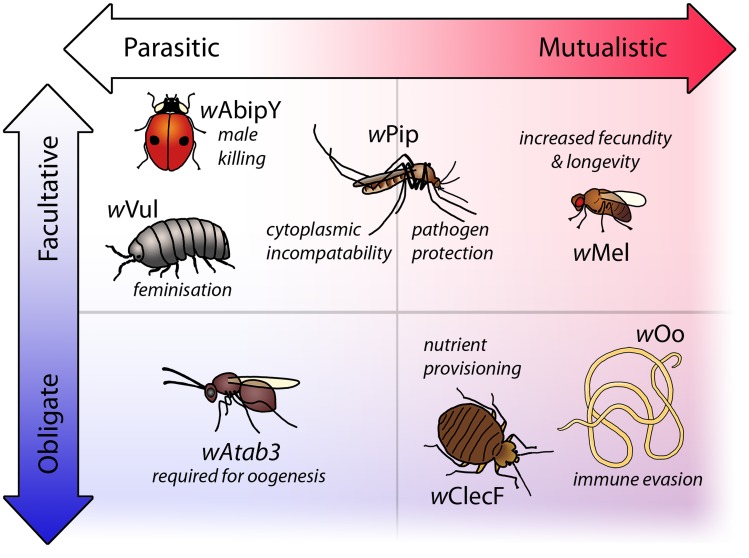
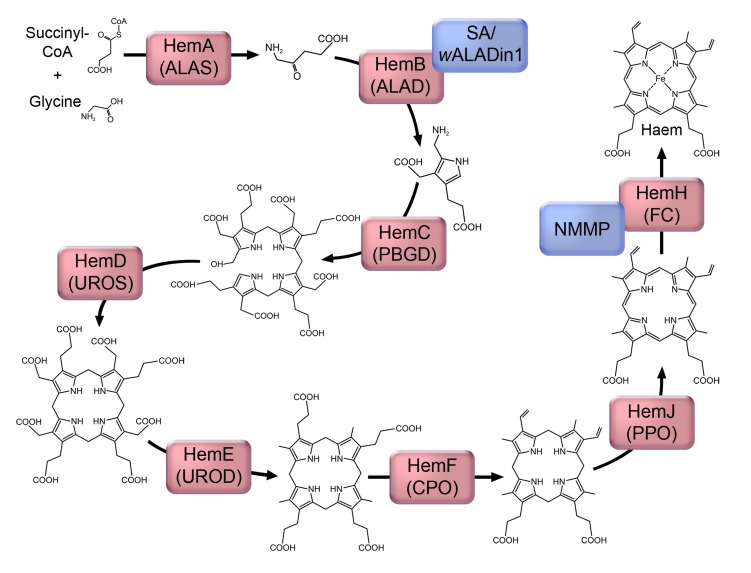
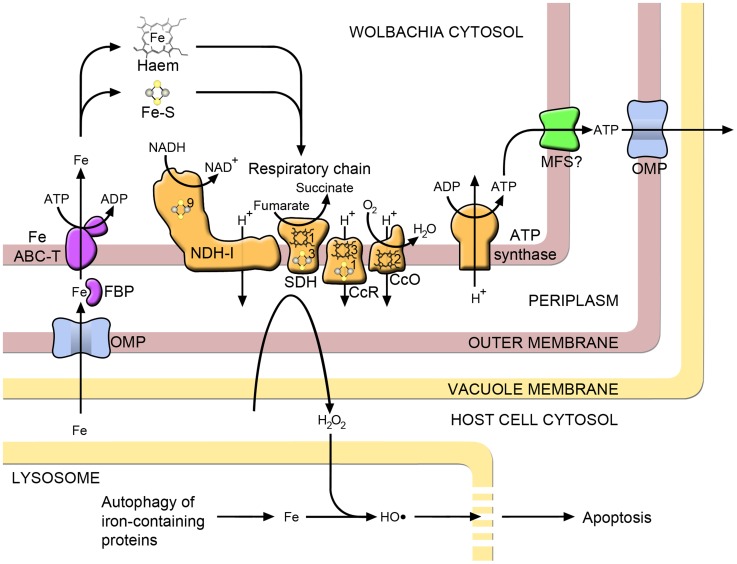
The bacterium Wolbachia (order Rickettsiales) is probably the world's most successful vertically-transmitted symbiont, distributed among a staggering 40% of terrestrial arthropod species. Wolbachia has great potential in vector control due to its ability to manipulate its hosts' reproduction and to impede the replication and dissemination of arboviruses and other pathogens within haematophagous arthropods. In addition, the unexpected presence of Wolbachia in filarial nematodes of medical and veterinary importance has provided an opportunity to target the adult worms of Wuchereria bancrofti, Onchocerca volvulus, and Dirofilaria immitis with safe drugs such as doxycycline. A striking feature of Wolbachia is its phenotypic plasticity between (and sometimes within) hosts, which may be underpinned by its ability to integrate itself into several key processes within eukaryotic cells: oxidative stress, autophagy, and apoptosis. Importantly, despite significant differences in the genomes of arthropod and filarial Wolbachia strains, these nexuses appear to lie on a continuum in different hosts. Here, we consider how iron metabolism may represent a fundamental aspect of host homeostasis that is impacted by Wolbachia infection, connecting disparate pathways ranging from the provision of haem and ATP to programmed cell death, aging, and the recycling of intracellular resources. Depending on how Wolbachia and host cells interact across networks that depend on iron, the gradient between parasitism and mutualism may shift dynamically in some systems, or alternatively, stabilise on one or the other end of the spectrum.
沃尔巴克氏体细菌(立克次氏体目)可能是世界上最成功的垂直传播共生体,分布在令人惊讶的40%的陆生节肢动物物种中。由于沃尔巴克氏体能够操纵宿主的繁殖,并阻碍虫媒病毒和其他病原体在吸血节肢动物体内的复制和传播,因此它在病媒控制方面具有巨大潜力。此外,在具有医学和兽医学重要性的丝虫线虫中意外发现沃尔巴克氏体,为使用强力霉素等安全药物靶向班氏吴策线虫、盘尾丝虫和犬恶丝虫的成虫提供了机会。沃尔巴克氏体的一个显著特征是其在宿主之间(有时在宿主体内)的表型可塑性,这可能是由其将自身整合到真核细胞内几个关键过程的能力所支撑的:氧化应激、自噬和细胞凋亡。重要的是,尽管节肢动物和丝虫沃尔巴克氏体菌株的基因组存在显著差异,但这些联系在不同宿主中似乎处于连续统一体上。在这里,我们探讨铁代谢如何可能代表宿主内稳态的一个基本方面,而这受到沃尔巴克氏体感染的影响,它连接了从血红素和ATP的供应到程序性细胞死亡、衰老以及细胞内资源循环等不同的途径。根据沃尔巴克氏体与宿主细胞在依赖铁的网络中如何相互作用,在某些系统中,寄生与共生之间的梯度可能会动态变化,或者在光谱的一端或另一端稳定下来。