Orlandi Ivan, Stamerra Giulia, Strippoli Maurizio, Vai Marina
SYSBIO Centre for Systems Biology Milano, Dipartimento di Biotecnologie e Bioscienze, Università di Milano-Bicocca, Piazza della Scienza 2, 20126 Milano, Italy.
Redox Biol. 2017 Aug;12:745-754. doi: 10.1016/j.redox.2017.04.015. Epub 2017 Apr 9.
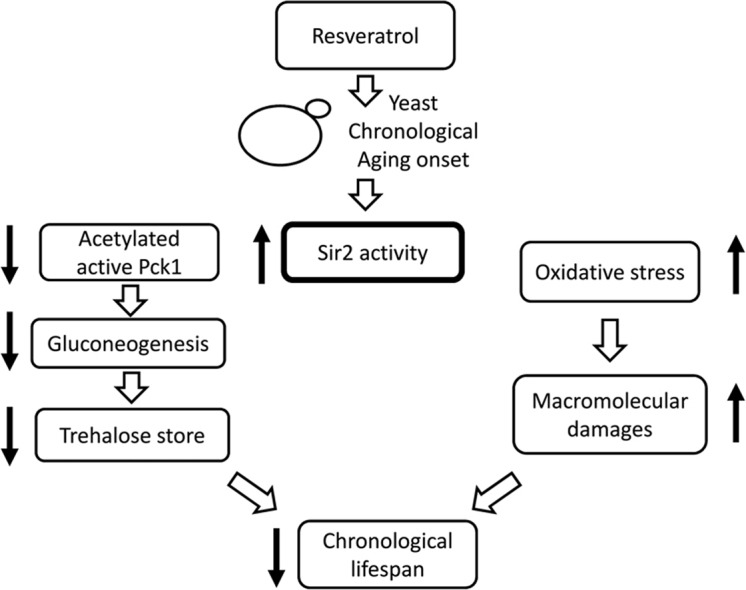
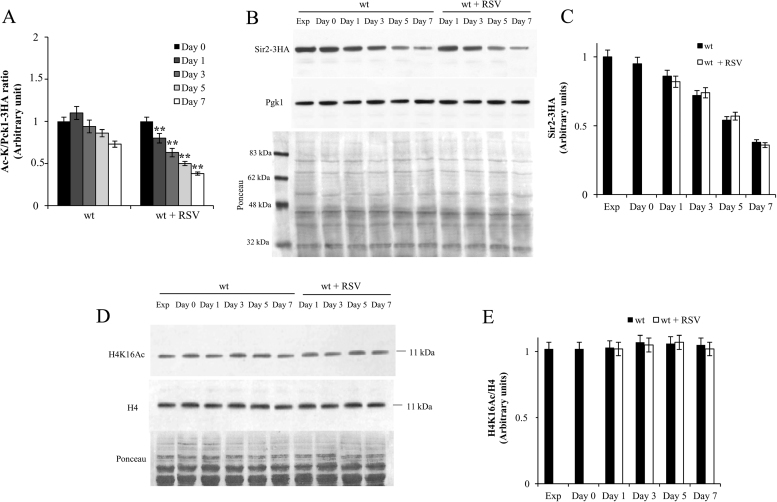
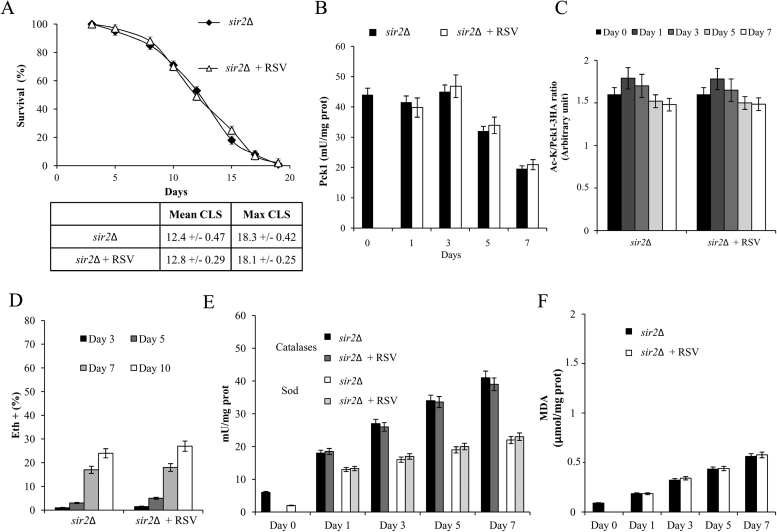
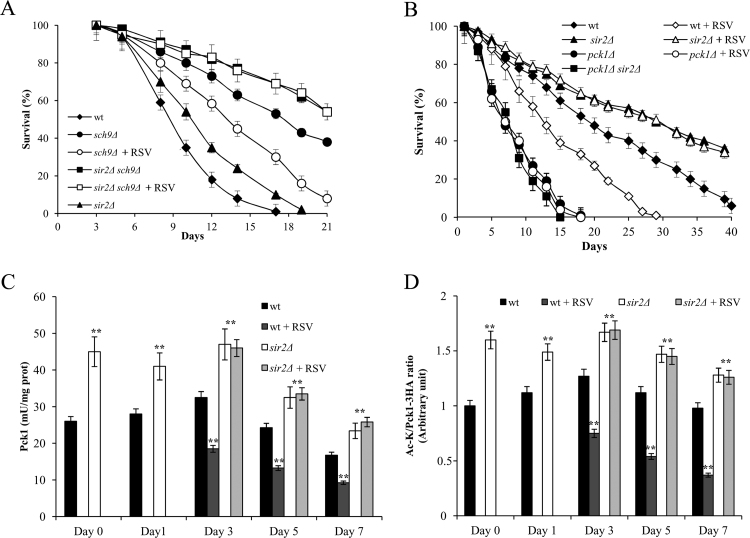
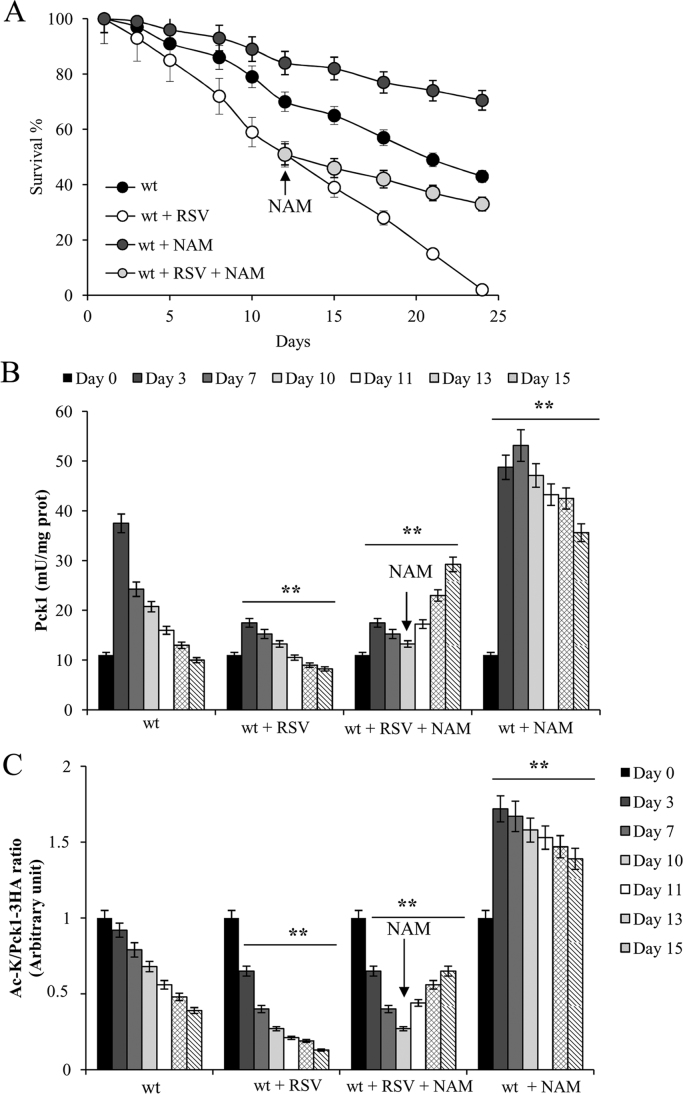
Resveratrol (RSV) is a naturally occurring polyphenolic compound endowed with interesting biological properties/functions amongst which are its activity as an antioxidant and as Sirtuin activating compound towards SIRT1 in mammals. Sirtuins comprise a family of NAD-dependent protein deacetylases that are involved in many physiological and pathological processes including aging and age-related diseases. These enzymes are conserved across species and SIRT1 is the closest mammalian orthologue of Sir2 of Saccharomyces cerevisiae. In the field of aging researches, it is well known that Sir2 is a positive regulator of replicative lifespan and, in this context, the RSV effects have been already examined. Here, we analyzed RSV effects during chronological aging, in which Sir2 acts as a negative regulator of chronological lifespan (CLS). Chronological aging refers to quiescent cells in stationary phase; these cells display a survival-based metabolism characterized by an increase in oxidative stress. We found that RSV supplementation at the onset of chronological aging, namely at the diauxic shift, increases oxidative stress and significantly reduces CLS. CLS reduction is dependent on Sir2 presence both in expired medium and in extreme Calorie Restriction. In addition, all data point to an enhancement of Sir2 activity, in particular Sir2-mediated deacetylation of the key gluconeogenic enzyme phosphoenolpyruvate carboxykinase (Pck1). This leads to a reduction in the amount of the acetylated active form of Pck1, whose enzymatic activity is essential for gluconeogenesis and CLS extension.
白藜芦醇(RSV)是一种天然存在的多酚化合物,具有多种有趣的生物学特性/功能,其中包括其作为抗氧化剂的活性以及作为哺乳动物中SIRT1的去乙酰化酶激活化合物的活性。去乙酰化酶包含一类依赖NAD的蛋白质脱乙酰酶,它们参与许多生理和病理过程,包括衰老和与年龄相关的疾病。这些酶在物种间具有保守性,SIRT1是酿酒酵母Sir2在哺乳动物中最接近的同源物。在衰老研究领域,众所周知Sir2是复制寿命的正向调节因子,在此背景下,已经对白藜芦醇的作用进行了研究。在这里,我们分析了白藜芦醇在时序性衰老过程中的作用,在时序性衰老中Sir2作为时序寿命(CLS)的负向调节因子。时序性衰老指的是静止期的静止细胞;这些细胞表现出以氧化应激增加为特征的基于生存的代谢。我们发现,在时序性衰老开始时,即在二次生长转换时补充白藜芦醇,会增加氧化应激并显著缩短CLS。CLS的缩短在耗尽培养基和极端热量限制条件下均依赖于Sir2的存在。此外,所有数据都表明Sir2活性增强,特别是Sir2介导的关键糖异生酶磷酸烯醇式丙酮酸羧激酶(Pck1)的去乙酰化。这导致Pck1乙酰化活性形式的量减少,其酶活性对于糖异生和CLS延长至关重要。