Ramírez A Susana, Willis Gordon, Rutten Lila Finney
a School of Social Sciences, Humanities, and Arts , University of California, Merced , Merced , California , USA.
b Division of Cancer Control and Population Sciences , National Cancer Institute , Bethesda , Maryland , USA.
J Health Commun. 2017 May;22(5):442-450. doi: 10.1080/10810730.2017.1304470. Epub 2017 Apr 17.
Spanish-speaking Latinos account for 13% of the U.S. population yet are chronically under-represented in national surveys; additionally, the response quality suffers from low literacy rates and translation challenges. These are the same issues that health communicators face when understanding how best to communicate important health information to Latinos. The Health Information National Trends Survey (HINTS) offers a unique opportunity to understand the health communication landscape and information needs of the U.S.
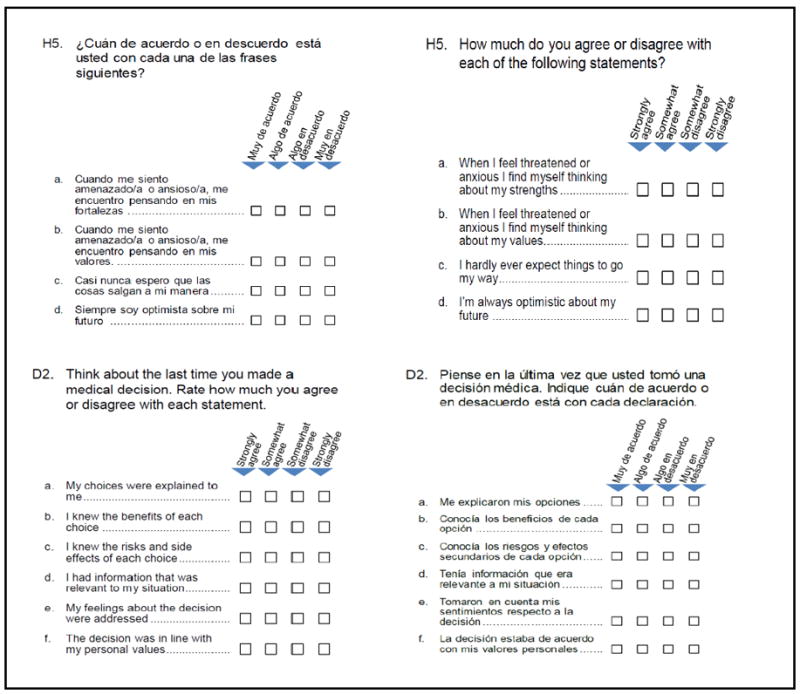
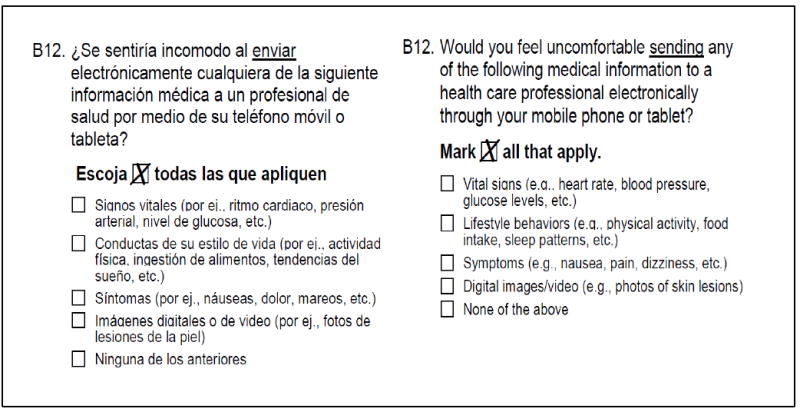
We describe the challenges in recruiting Spanish-speaking HINTS respondents and strategies used to improve rates and quality of responses among Spanish-speaking Latinos. Cognitive interviewing techniques helped to better understand how Spanish-speaking Latinos were interpreting the survey questions, and the extent to which these interpretations matched English-speaking respondents' interpretations. Some Spanish-speaking respondents had difficulty with the questions because of a lack of access to health care. Additionally, Spanish-speaking respondents had a particularly hard time answering questions that were presented in a grid format. We describe the cognitive interview process, and consider the impact of format changes on Spanish-speaking people's responses and response quality. We discuss challenges that remain in understanding health information needs of non-English-speakers.
说西班牙语的拉丁裔占美国人口的13%,但在全国性调查中其代表性长期不足;此外,由于识字率低和翻译难题,回答质量也受到影响。这些正是健康传播者在思考如何以最佳方式向拉丁裔传达重要健康信息时所面临的相同问题。健康信息全国趋势调查(HINTS)为了解美国的健康传播格局和信息需求提供了一个独特的机会。
我们描述了招募说西班牙语的HINTS受访者所面临的挑战,以及用于提高说西班牙语的拉丁裔受访者回复率和回复质量的策略。认知访谈技术有助于更好地理解说西班牙语的拉丁裔如何理解调查问卷问题,以及这些理解与说英语的受访者的理解相符程度。一些说西班牙语的受访者因难以获得医疗保健而在回答问题时遇到困难。此外,说西班牙语的受访者在回答以网格形式呈现的问题时尤其吃力。我们描述了认知访谈过程,并考虑格式变化对说西班牙语的人的回答和回答质量的影响。我们讨论了在理解非英语使用者的健康信息需求方面仍然存在的挑战。