Zank Sofia, Hanazaki Natalia
Laboratory of Human Ecology and Ethnobotany, Department of Ecology and Zoology, Federal University of Santa Catarina, Trindade, Florianópolis, Santa Catarina, Brazil.
PLoS One. 2017 Apr 17;12(4):e0174731. doi: 10.1371/journal.pone.0174731. eCollection 2017.
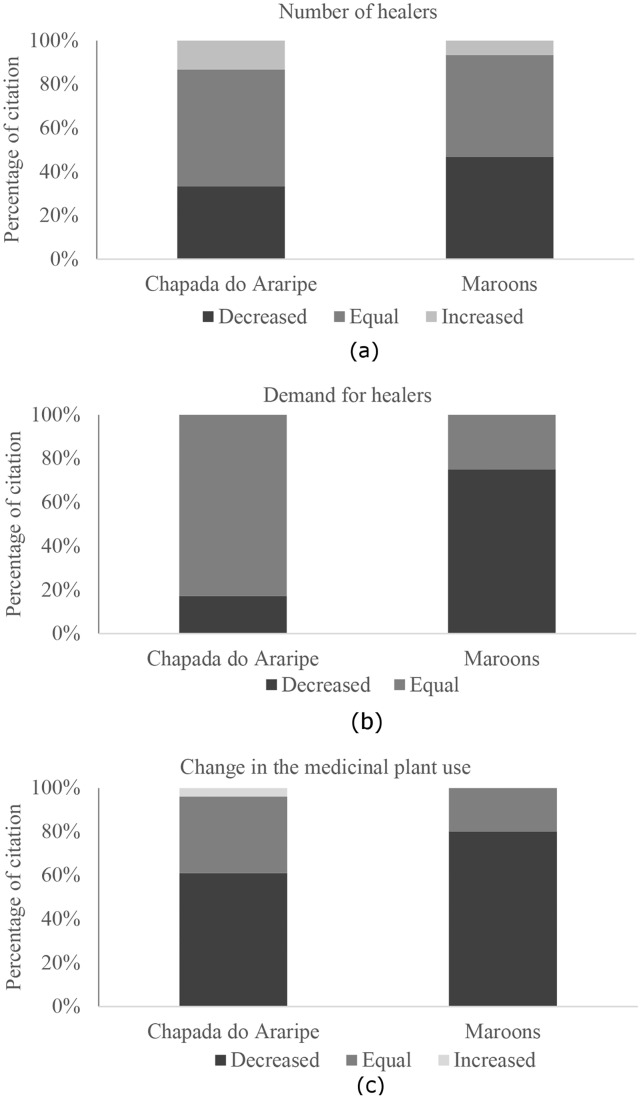
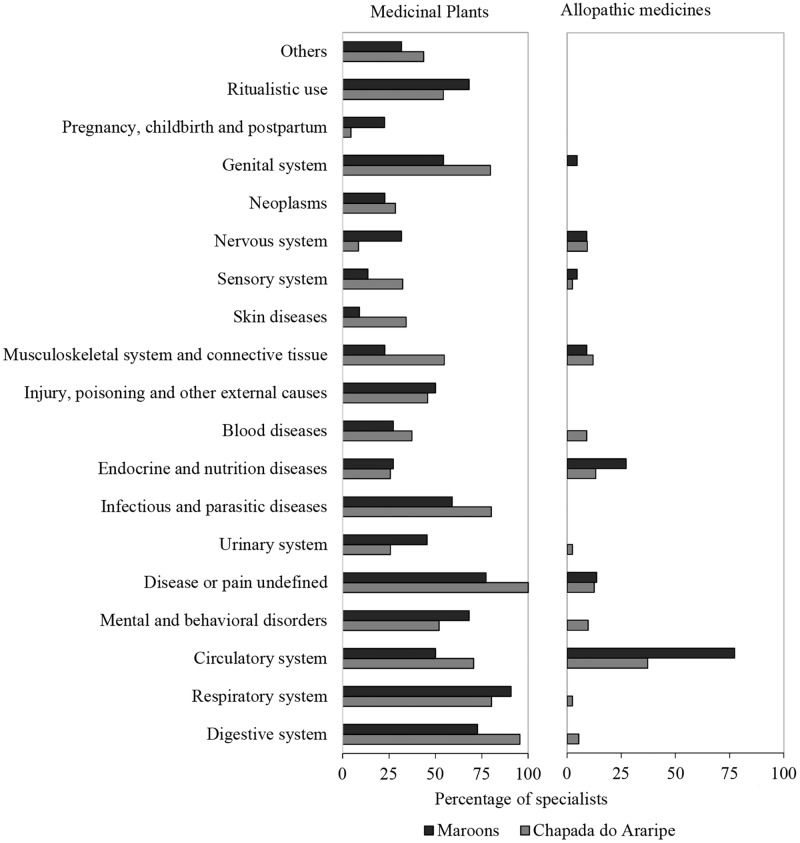
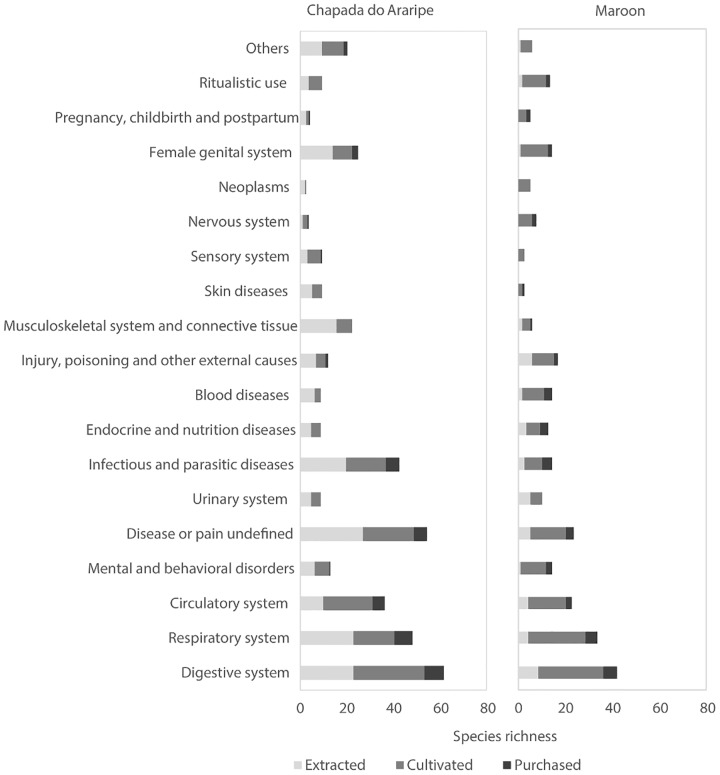
This study investigated the combined use of traditional medicine and biomedicine by local experts in Chapada do Araripe communities (Ceará State) and maroon communities (Santa Catarina State), Brazil. The objective was to understand the perception of local health specialists regarding the number of healers, demand for healers and use of medicinal plants, and the dependence of different environments to obtain such plants. We also aimed to understand the role of medicinal plants to treat different categories of diseases and if there is a complementary use of medicinal plants and allopathic biomedicine, according to the context of each group. The research was conducted with local health specialists that answered structured interviews, created free lists and participated in guided tours to collect cited plants. Sixty-six local health specialists were identified in the Araripe communities and 22 specialists in the maroon communities. In the maroon communities, a greater number of specialists thought there was a decrease in the number and demand for healers, as well as the use of medicinal plants, due to changes in traditional livelihoods, since they are located in a region where the effects of the modernization were more intense. In the Chapada do Araripe communities the specialists knew more plants extracted from native vegetation, whereas in the maroon communities cultivated plants were better known, which may reflect the environmental conditions and the history of each region. Medicinal plants are preferred to treat simpler health problems that do not require medical care, such as gastrointestinal problems, general pain, flues and colds. The biomedicine is used principally for problems with blood pressure, general pains and endocrine and nutritional diseases. Even with the particularities of each region, in general the use of medicinal plants and biomedicines occurred in a complementary form in both regions; however, this coexistence may result from these different contexts. This study also found that there was knowledge and appreciation for traditional health practices in both regions.
本研究调查了巴西塞阿拉州阿拉里皮高原社区和圣卡塔琳娜州黑人社区的当地专家对传统医学和生物医学的联合使用情况。目的是了解当地健康专家对治疗师数量、对治疗师的需求和药用植物的使用的看法,以及不同环境获取此类植物的依赖性。我们还旨在了解药用植物在治疗不同类别疾病中的作用,以及根据每个群体的情况,药用植物和对抗疗法生物医学是否存在互补使用。该研究是与回答结构化访谈、创建自由列表并参加导游之旅以收集被提及植物的当地健康专家进行的。在阿拉里皮社区识别出66名当地健康专家,在黑人社区识别出22名专家。在黑人社区,由于传统生计的变化,更多专家认为治疗师的数量、对治疗师的需求以及药用植物的使用都有所减少,因为他们所在地区现代化的影响更为强烈。在阿拉里皮高原社区,专家们更了解从本土植被中提取的植物,而在黑人社区,人们更了解种植的植物,这可能反映了每个地区的环境条件和历史。药用植物更适合治疗不需要医疗护理的较简单健康问题,如胃肠道问题、全身疼痛、流感和感冒。生物医学主要用于治疗血压问题、全身疼痛以及内分泌和营养疾病。尽管每个地区都有其特殊性,但总体而言,两个地区药用植物和生物医学的使用都是以互补的形式出现的;然而,这种共存可能是由这些不同的情况导致的。本研究还发现,两个地区都存在对传统健康做法的了解和重视。