An Ruopeng, Loehmer Emily, Khan Naiman, Scott Marci K, Rindfleisch Kimbirly, McCaffrey Jennifer
Kinesiology & Community Health, University of Illinois at Urbana-Champaign, 1206 South Fourth Street, Room 2013 Huff Hall, Champaign, IL 61820, USA.
University of Illinois Extension, University of Illinois at Urbana-Champaign, Champaign, IL 61820, USA.
Prev Med Rep. 2017 Mar 24;6:294-301. doi: 10.1016/j.pmedr.2017.03.007. eCollection 2017 Jun.
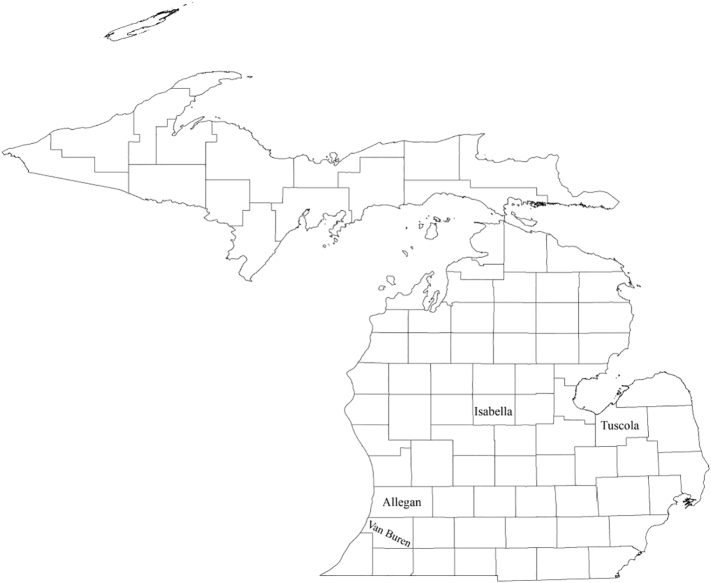
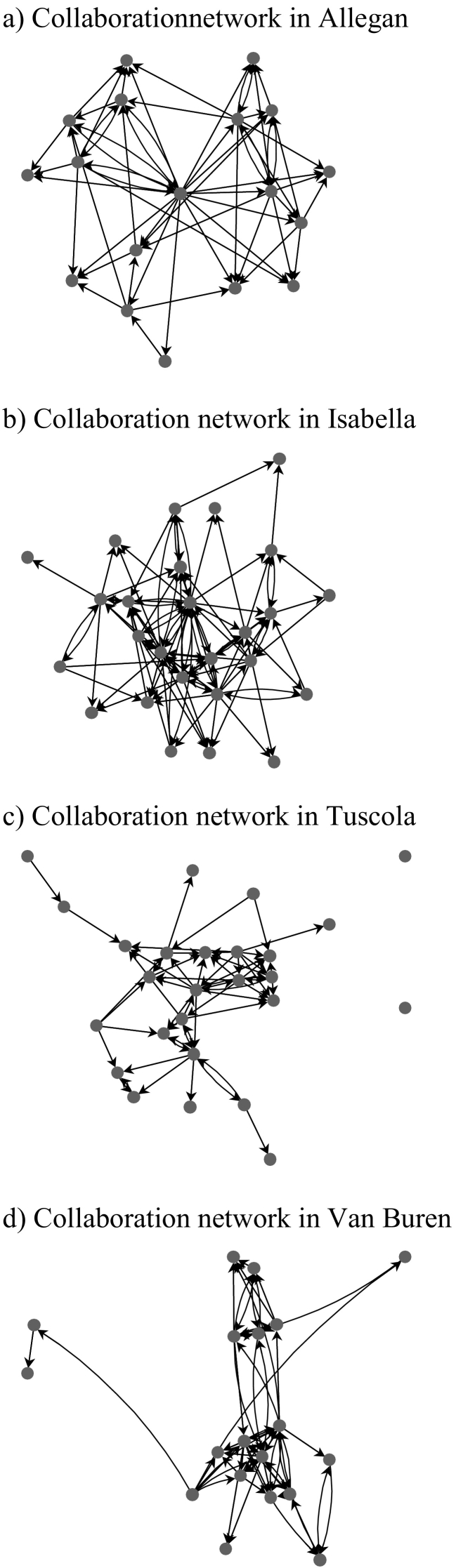
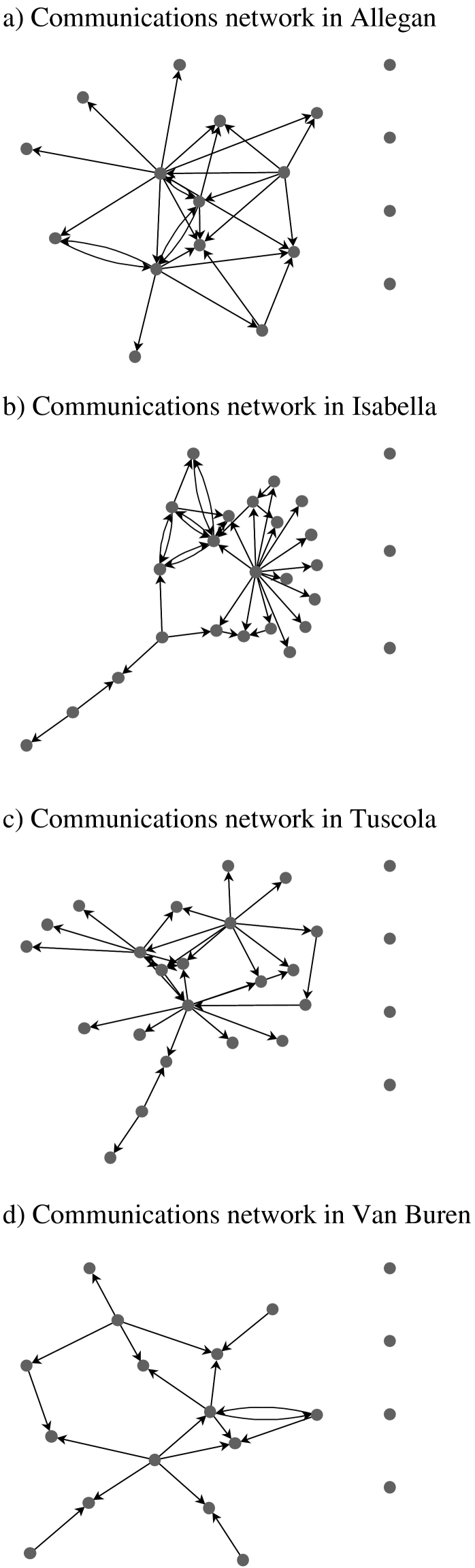
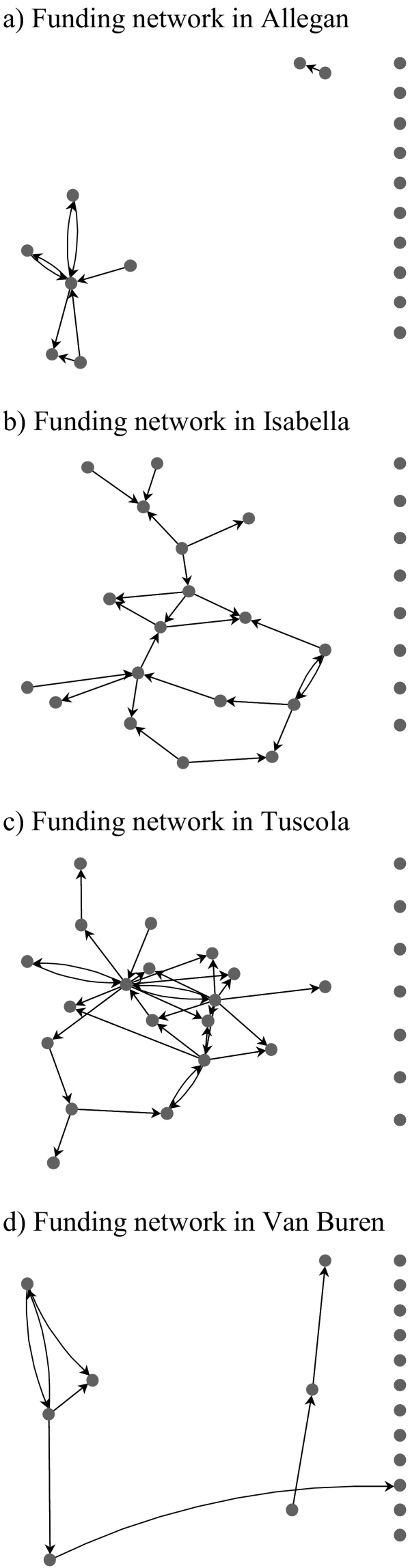
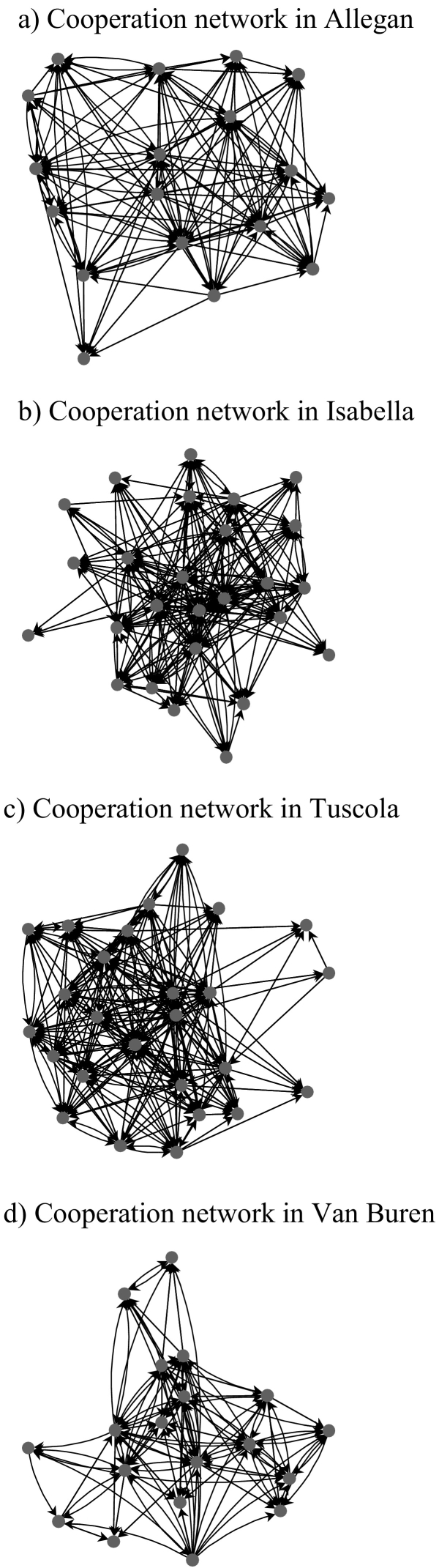
Promoting healthy eating and lifestyles among populations with limited resources is a complex undertaking that often requires strong partnerships between various agencies. In local communities, these agencies are typically located in different areas, serve diverse subgroups, and operate distinct programs, limiting their communication and interactions with each other. This study assessed the network of agencies in local communities that promote healthy eating and lifestyles among populations with limited resources. Network surveys were administered in 2016 among 89 agencies located in 4 rural counties in Michigan that served limited-resource audiences. The agencies were categorized into 8 types: K-12 schools, early childhood centers, emergency food providers, health-related agencies, social resource centers, low-income/subsidized housing complexes, continuing education organizations, and others. Network analysis was conducted to examine 4 network structures-communication, funding, cooperation, and collaboration networks between agencies within each county. Agencies had a moderate level of cooperation, but were only loosely connected in the other 3 networks, indicated by low network density. Agencies in a network were decentralized rather than centralized around a few influential agencies, indicated by low centralization. There was evidence regarding homophily in a network, indicated by some significant correlations within agencies of the same type. Agencies connected in any one network were considerably more likely to be connected in all the other networks as well. In conclusion, promoting healthy eating and lifestyles among populations with limited resources warrants strong partnership between agencies in communities. Network analysis serves as a useful tool to evaluate community partnerships and facilitate coalition building.
在资源有限的人群中推广健康饮食和生活方式是一项复杂的工作,通常需要各机构之间建立强有力的伙伴关系。在当地社区,这些机构通常分布在不同区域,服务于不同的亚群体,并且运营着不同的项目,这限制了它们之间的沟通与互动。本研究评估了当地社区中致力于在资源有限的人群中推广健康饮食和生活方式的机构网络。2016年,对密歇根州4个农村县的89个服务于资源有限人群的机构进行了网络调查。这些机构被分为8类:K-12学校、幼儿中心、应急食品供应商、健康相关机构、社会资源中心、低收入/补贴住房小区、继续教育组织以及其他机构。进行了网络分析,以考察每个县内各机构之间的4种网络结构——沟通网络、资金网络、合作网络和协作网络。各机构之间的合作水平适中,但在其他3种网络中联系松散,网络密度较低表明了这一点。网络中的机构是分散的,而非集中于少数几个有影响力的机构,低集中度表明了这一点。有证据表明网络中存在同质性,同一类型机构内部的一些显著相关性表明了这一点。在任何一个网络中建立联系的机构在所有其他网络中也更有可能建立联系。总之,在资源有限的人群中推广健康饮食和生活方式需要社区内各机构之间建立强有力的伙伴关系。网络分析是评估社区伙伴关系和促进联盟建设的有用工具。