Isaac-Lam Meden F, Hammonds Dewana M
Department of Chemistry and Physics, Purdue University Northwest, 1401 S US Hwy 421, Westville, IN 46391, USA.
Pharmaceuticals (Basel). 2017 Apr 15;10(2):41. doi: 10.3390/ph10020041.
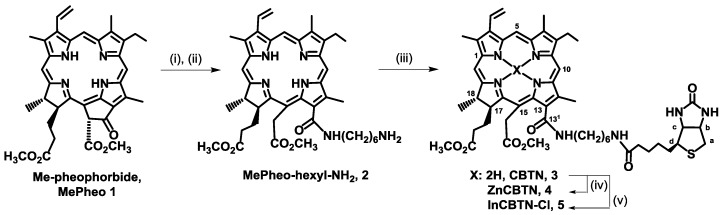
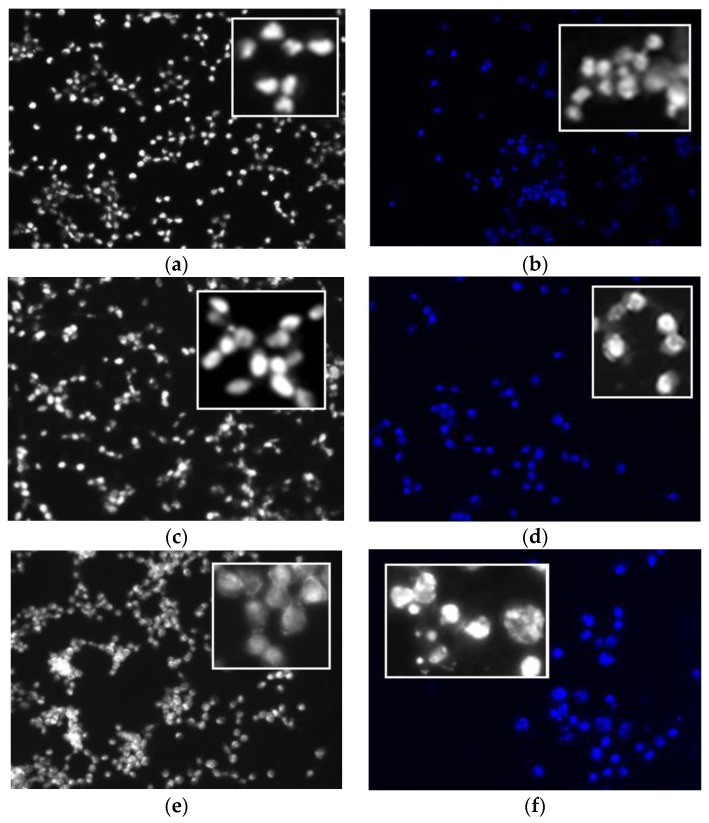
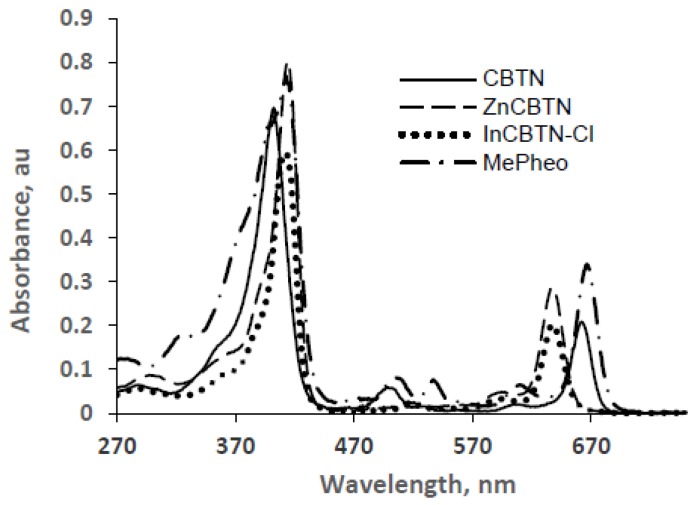
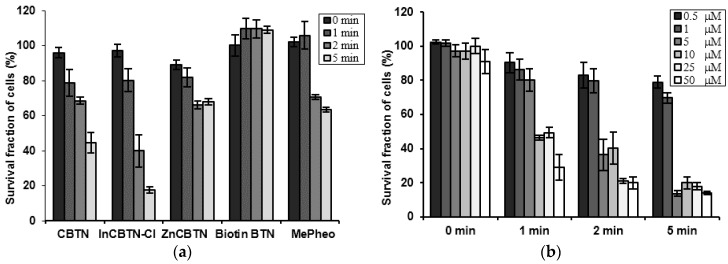
The synthesis and characterization of biotinylated chlorin photosensitizer and the corresponding zinc and indium complexes are described for potential applications in photodynamic therapy (PDT) for cancer. Phototoxicity of the biotin-chlorin conjugate and the metallated complexes was determined in colon carcinoma CT26 cell lines known to overexpress biotin (Vit B₇) receptors. Cell survival assay indicated that the biotinylated chlorin and indium complex showed increased cell growth inhibition than the zinc complex and the starting chlorin (methyl pheophorbide). Fluorescence microcopy studies revealed the generation of apoptotic cells upon light irradiation of colon cells treated with the indium complex. Targeting biotin receptors in cancer cells can improve specificity of photosensitizers for PDT applications.
本文描述了生物素化二氢卟吩光敏剂及其相应的锌和铟配合物的合成与表征,用于癌症光动力疗法(PDT)的潜在应用。在已知过表达生物素(维生素B₇)受体的结肠癌细胞系CT26中测定了生物素-二氢卟吩共轭物和金属化配合物的光毒性。细胞存活试验表明,生物素化二氢卟吩和铟配合物比锌配合物和起始二氢卟吩(甲基脱镁叶绿酸)表现出更强的细胞生长抑制作用。荧光显微镜研究显示,用铟配合物处理的结肠细胞在光照后会产生凋亡细胞。靶向癌细胞中的生物素受体可以提高光敏剂在PDT应用中的特异性。