Meng Shuai, Zhu Yi, Li Jiang-Feng, Wang Xiao, Liang Zhen, Li Shi-Qi, Xu Xin, Chen Hong, Liu Ben, Zheng Xiang-Yi, Xie Li-Ping
Department of Urology, The First Affiliated Hospital, School of Medicine, Zhejiang University, Hangzhou, Zhejiang Province 310003, China.
Oncotarget. 2017 Mar 21;8(12):19834-19842. doi: 10.18632/oncotarget.15771.
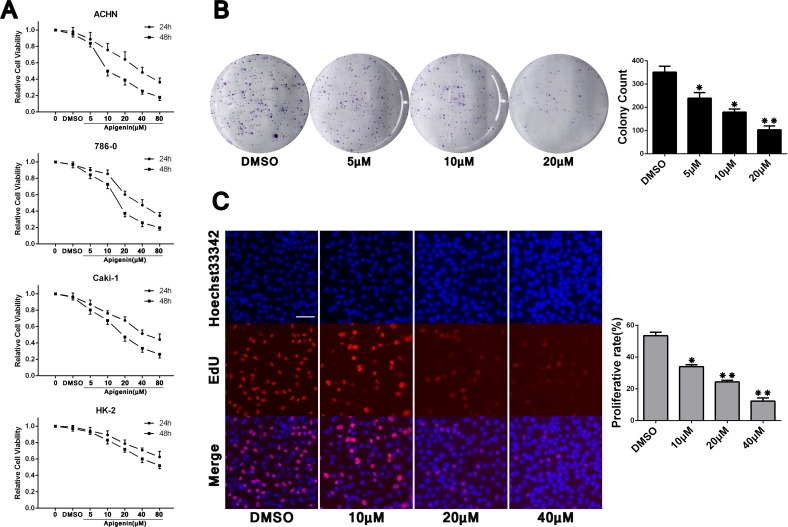
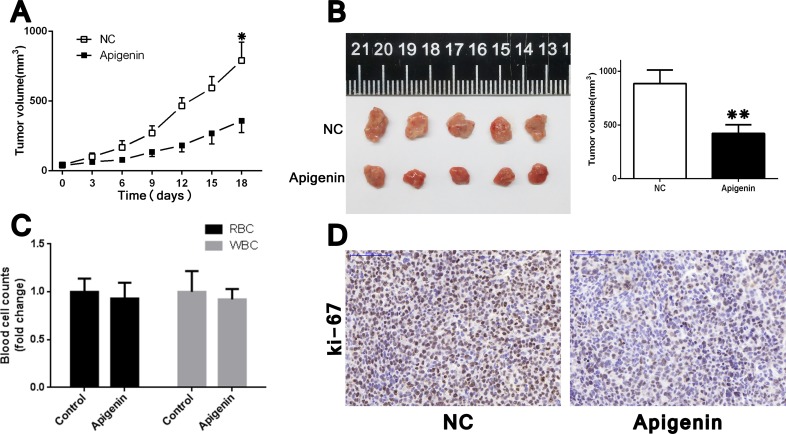
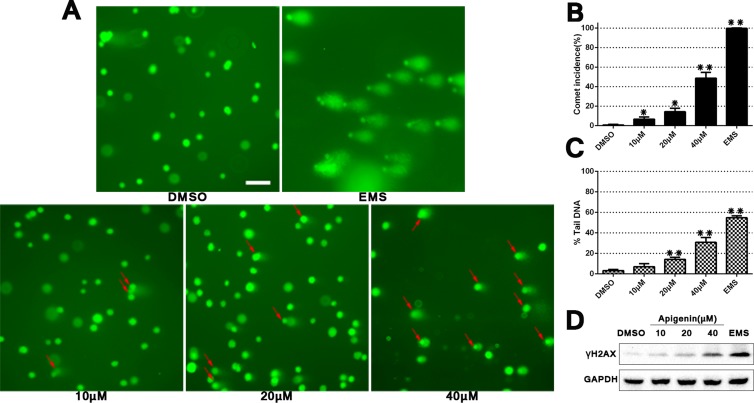
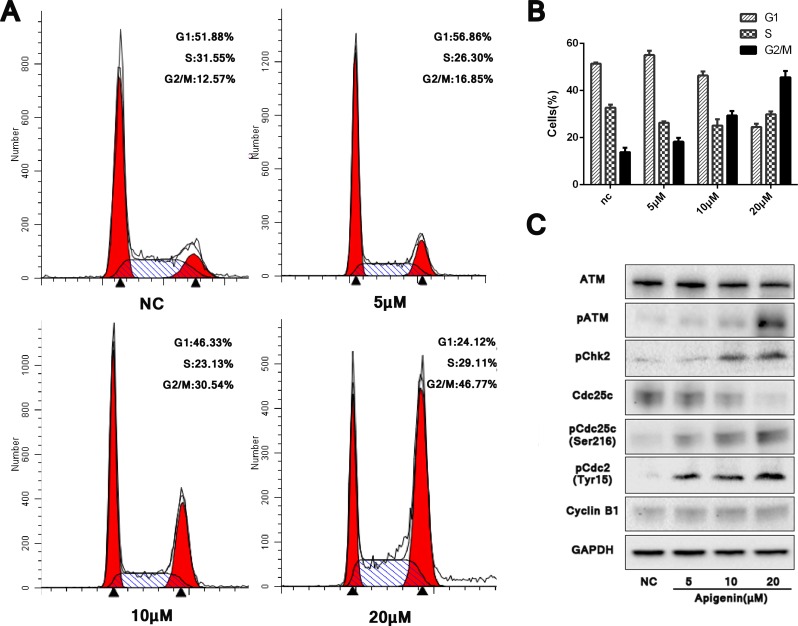
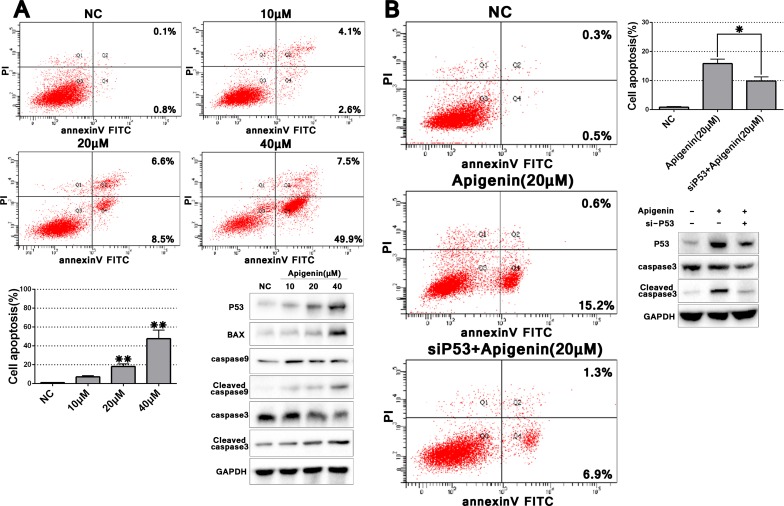
Apigenin, a natural flavonoid found in vegetables and fruits, has antitumor activity in several cancer types. The present study evaluated the effects and mechanism of action of apigenin in renal cell carcinoma (RCC) cells. We found that apigenin suppressed ACHN, 786-0, and Caki-1 RCC cell proliferation in a dose- and time-dependent manner. A comet assay suggested that apigenin caused DNA damage in ACHN cells, especially at higher doses, and induced G2/M phase cell cycle arrest through ATM signal modulation. Small interfering RNA (siRNA)-mediated p53 knockdown showed that apigenin-induced apoptosis was likely p53 dependent. Apigenin anti-proliferative effects were confirmed in an ACHN cell xenograft mouse model. Apigenin treatment reduced tumor growth and volume in vivo, and immunohistochemical staining revealed lower Ki-67 indices in tumors derived from apigenin-treated mice. These findings suggest that apigenin exposure induces DNA damage, G2/M phase cell cycle arrest, p53 accumulation and apoptosis, which collectively suppress ACHN RCC cell proliferation in vitro and in vivo. Given its antitumor effects and low in vivo toxicity, apigenin is a highly promising agent for treatment of RCC.
芹菜素是一种存在于蔬菜和水果中的天然黄酮类化合物,在多种癌症类型中具有抗肿瘤活性。本研究评估了芹菜素对肾细胞癌(RCC)细胞的作用效果及作用机制。我们发现芹菜素以剂量和时间依赖性方式抑制ACHN、786 - 0和Caki - 1肾癌细胞的增殖。彗星试验表明,芹菜素会导致ACHN细胞中的DNA损伤,尤其是在高剂量时,并通过ATM信号调节诱导G2/M期细胞周期阻滞。小干扰RNA(siRNA)介导的p53基因敲低表明,芹菜素诱导的细胞凋亡可能依赖于p53。在ACHN细胞异种移植小鼠模型中证实了芹菜素的抗增殖作用。芹菜素治疗可降低体内肿瘤的生长和体积,免疫组织化学染色显示,来自芹菜素治疗小鼠的肿瘤中Ki - 67指数较低。这些发现表明,芹菜素暴露会诱导DNA损伤、G2/M期细胞周期阻滞、p53积累和细胞凋亡,这些共同作用在体外和体内抑制ACHN肾癌细胞的增殖。鉴于其抗肿瘤作用和低体内毒性,芹菜素是一种极具前景的肾细胞癌治疗药物。