Noji Hiroyuki, Ueno Hiroshi, McMillan Duncan G G
Department of Applied Chemistry, Graduate School of Engineering, The University of Tokyo, Tokyo, 113-8656 Japan.
Biophys Rev. 2017 Mar 25;9(2):103-118. doi: 10.1007/s12551-017-0262-x. eCollection 2017 Apr.
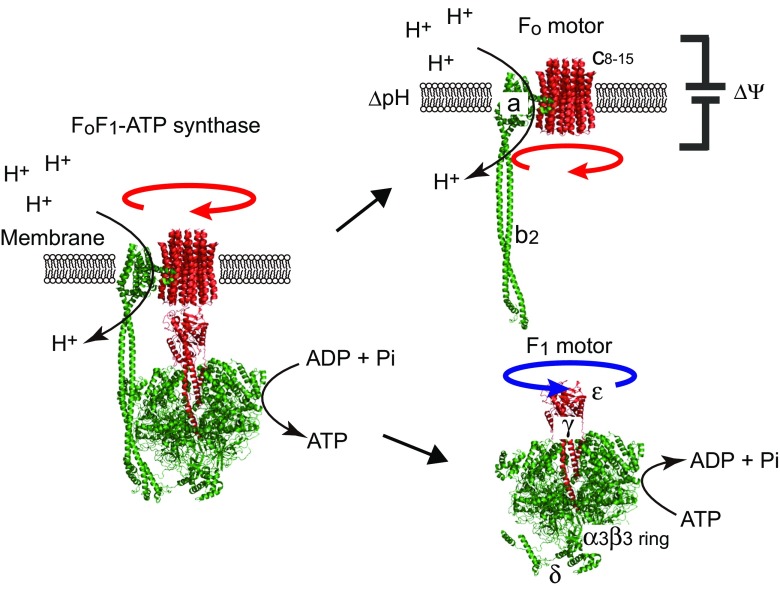
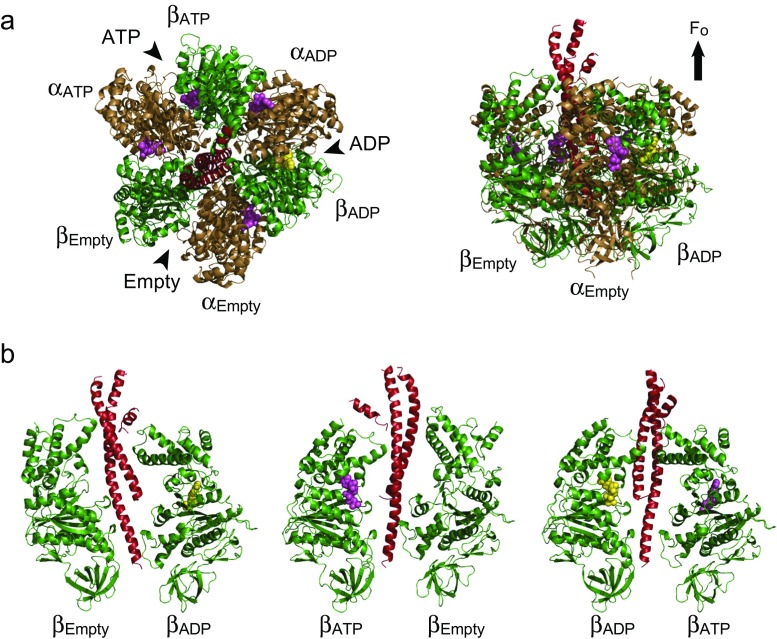
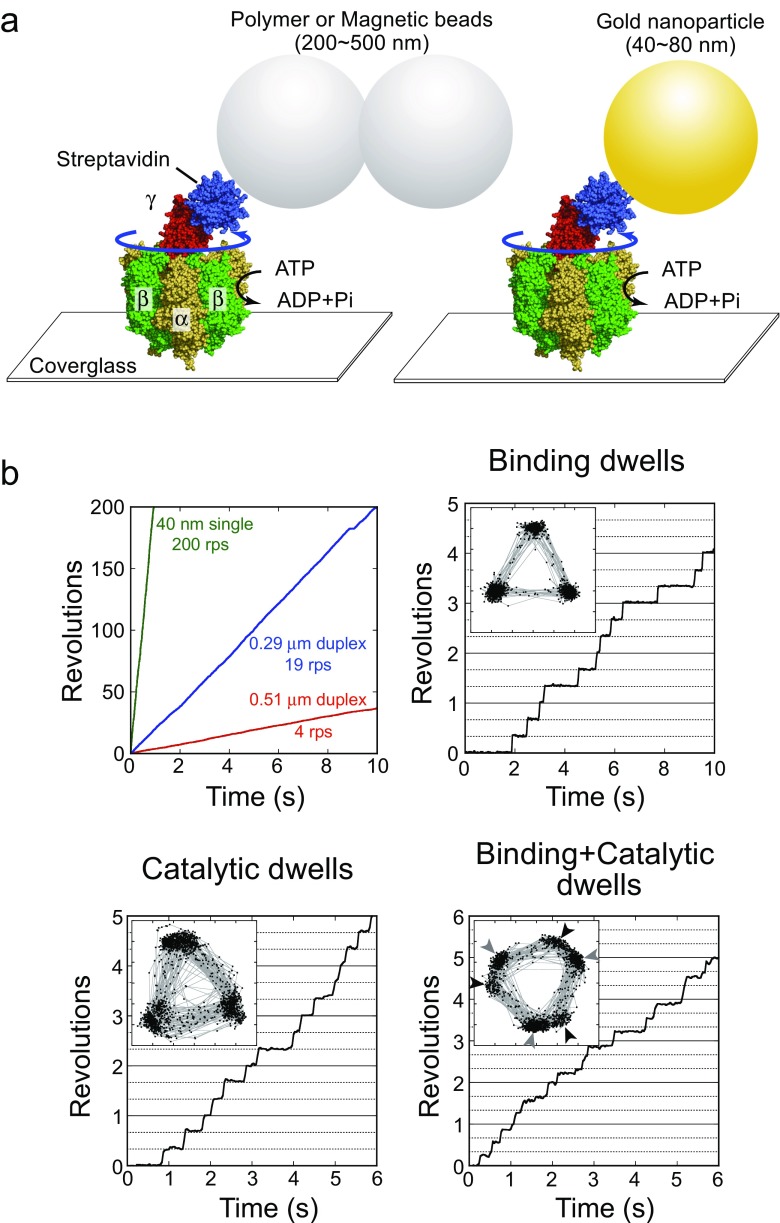
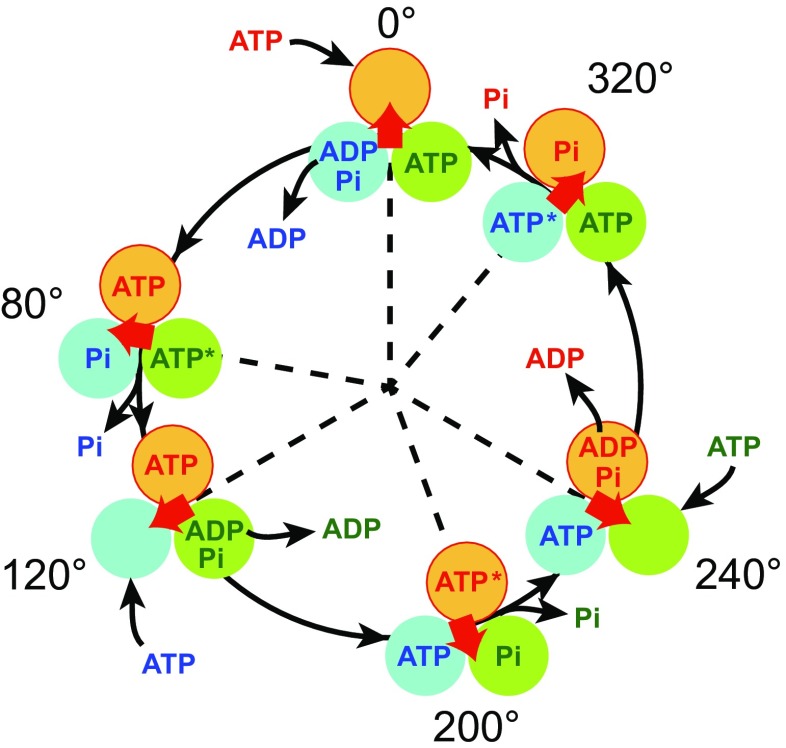
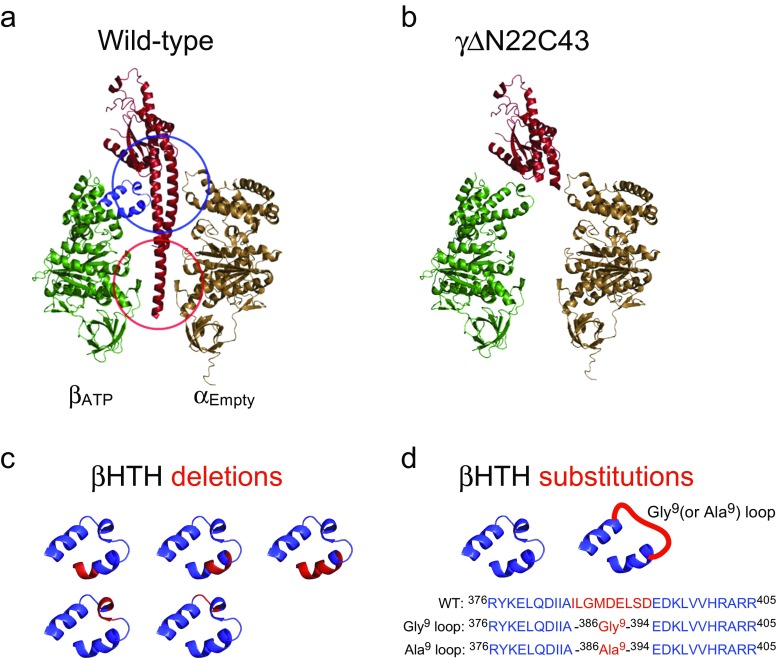
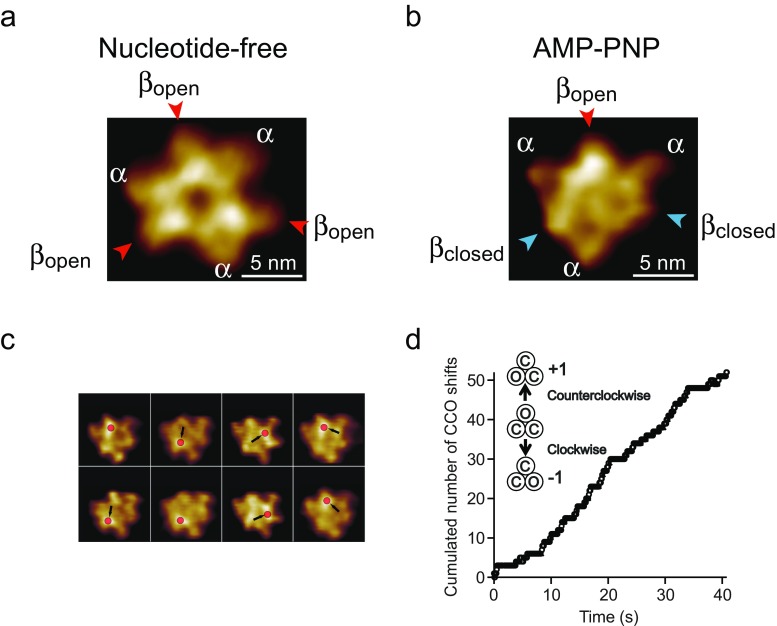
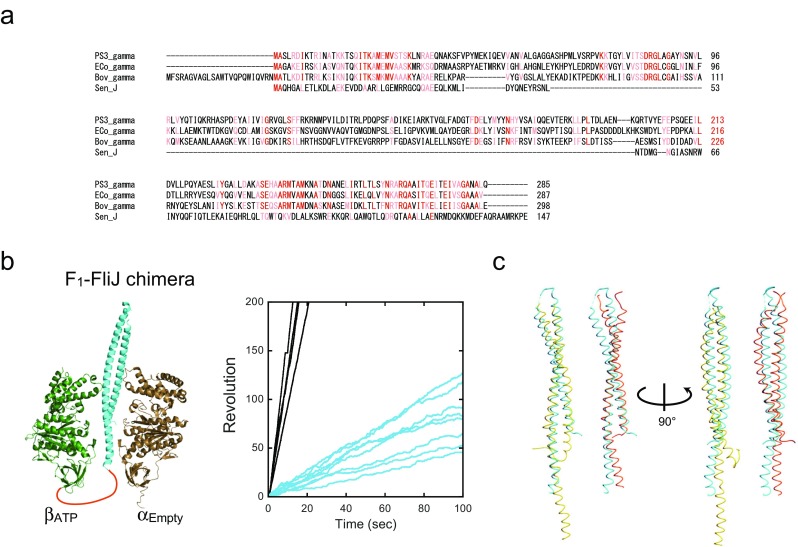
The F-ATPase is the catalytic portion of the FF ATP synthase and acts as a rotary molecular motor when it hydrolyzes ATP. Two decades have passed since the single-molecule rotation assay of F-ATPase was established. Although several fundamental issues remain elusive, basic properties of F-type ATPases as motor proteins have been well characterized, and a large part of the reaction scheme has been revealed by the combination of extensive structural, biochemical, biophysical, and theoretical studies. This review is intended to provide a concise summary of the fundamental features of F-ATPases, by use of the well-described model F from the thermophilic PS3 (TF). In the last part of this review, we focus on the robustness of the rotary catalysis of F-ATPase to provide a perspective on the re-designing of novel molecular machines.
F-ATP酶是FF型ATP合酶的催化部分,在水解ATP时充当旋转分子马达。自F-ATP酶的单分子旋转测定法建立以来,已经过去了二十年。尽管几个基本问题仍然难以捉摸,但F型ATP酶作为马达蛋白的基本特性已得到充分表征,并且通过广泛的结构、生化、生物物理和理论研究相结合,揭示了大部分反应机制。本综述旨在通过使用来自嗜热菌PS3(TF)的描述详尽的F模型,简要总结F-ATP酶的基本特征。在本综述的最后部分,我们将重点关注F-ATP酶旋转催化的稳健性,以便为新型分子机器的重新设计提供一个视角。