Saito Saburo, Aoki Ayana, Arai Iwao, Takaishi Shinya, Ito Haruyasu, Akiyama Nobutake, Kiyonari Hiroshi
Division of Molecular Immunology, Research Center for Medical Science, The Jikei University School of Medicine, 3-25-8 Nishi-shinbashi, Minato-ku, Tokyo, 105-8461 Japan.
Department of Dermatology, The Jikei University School of Medicine, 3-25-8 Nishi-shinbashi, Minato-ku, Tokyo, Japan.
Allergy Asthma Clin Immunol. 2017 Apr 17;13:23. doi: 10.1186/s13223-017-0194-9. eCollection 2017.
Interleukin-31 (IL-31) is a recently identified cytokine produced by Th2 cells that is involved in the development of atopic dermatitis-induced skin inflammation and pruritus. Its receptor, IL-31RA, is expressed by a number of cell types, including epithelial cells, eosinophils, and activated monocytes and macrophages. To date, however, the regulation of Th2 responses by distinct cell types and tissues expressing IL-31RA has not been well studied.
In this study, Cry j 2, one of the major allergens of Japanese cedar pollen, was administered to IL-31RA-deficient or wild-type (WT) mice via nasal or intraperitoneal injection for induction of specific Th2 responses.
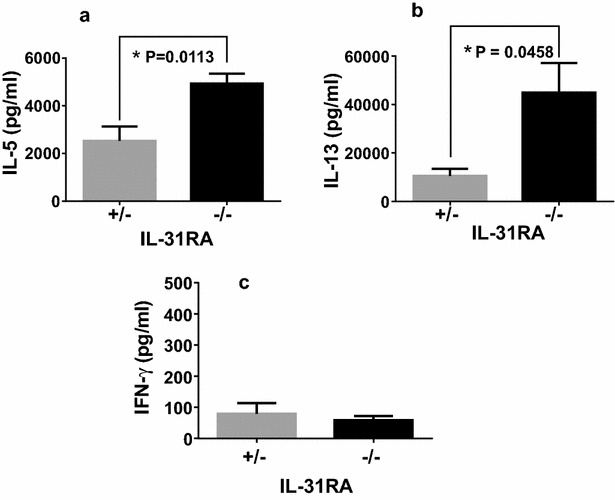
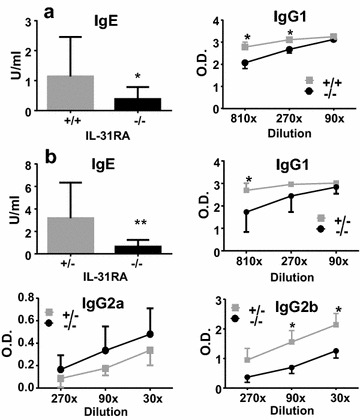
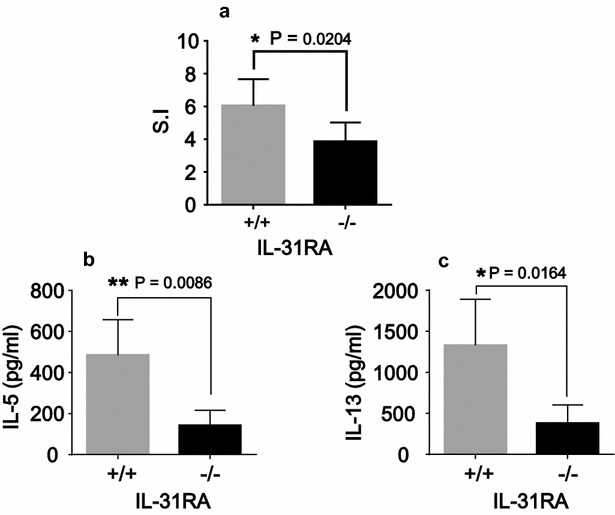
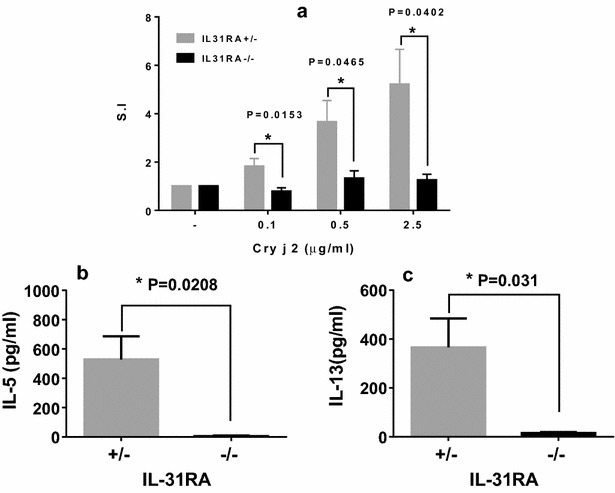
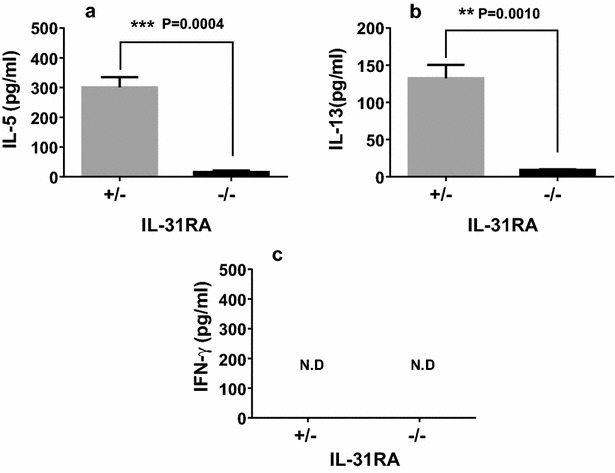
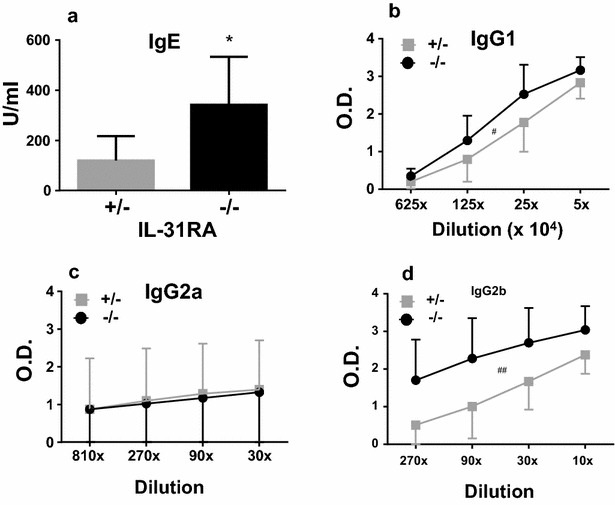
After nasal administration of Cry j 2, IL-31RA-deficient mice showed lower Cry j 2-specific CD4+ T cell proliferation, Th2 cytokine (IL-5 and IL-13) production, and Th2-mediated (IgE, IgG1, and IgG2b) antibody responses than WT mice. In contrast, IL-31RA-deficient mice administered Cry j 2 intraperitoneally showed stronger Th2 immune responses than WT mice.
These results indicate that IL-31R signaling positively regulates Th2 responses induced by nasal administration of Cry j 2, but negatively regulates these responses when Cry j 2 is administered intraperitoneally. Collectively, these data indicate that the induction of antigen-specific Th2 immune responses might depend on tissue-specific cell types expressing IL-31RA.
白细胞介素-31(IL-31)是一种最近发现的由Th2细胞产生的细胞因子,参与特应性皮炎诱导的皮肤炎症和瘙痒的发生。其受体IL-31RA在多种细胞类型中表达,包括上皮细胞、嗜酸性粒细胞以及活化的单核细胞和巨噬细胞。然而,迄今为止,表达IL-31RA的不同细胞类型和组织对Th2反应的调节尚未得到充分研究。
在本研究中,通过鼻腔或腹腔注射将日本雪松花粉的主要变应原之一Cry j 2给予IL-31RA缺陷型或野生型(WT)小鼠,以诱导特异性Th2反应。
鼻腔给予Cry j 2后,IL-31RA缺陷型小鼠的Cry j 2特异性CD4 + T细胞增殖、Th2细胞因子(IL-5和IL-13)产生以及Th2介导的(IgE、IgG1和IgG2b)抗体反应均低于WT小鼠。相反,腹腔注射Cry j 2的IL-31RA缺陷型小鼠表现出比WT小鼠更强的Th2免疫反应。
这些结果表明,IL-31R信号通路对鼻腔给予Cry j 2诱导的Th2反应起正向调节作用,但对腹腔注射Cry j 2时的这些反应起负向调节作用。总体而言,这些数据表明抗原特异性Th2免疫反应的诱导可能取决于表达IL-31RA的组织特异性细胞类型。