Department of Psychiatry, University of Pennsylvania Perelman School of Medicine, 3535 Market Street, Suite 4100, Philadelphia, PA, 19104, USA.
Pulmonary, Allergy, & Critical Care Division, University of Pennsylvania Presbyterian Medical Center, Philadelphia, PA, USA.
J Neurovirol. 2017 Aug;23(4):550-557. doi: 10.1007/s13365-017-0526-z. Epub 2017 Apr 20.
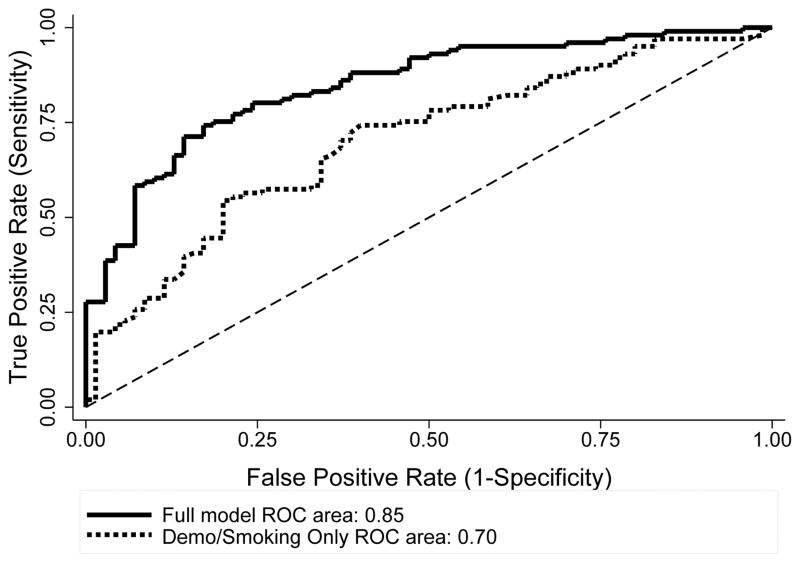
HIV-infected smokers lose more years of life to tobacco-related disease than HIV. Since neurocognitive deficits are common among those with HIV and are associated with smoking persistence, these deficits may be a unique barrier to smoking cessation among HIV-infected smokers. Documenting unique differences in and correlates of cognition among HIV-infected smokers is a critical step towards developing a population-specific tobacco cessation treatment. We compared neurocognitive function between HIV-infected (n = 103) and HIV-uninfected smokers (n = 70), accounting for demographic and smoking-related variables. We also evaluated whether HIV-related health outcomes (e.g., CD4 count, viral load, depression ratings, quality of life [QoL]) and HAART adherence were associated with cognition. Participants completed neurocognitive tasks (N-back and Continuous Performance Task [CPT]) measuring working memory, attention, and processing speed, and intra-individual variability. Stepwise regression models were conducted and validated with resampling techniques. HIV-infected smokers performed worse than HIV-uninfected smokers on working memory, processing speed, and intra-individual variability (all p < 0.01). ROC analysis for the model including cognitive measures demonstrated 85% area under the curve, which indicates "good prediction" for distinguishing between HIV-infected and HIV-uninfected smokers. This was a significant improvement over the model including demographic and smoking-related variables only (p = 0.0003). Among HIV-infected smokers, neurocognitive performance was negatively associated with QoL and depression ratings. Smoking cessation interventions for HIV-infected smokers should consider cognitive neurorehabilitation as a potential strategy to decrease the likelihood of nicotine relapse and decrease tobacco-related morbidity in this population.
HIV 感染者因烟草相关疾病而损失的寿命比 HIV 本身更多。由于 HIV 感染者中常见认知功能缺陷,且与吸烟持续存在相关,这些缺陷可能是 HIV 感染者戒烟的独特障碍。记录 HIV 感染者认知方面的独特差异及其相关因素,是为这一人群开发特定于人群的戒烟治疗方法的关键步骤。我们比较了 HIV 感染者(n=103)和 HIV 未感染者(n=70)的神经认知功能,同时考虑了人口统计学和与吸烟相关的变量。我们还评估了 HIV 相关健康结果(例如 CD4 计数、病毒载量、抑郁评分、生活质量 [QoL])和 HAART 依从性是否与认知相关。参与者完成了神经认知任务(N-back 和连续绩效任务 [CPT]),用于测量工作记忆、注意力和处理速度以及个体内变异性。采用逐步回归模型并结合重采样技术进行验证。HIV 感染者在工作记忆、处理速度和个体内变异性方面的表现均差于 HIV 未感染者(所有 p 值均<0.01)。包括认知测量的模型的 ROC 分析显示,曲线下面积为 85%,表明其能够“很好地”区分 HIV 感染者和 HIV 未感染者,这明显优于仅包括人口统计学和与吸烟相关变量的模型(p=0.0003)。在 HIV 感染者中,神经认知表现与 QoL 和抑郁评分呈负相关。针对 HIV 感染者的戒烟干预措施应考虑认知神经康复作为一种潜在策略,以降低该人群尼古丁复吸的可能性,并降低与烟草相关的发病率。