• 文献检索
  • 文档翻译
  • 深度研究
  • 学术资讯
  • Suppr Zotero 插件Zotero 插件
  • 邀请有礼
  • 套餐&价格
  • 历史记录
应用&插件
Suppr Zotero 插件Zotero 插件浏览器插件Mac 客户端Windows 客户端微信小程序
定价
高级版会员购买积分包购买API积分包
服务
文献检索文档翻译深度研究API 文档MCP 服务
关于我们
关于 Suppr公司介绍联系我们用户协议隐私条款
关注我们

Suppr 超能文献

核心技术专利:CN118964589B侵权必究
粤ICP备2023148730 号-1Suppr @ 2026

文献检索

告别复杂PubMed语法,用中文像聊天一样搜索,搜遍4000万医学文献。AI智能推荐,让科研检索更轻松。

立即免费搜索

文件翻译

保留排版,准确专业,支持PDF/Word/PPT等文件格式,支持 12+语言互译。

免费翻译文档

深度研究

AI帮你快速写综述,25分钟生成高质量综述,智能提取关键信息,辅助科研写作。

立即免费体验

对实验室啮齿动物剪趾或剪耳所致不适的系统评价。

A systematic review of discomfort due to toe or ear clipping in laboratory rodents.

作者信息

Wever Kimberley E, Geessink Florentine J, Brouwer Michelle A E, Tillema Alice, Ritskes-Hoitinga Merel

机构信息

1 SYstematic Review Centre for Laboratory animal Experimentation (SYRCLE).

2 Medical Library, Radboud University Medical Center, Nijmegen, The Netherlands.

出版信息

Lab Anim. 2017 Dec;51(6):583-600. doi: 10.1177/0023677217705912. Epub 2017 Apr 21.

DOI:10.1177/0023677217705912
PMID:28429644
原文链接:https://pmc.ncbi.nlm.nih.gov/articles/PMC5700778/
Abstract

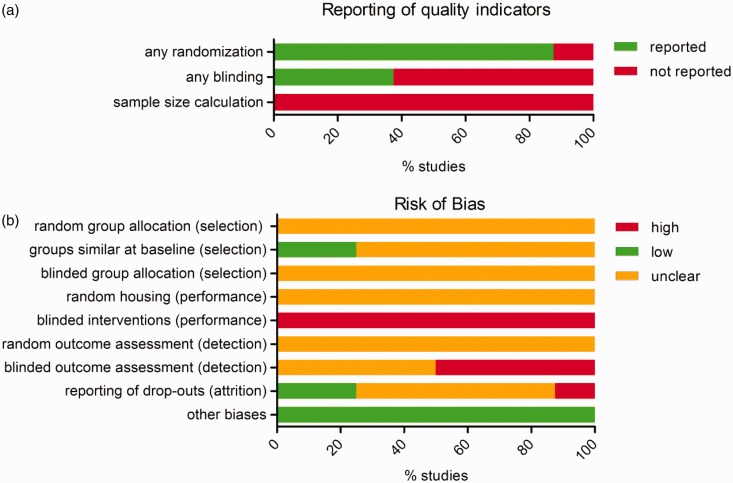
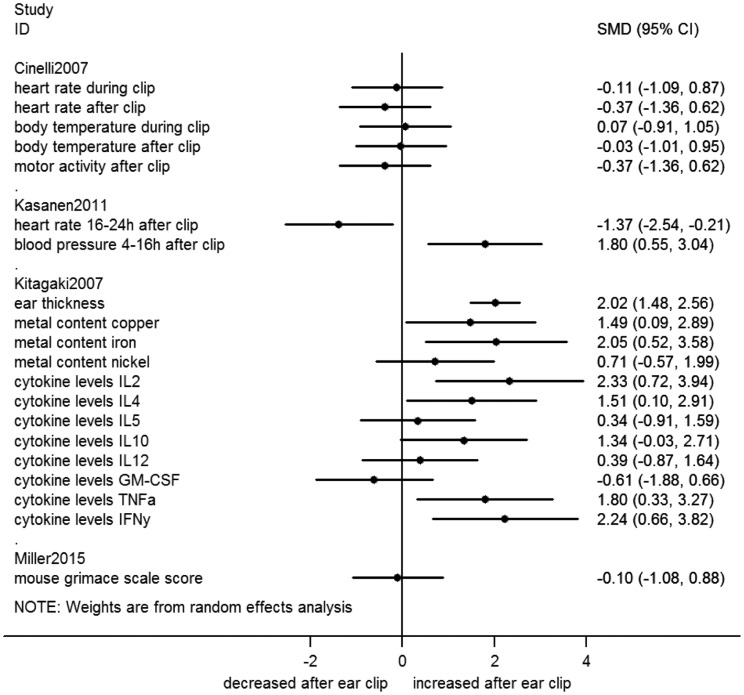
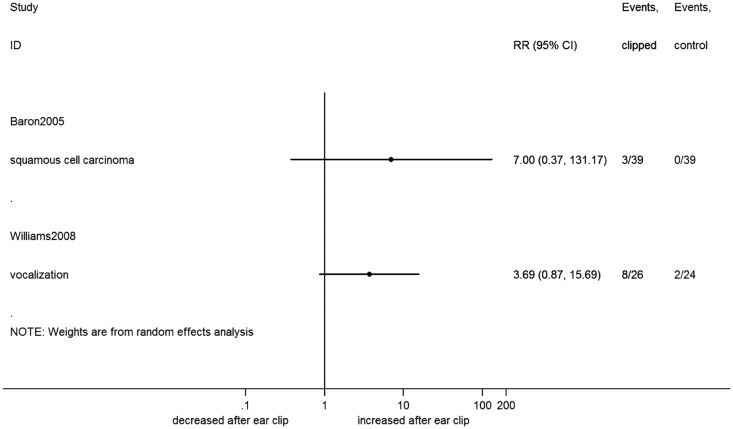
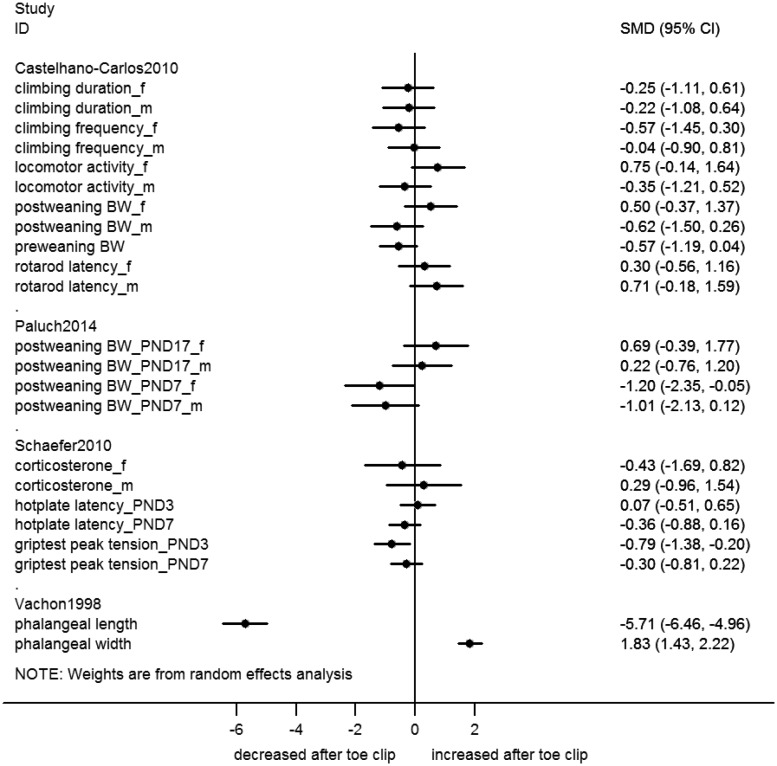
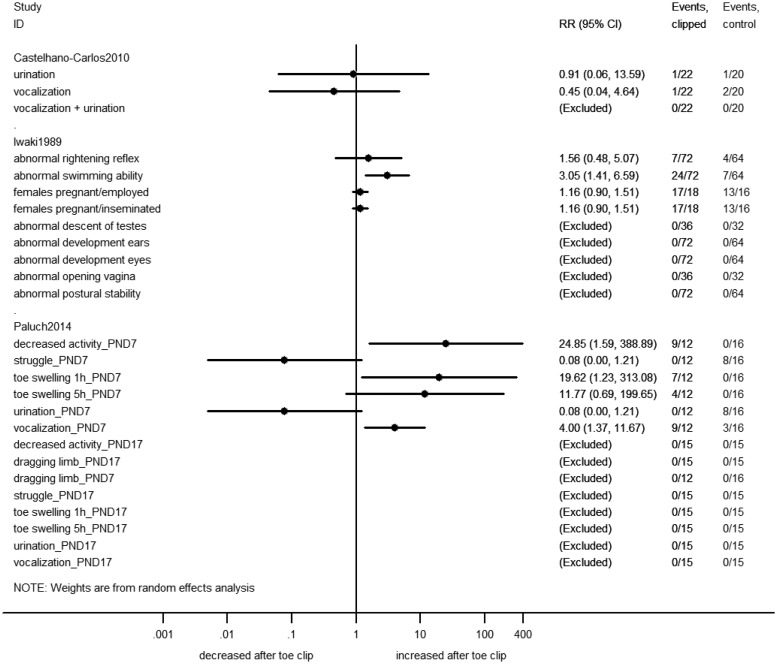
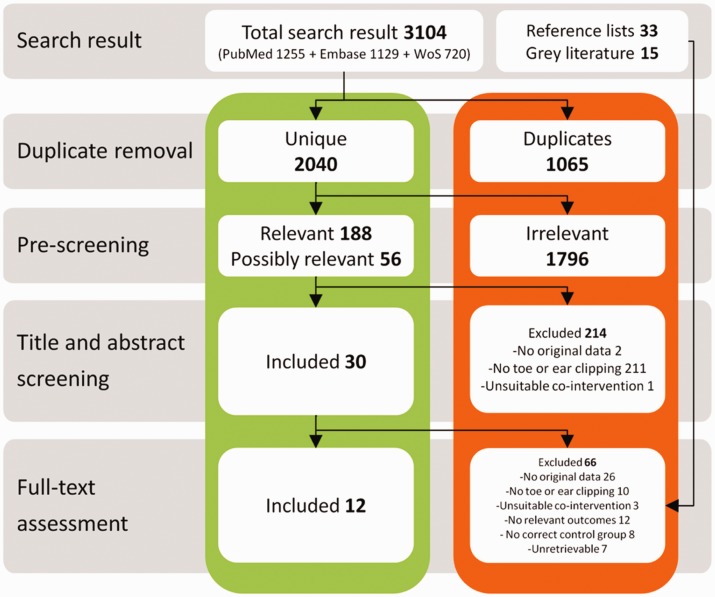
Toe clipping and ear clipping (also ear notching or ear punching) are frequently used methods for individual identification of laboratory rodents. These procedures potentially cause severe discomfort, which can reduce animal welfare and distort experimental results. However, no systematic summary of the evidence on this topic currently exists. We conducted a systematic review of the evidence for discomfort due to toe or ear clipping in rodents. The review methodology was pre-specified in a registered review protocol. The population, intervention, control, outcome (PICO) question was: In rodents, what is the effect of toe clipping or ear clipping, compared with no clipping or sham clipping, on welfare-related outcomes? Through a systematic search in PubMed, Embase, Web of Science and grey literature, we identified seven studies on the effect of ear clipping on animal welfare, and five such studies on toe clipping. Studies were included in the review if they contained original data from an in vivo experiment in rodents, assessing the effect of toe clipping or ear clipping on a welfare-related outcome. Case studies and studies applying unsuitable co-interventions were excluded. Study quality was appraised using an extended version of SYstematic Review Centre for Laboratory animal Experimentation (SYRCLE)'s risk of bias tool for animal studies. Study characteristics and outcome measures were highly heterogeneous, and there was an unclear or high risk of bias in all studies. We therefore present a narrative synthesis of the evidence identified. None of the studies reported a sample size calculation. Out of over 60 different outcomes, we found evidence of discomfort due to ear clipping in the form of increased respiratory volume, vocalization and blood pressure. For toe clipping, increased vocalization and decreased motor activity in pups were found, as well as long-term effects in the form of reduced grip strength and swimming ability in adults. In conclusion, there is too little evidence to reliably assess discomfort due to toe or ear clipping, and the quality of the available evidence is uncertain. Adequately powered, high-quality studies reporting reliable, relevant outcome measures are needed to accurately assess the impact of these identification techniques. Until more reliable evidence is available, any effect of toe clipping or ear clipping on animal welfare and study results cannot be confirmed or excluded.

摘要

剪趾和剪耳(也称为耳刻或耳打孔)是实验室啮齿动物个体识别常用的方法。这些操作可能会造成严重不适,进而降低动物福利并扭曲实验结果。然而,目前尚无关于该主题证据的系统总结。我们对啮齿动物因剪趾或剪耳导致不适的证据进行了系统综述。综述方法在已注册的综述方案中预先确定。人群、干预措施、对照、结局(PICO)问题为:在啮齿动物中,与不剪趾或假剪趾相比,剪趾或剪耳对与福利相关的结局有何影响?通过在PubMed、Embase、Web of Science和灰色文献中进行系统检索,我们确定了7项关于剪耳对动物福利影响的研究,以及5项关于剪趾的此类研究。如果研究包含来自啮齿动物体内实验的原始数据,评估剪趾或剪耳对与福利相关结局的影响,则纳入综述。案例研究和应用不合适的联合干预措施的研究被排除。使用实验室动物实验系统评价中心(SYRCLE)动物研究偏倚风险工具的扩展版本对研究质量进行评估。研究特征和结局指标高度异质,所有研究均存在不明确或高偏倚风险。因此,我们对所确定的证据进行了叙述性综合。没有一项研究报告样本量计算。在60多种不同结局中,我们发现有证据表明剪耳会导致不适,表现为呼吸量增加、发声和血压升高。对于剪趾,发现幼崽发声增加、运动活动减少,以及成年后握力和游泳能力下降等长期影响。总之,证据太少,无法可靠评估剪趾或剪耳引起的不适,现有证据的质量也不确定。需要开展有足够效力、高质量的研究,报告可靠、相关的结局指标,以准确评估这些识别技术的影响。在获得更可靠的证据之前,无法确定或排除剪趾或剪耳对动物福利和研究结果的任何影响。
https://cdn.ncbi.nlm.nih.gov/pmc/blobs/501c/5700778/709fa7058a46/10.1177_0023677217705912-fig6.jpg
https://cdn.ncbi.nlm.nih.gov/pmc/blobs/501c/5700778/b48922f93627/10.1177_0023677217705912-fig1.jpg
https://cdn.ncbi.nlm.nih.gov/pmc/blobs/501c/5700778/f93863fb6a9a/10.1177_0023677217705912-fig2.jpg
https://cdn.ncbi.nlm.nih.gov/pmc/blobs/501c/5700778/002b13f4fb56/10.1177_0023677217705912-fig3.jpg
https://cdn.ncbi.nlm.nih.gov/pmc/blobs/501c/5700778/d1ddb031999a/10.1177_0023677217705912-fig4.jpg
https://cdn.ncbi.nlm.nih.gov/pmc/blobs/501c/5700778/dc08dd90dc04/10.1177_0023677217705912-fig5.jpg
https://cdn.ncbi.nlm.nih.gov/pmc/blobs/501c/5700778/709fa7058a46/10.1177_0023677217705912-fig6.jpg
https://cdn.ncbi.nlm.nih.gov/pmc/blobs/501c/5700778/b48922f93627/10.1177_0023677217705912-fig1.jpg
https://cdn.ncbi.nlm.nih.gov/pmc/blobs/501c/5700778/f93863fb6a9a/10.1177_0023677217705912-fig2.jpg
https://cdn.ncbi.nlm.nih.gov/pmc/blobs/501c/5700778/002b13f4fb56/10.1177_0023677217705912-fig3.jpg
https://cdn.ncbi.nlm.nih.gov/pmc/blobs/501c/5700778/d1ddb031999a/10.1177_0023677217705912-fig4.jpg
https://cdn.ncbi.nlm.nih.gov/pmc/blobs/501c/5700778/dc08dd90dc04/10.1177_0023677217705912-fig5.jpg
https://cdn.ncbi.nlm.nih.gov/pmc/blobs/501c/5700778/709fa7058a46/10.1177_0023677217705912-fig6.jpg

相似文献

1
A systematic review of discomfort due to toe or ear clipping in laboratory rodents.对实验室啮齿动物剪趾或剪耳所致不适的系统评价。
Lab Anim. 2017 Dec;51(6):583-600. doi: 10.1177/0023677217705912. Epub 2017 Apr 21.
2
Topical antiseptics for chronic suppurative otitis media.用于慢性化脓性中耳炎的局部用抗菌剂。
Cochrane Database Syst Rev. 2025 Jun 9;6(6):CD013055. doi: 10.1002/14651858.CD013055.pub3.
3
Aural toilet (ear cleaning) for chronic suppurative otitis media.慢性化脓性中耳炎的耳道清理(耳部清洁)
Cochrane Database Syst Rev. 2025 Jun 9;6(6):CD013057. doi: 10.1002/14651858.CD013057.pub3.
4
Ear drops for the removal of ear wax.用于清除耳垢的滴耳剂。
Cochrane Database Syst Rev. 2018 Jul 25;7(7):CD012171. doi: 10.1002/14651858.CD012171.pub2.
5
Drugs for preventing postoperative nausea and vomiting in adults after general anaesthesia: a network meta-analysis.成人全身麻醉后预防术后恶心呕吐的药物:网状Meta分析
Cochrane Database Syst Rev. 2020 Oct 19;10(10):CD012859. doi: 10.1002/14651858.CD012859.pub2.
6
Transcutaneous electrical nerve stimulation (TENS) for neuropathic pain in adults.经皮电刺激神经疗法(TENS)治疗成人神经性疼痛。
Cochrane Database Syst Rev. 2017 Sep 14;9(9):CD011976. doi: 10.1002/14651858.CD011976.pub2.
7
Topical versus systemic antibiotics for chronic suppurative otitis media.用于慢性化脓性中耳炎的局部用抗生素与全身用抗生素对比
Cochrane Database Syst Rev. 2025 Jun 9;6(6):CD013053. doi: 10.1002/14651858.CD013053.pub3.
8
Physical activity and exercise for chronic pain in adults: an overview of Cochrane Reviews.成人慢性疼痛的体力活动与锻炼:Cochrane系统评价概述
Cochrane Database Syst Rev. 2017 Jan 14;1(1):CD011279. doi: 10.1002/14651858.CD011279.pub2.
9
Topical antibiotics for chronic suppurative otitis media.用于慢性化脓性中耳炎的局部用抗生素
Cochrane Database Syst Rev. 2025 Jun 9;6:CD013051. doi: 10.1002/14651858.CD013051.pub3.
10
Physical activity for treatment of irritable bowel syndrome.体力活动治疗肠易激综合征。
Cochrane Database Syst Rev. 2022 Jun 29;6(6):CD011497. doi: 10.1002/14651858.CD011497.pub2.

引用本文的文献

1
Meta-analysis of niacin and NAD metabolite treatment in infectious disease animal studies suggests benefit but requires confirmation in clinically relevant models.对传染病动物研究中烟酸和烟酰胺腺嘌呤二核苷酸(NAD)代谢物治疗的荟萃分析表明有益,但需要在临床相关模型中得到证实。
Sci Rep. 2025 Apr 12;15(1):12621. doi: 10.1038/s41598-025-95735-y.
2
Should I Stay or Should I Go? Seasonal Fluctuations of Wood Mouse Populations in Fields Surrounded by Woodlands.我该留下还是离开?林地环绕田野中林姬鼠种群的季节性波动
Animals (Basel). 2023 Jun 17;13(12):2017. doi: 10.3390/ani13122017.
3
A Comparison of Small Rodent Assemblages after a 20 Year Interval in the Alps.

本文引用的文献

1
Risk of Bias in Reports of In Vivo Research: A Focus for Improvement.体内研究报告中的偏倚风险:改进重点
PLoS Biol. 2015 Oct 13;13(10):e1002273. doi: 10.1371/journal.pbio.1002273. eCollection 2015 Oct.
2
Using the mouse grimace scale to assess pain associated with routine ear notching and the effect of analgesia in laboratory mice.使用小鼠面部表情评分法评估实验小鼠常规耳标记相关疼痛及镇痛效果。
Lab Anim. 2015 Apr;49(2):117-20. doi: 10.1177/0023677214559084. Epub 2014 Nov 6.
3
SYRCLE's risk of bias tool for animal studies.SYRCLE 动物研究偏倚风险评估工具。
阿尔卑斯山20年间小型啮齿动物群落的比较
Animals (Basel). 2023 Apr 19;13(8):1407. doi: 10.3390/ani13081407.
4
Effect of low-to-moderate hyperoxia on lung injury in preclinical animal models: a systematic review and meta-analysis.低至中度高氧对临床前动物模型肺损伤的影响:一项系统评价和荟萃分析
Intensive Care Med Exp. 2023 Apr 24;11(1):22. doi: 10.1186/s40635-023-00501-x.
5
The Pen Is Milder Than the Blade: Identification Marking Mice Using Ink on the Tail Appears More Humane Than Ear-Punching Even with Local Anaesthetic.笔比刀片温和:用墨水在小鼠尾巴上做识别标记似乎比即使使用局部麻醉剂进行耳部打孔更人道。
Animals (Basel). 2021 Jun 3;11(6):1664. doi: 10.3390/ani11061664.
6
The Effects of Obesity on Outcome in Preclinical Animal Models of Infection and Sepsis: A Systematic Review and Meta-Analysis.肥胖对感染和脓毒症临床前动物模型结局的影响:系统评价和荟萃分析。
J Obes. 2020 Feb 17;2020:1508764. doi: 10.1155/2020/1508764. eCollection 2020.
7
Checkpoint inhibitor therapy in preclinical sepsis models: a systematic review and meta-analysis.临床前脓毒症模型中的检查点抑制剂疗法:一项系统综述和荟萃分析。
Intensive Care Med Exp. 2020 Feb 4;8(1):7. doi: 10.1186/s40635-019-0290-x.
8
Welfare and Scientific Considerations of Tattooing and Ear Tagging for Mouse Identification.用于小鼠识别的纹身和耳标标记的福利与科学考量。
J Am Assoc Lab Anim Sci. 2019 Mar 1;58(2):142-153. doi: 10.30802/AALAS-JAALAS-18-000057. Epub 2019 Feb 27.
BMC Med Res Methodol. 2014 Mar 26;14:43. doi: 10.1186/1471-2288-14-43.
4
Developmental and behavioral effects of toe clipping on neonatal and preweanling mice with and without vapocoolant anesthesia.有无挥发性冷却剂麻醉情况下,断趾对新生及断奶前小鼠发育和行为的影响。
J Am Assoc Lab Anim Sci. 2014 Mar;53(2):132-40.
5
Updated version of the Embase search filter for animal studies.动物研究的Embase检索过滤器更新版本。
Lab Anim. 2014 Jan;48(1):88. doi: 10.1177/0023677213494374. Epub 2013 Jul 8.
6
FELASA guidelines for the refinement of methods for genotyping genetically-modified rodents: a report of the Federation of European Laboratory Animal Science Associations Working Group.FELASA 指导原则:基因修饰啮齿类动物基因分型方法的优化——欧洲实验动物科学协会联合会工作组的报告。
Lab Anim. 2013 Jul;47(3):134-45. doi: 10.1177/0023677212473918.
7
Report of the Federation of European Laboratory Animal Science Associations Working Group on animal identification.欧洲实验动物科学协会联合会动物识别工作组报告。
Lab Anim. 2013 Jan;47(1):2-11. doi: 10.1177/002367712473290.
8
Assessment of routine procedure effect on breathing parameters in mice by using whole-body plethysmography.通过全身体积描记法评估常规程序对小鼠呼吸参数的影响。
J Am Assoc Lab Anim Sci. 2012 Jul;51(4):469-74.
9
Comparison of ear tattoo, ear notching and microtattoo in rats undergoing cardiovascular telemetry.在接受心血管遥测的大鼠中比较耳纹身、耳缺刻和微纹身。
Lab Anim. 2011 Jul;45(3):154-9. doi: 10.1258/la.2011.010113. Epub 2011 Apr 19.
10
Improving bioscience research reporting: the ARRIVE guidelines for reporting animal research.改进生物科学研究报告:动物研究报告的ARRIVE指南
PLoS Biol. 2010 Jun 29;8(6):e1000412. doi: 10.1371/journal.pbio.1000412.