Department of Plant Sciences, University of Tennessee, Knoxville, TN, USA.
BioEnergy Science Center (BESC), Oak Ridge National Laboratory, Oak Ridge, TN, USA.
Plant Biotechnol J. 2018 Jan;16(1):39-49. doi: 10.1111/pbi.12747. Epub 2017 Jun 20.
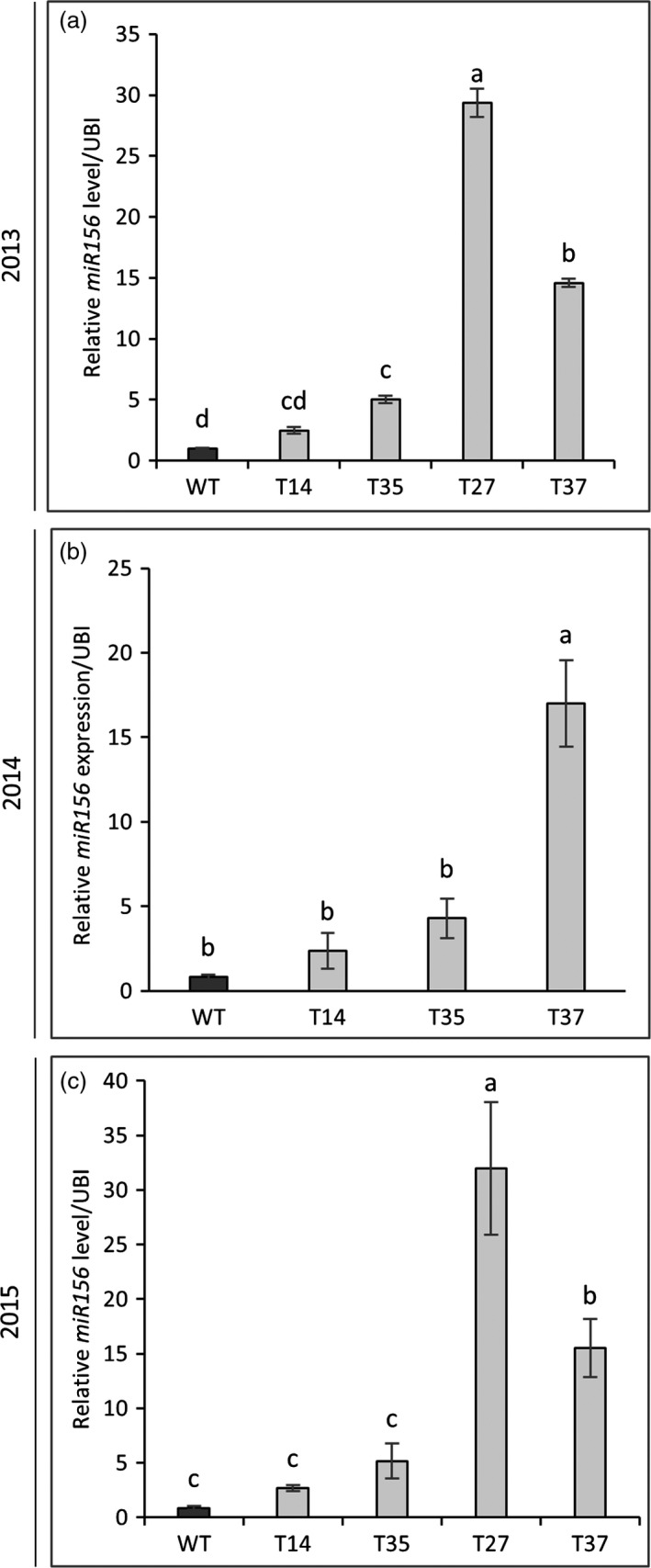
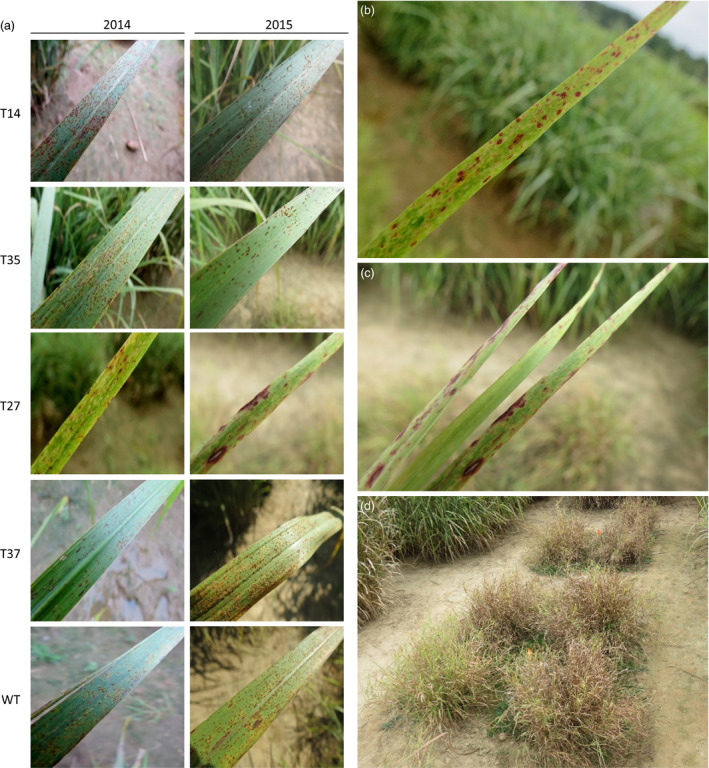
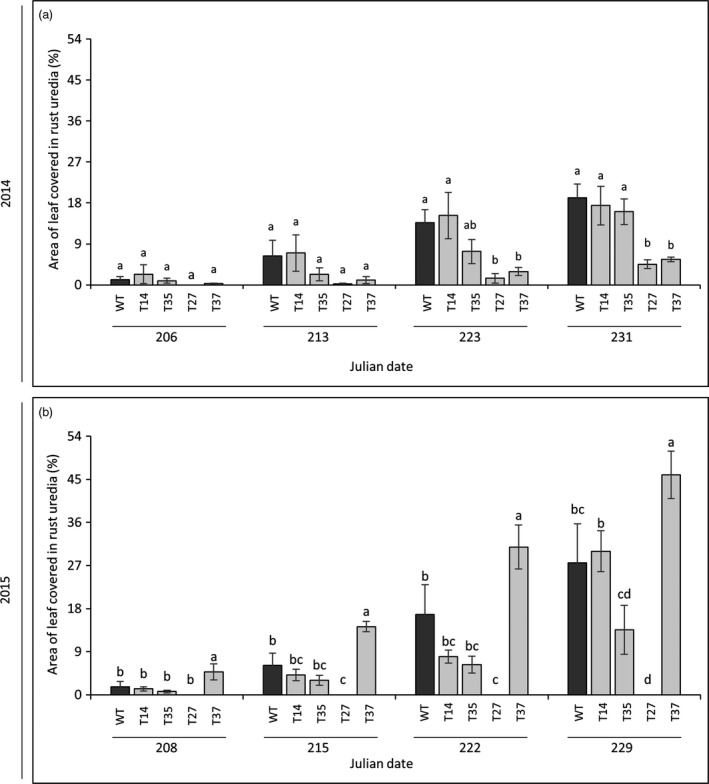
Sustainable utilization of lignocellulosic perennial grass feedstocks will be enabled by high biomass production and optimized cell wall chemistry for efficient conversion into biofuels. MicroRNAs are regulatory elements that modulate the expression of genes involved in various biological functions in plants, including growth and development. In greenhouse studies, overexpressing a microRNA (miR156) gene in switchgrass had dramatic effects on plant architecture and flowering, which appeared to be driven by transgene expression levels. High expressing lines were extremely dwarfed, whereas low and moderate-expressing lines had higher biomass yields, improved sugar release and delayed flowering. Four lines with moderate or low miR156 overexpression from the prior greenhouse study were selected for a field experiment to assess the relationship between miR156 expression and biomass production over three years. We also analysed important bioenergy feedstock traits such as flowering, disease resistance, cell wall chemistry and biofuel production. Phenotypes of the transgenic lines were inconsistent between the greenhouse and the field as well as among different field growing seasons. One low expressing transgenic line consistently produced more biomass (25%-56%) than the control across all three seasons, which translated to the production of 30% more biofuel per plant during the final season. The other three transgenic lines produced less biomass than the control by the final season, and the two lines with moderate expression levels also exhibited altered disease susceptibilities. Results of this study emphasize the importance of performing multiyear field studies for plants with altered regulatory transgenes that target plant growth and development.
木质纤维素多年生草本饲料的可持续利用将通过高生物量生产和优化细胞壁化学性质来实现,以有效转化为生物燃料。microRNAs 是调节植物中各种生物功能基因表达的调节因子,包括生长和发育。在温室研究中,柳枝稷中过表达 microRNA(miR156)基因对植物结构和开花有显著影响,这似乎是由转基因表达水平驱动的。高表达株系极度矮小,而低表达和中表达株系的生物量产量更高,糖释放改善,开花延迟。从先前的温室研究中选择了四个具有中度或低度 miR156 过表达的株系进行田间试验,以评估三年内 miR156 表达与生物量生产之间的关系。我们还分析了重要的生物能源饲料特性,如花、抗病性、细胞壁化学和生物燃料生产。转基因株系的表型在温室和田间以及不同的田间生长季节之间不一致。一个低表达的转基因株系在所有三个季节的生物量(25%-56%)都比对照高,这意味着在最后一个季节,每株植物的生物燃料产量增加了 30%。到最后一个季节,其他三个转基因株系的生物量比对照少,两个中表达水平的株系也表现出不同的抗病性。本研究的结果强调了对目标是植物生长和发育的具有改变的调节转基因植物进行多年田间研究的重要性。