Gutiérrez-Preciado Ana, Vargas-Chávez Carlos, Reyes-Prieto Mariana, Ordoñez Omar F, Santos-García Diego, Rosas-Pérez Tania, Valdivia-Anistro Jorge, Rebollar Eria A, Saralegui Andrés, Moya Andrés, Merino Enrique, Farías María Eugenia, Latorre Amparo, Souza Valeria
Unidad de Genética Evolutiva, Instituto Cavanilles de Biodiversidad y Biología Evolutiva, Universidad de Valencia, Calle Catedrático José Beltrán Martínez, Paterna, Valencia, Spain.
Current affiliation: Ecologie Systématique Evolution, CNRS, AgroParisTech, Université Paris Sud (Paris XI), Orsay, France.
PeerJ. 2017 Apr 19;5:e3162. doi: 10.7717/peerj.3162. eCollection 2017.
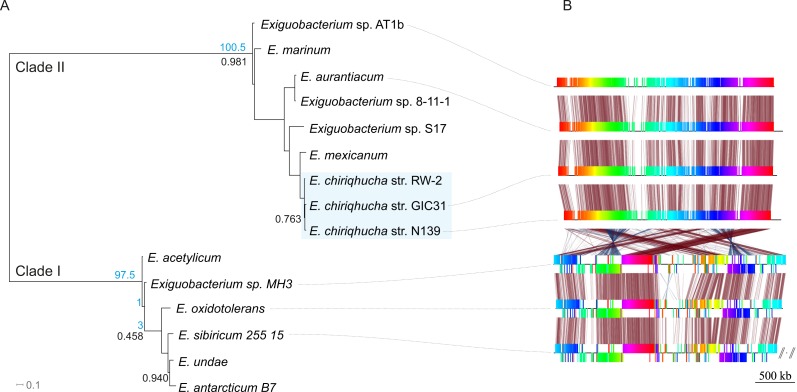
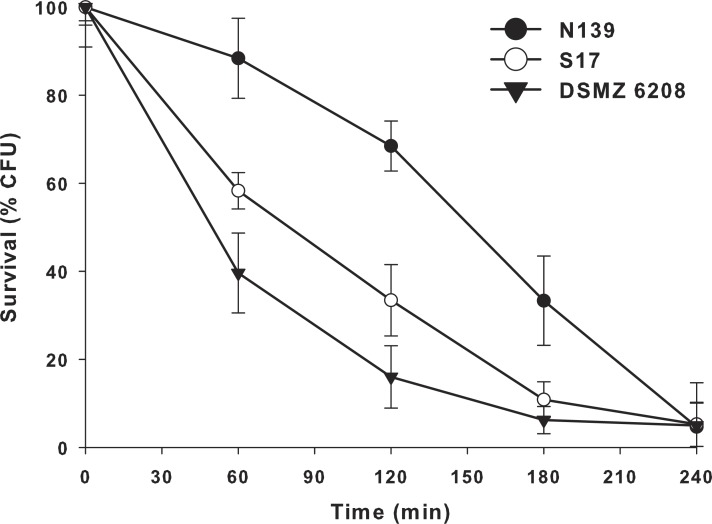
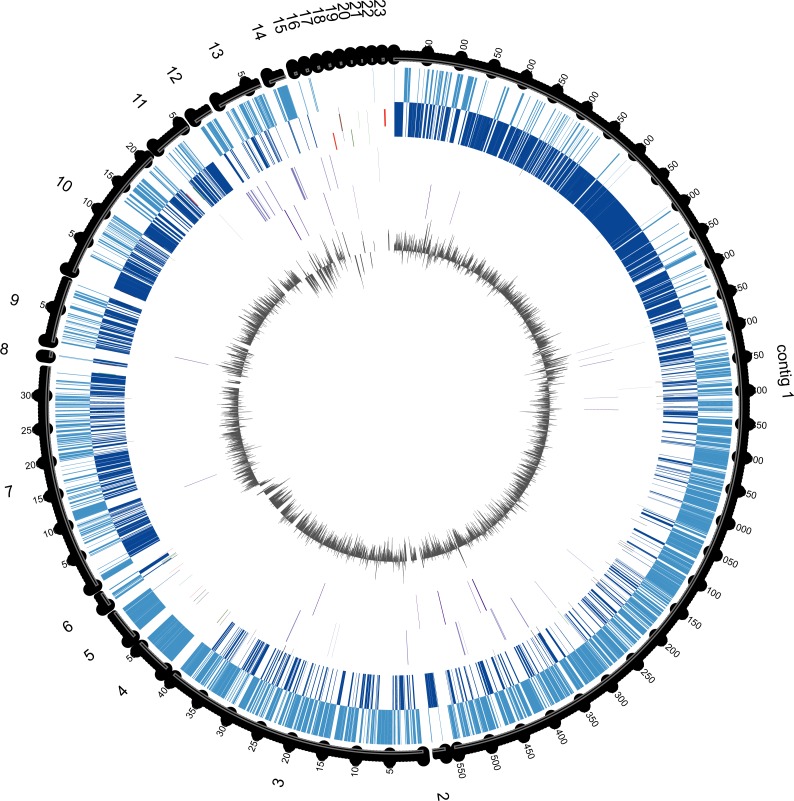
We report the genome sequence of str. N139, isolated from a high-altitude Andean lake. Comparative genomic analyses of the genomes available suggest that our strain belongs to the same species as the previously reported str. RW-2 and str. GIC 31. We describe this species and propose the name to group them. 'Chiri qhucha' in Quechua means 'cold lake', which is a common origin of these three cosmopolitan Exiguobacteria. The 2,952,588-bp str. N139 genome contains one chromosome and three megaplasmids. The genome analysis of the Andean strain suggests the presence of enzymes that confer str. N139 the ability to grow under multiple environmental extreme conditions, including high concentrations of different metals, high ultraviolet B radiation, scavenging for phosphorous and coping with high salinity. Moreover, the regulation of its tryptophan biosynthesis suggests that novel pathways remain to be discovered, and that these pathways might be fundamental in the amino acid metabolism of the microbial community from Laguna Negra, Argentina.
我们报告了从安第斯山脉高海拔湖泊中分离出的菌株N139的基因组序列。对现有基因组的比较基因组分析表明,我们的菌株与先前报道的菌株RW-2和菌株GIC 31属于同一物种。我们描述了这个物种并提出了将它们归为一类的名称。克丘亚语中的“Chiri qhucha”意为“寒冷的湖泊”,这是这三种世界性微小杆菌的共同起源。2952588碱基对的菌株N139基因组包含一条染色体和三个大质粒。对安第斯菌株的基因组分析表明,存在使菌株N139能够在多种极端环境条件下生长的酶,这些条件包括高浓度的不同金属、高紫外线B辐射、磷的 scavenging(此处原文可能有误,推测可能是scavenging for phosphorus,意为“磷的清除”)以及应对高盐度。此外,其色氨酸生物合成的调控表明仍有待发现新的途径,并且这些途径可能是阿根廷内格拉湖微生物群落氨基酸代谢的基础。