Kikuchi Yukiko, Attaheri Adam, Wilson Benjamin, Rhone Ariane E, Nourski Kirill V, Gander Phillip E, Kovach Christopher K, Kawasaki Hiroto, Griffiths Timothy D, Howard Matthew A, Petkov Christopher I
Institute of Neuroscience, Newcastle University, Newcastle upon Tyne, United Kingdom.
Centre for Behaviour and Evolution, Newcastle University, Newcastle upon Tyne, United Kingdom.
PLoS Biol. 2017 Apr 25;15(4):e2000219. doi: 10.1371/journal.pbio.2000219. eCollection 2017 Apr.
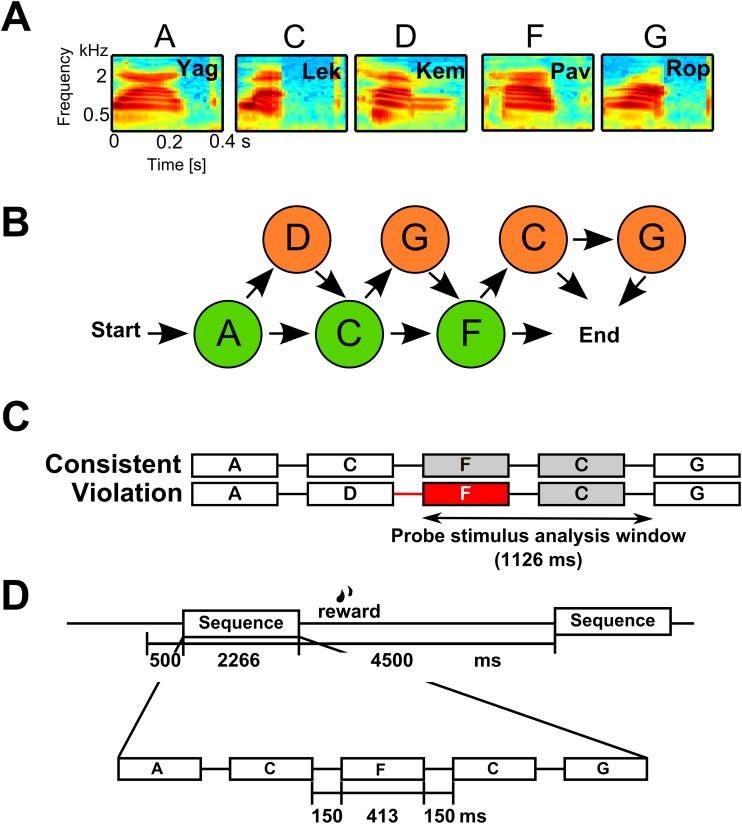
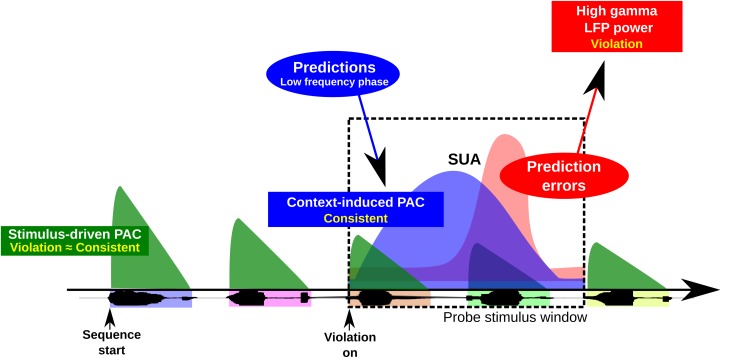
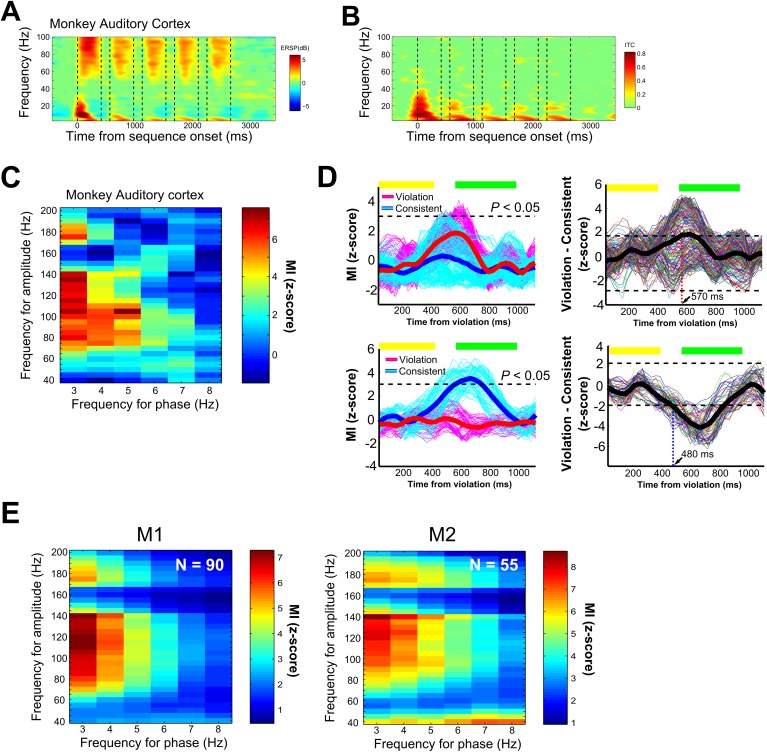
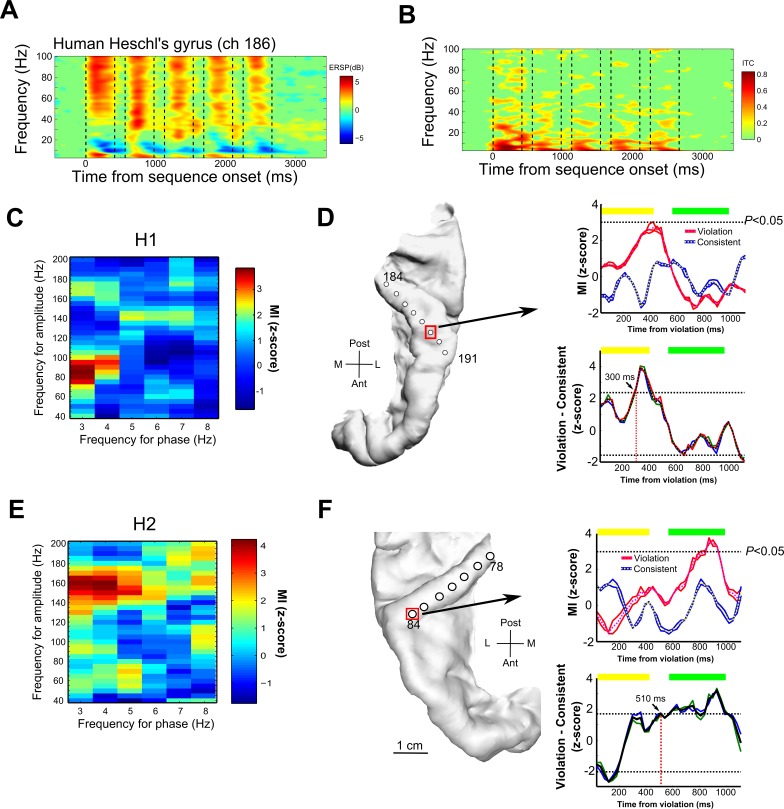
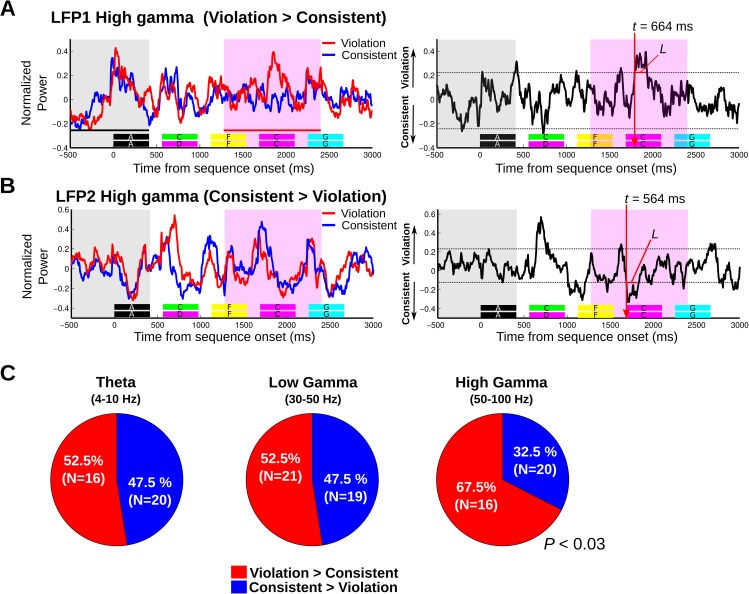
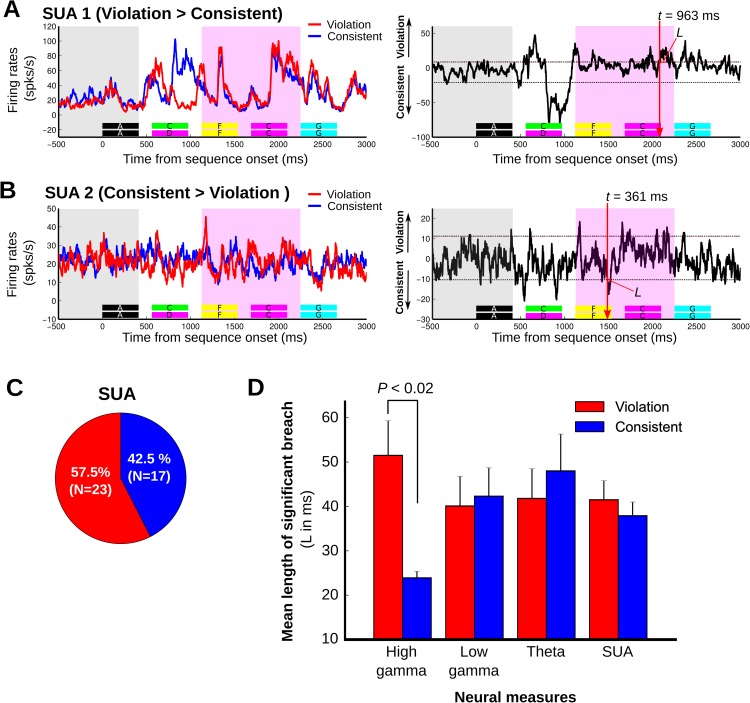
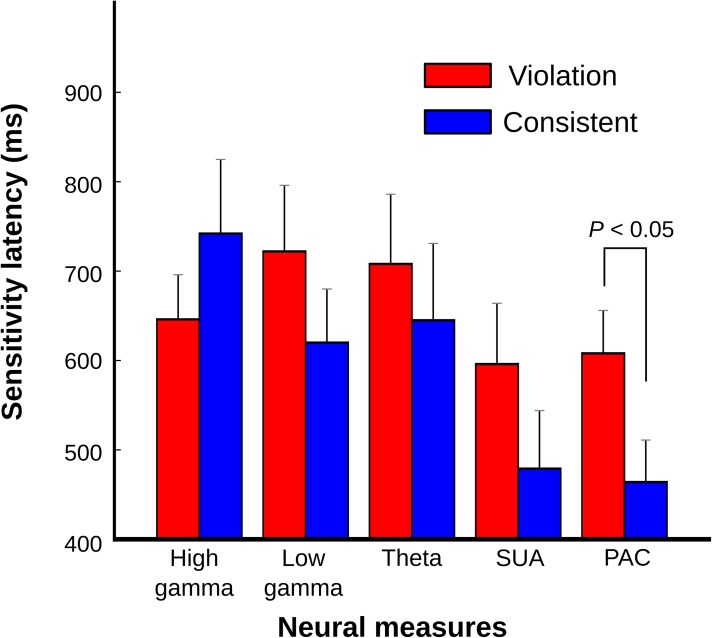
Learning complex ordering relationships between sensory events in a sequence is fundamental for animal perception and human communication. While it is known that rhythmic sensory events can entrain brain oscillations at different frequencies, how learning and prior experience with sequencing relationships affect neocortical oscillations and neuronal responses is poorly understood. We used an implicit sequence learning paradigm (an "artificial grammar") in which humans and monkeys were exposed to sequences of nonsense words with regularities in the ordering relationships between the words. We then recorded neural responses directly from the auditory cortex in both species in response to novel legal sequences or ones violating specific ordering relationships. Neural oscillations in both monkeys and humans in response to the nonsense word sequences show strikingly similar hierarchically nested low-frequency phase and high-gamma amplitude coupling, establishing this form of oscillatory coupling-previously associated with speech processing in the human auditory cortex-as an evolutionarily conserved biological process. Moreover, learned ordering relationships modulate the observed form of neural oscillatory coupling in both species, with temporally distinct neural oscillatory effects that appear to coordinate neuronal responses in the monkeys. This study identifies the conserved auditory cortical neural signatures involved in monitoring learned sequencing operations, evident as modulations of transient coupling and neuronal responses to temporally structured sensory input.
学习序列中感觉事件之间复杂的排序关系对于动物感知和人类交流至关重要。虽然已知有节奏的感觉事件可以在不同频率上诱导脑振荡,但学习和先前的序列关系经验如何影响新皮层振荡和神经元反应却知之甚少。我们使用了一种内隐序列学习范式(一种“人工语法”),其中人类和猴子接触由无意义单词组成的序列,这些单词之间的排序关系具有规律性。然后,我们直接记录了这两个物种的听觉皮层对新的合法序列或违反特定排序关系的序列的神经反应。猴子和人类对无意义单词序列的神经振荡表现出惊人的相似的分层嵌套低频相位和高伽马振幅耦合,将这种先前与人类听觉皮层语音处理相关的振荡耦合形式确立为一种进化上保守的生物学过程。此外,学习到的排序关系调节了这两个物种中观察到的神经振荡耦合形式,在猴子中出现了时间上不同的神经振荡效应,这些效应似乎协调了神经元反应。这项研究确定了参与监测学习到的序列操作的保守听觉皮层神经特征,表现为对时间结构感觉输入的瞬态耦合和神经元反应的调制。