Medizinische Klinik und Poliklinik IV, Klinikum der LMU München, Munich, Germany.
Medizinische Klinik und Poliklinik III, Klinikum der LMU München, Munich, Germany.
Sci Rep. 2017 Apr 25;7(1):1112. doi: 10.1038/s41598-017-01148-x.
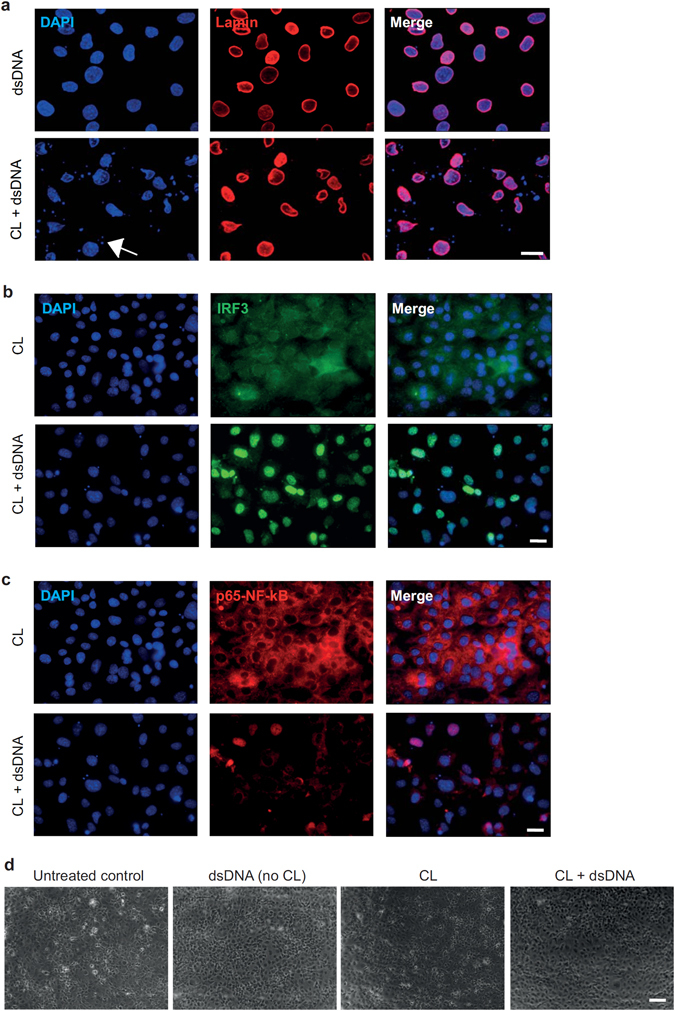
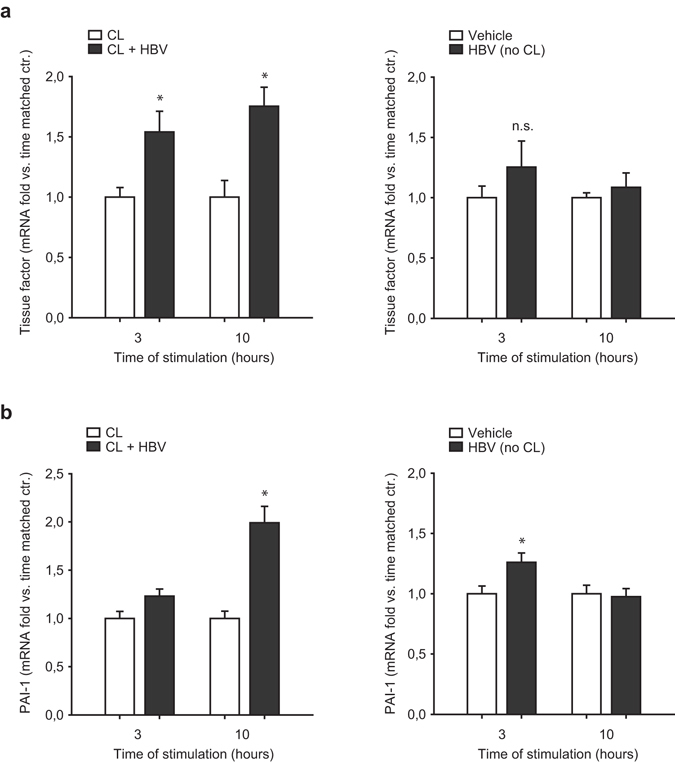
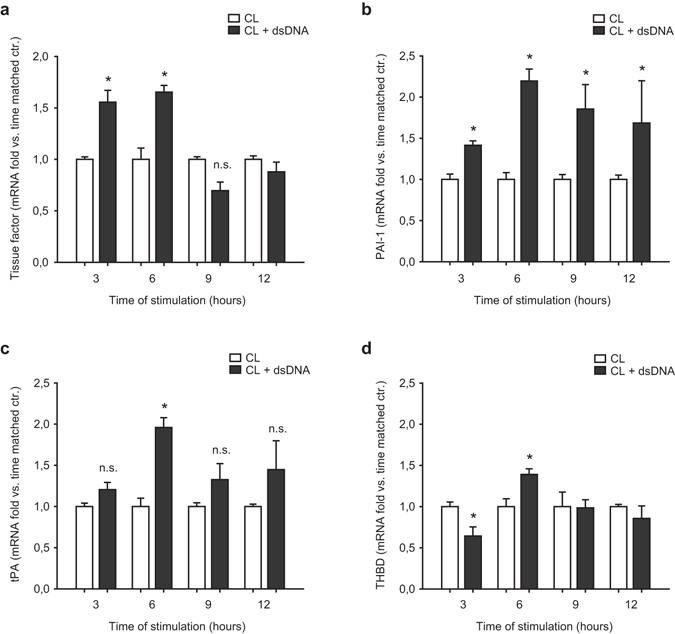
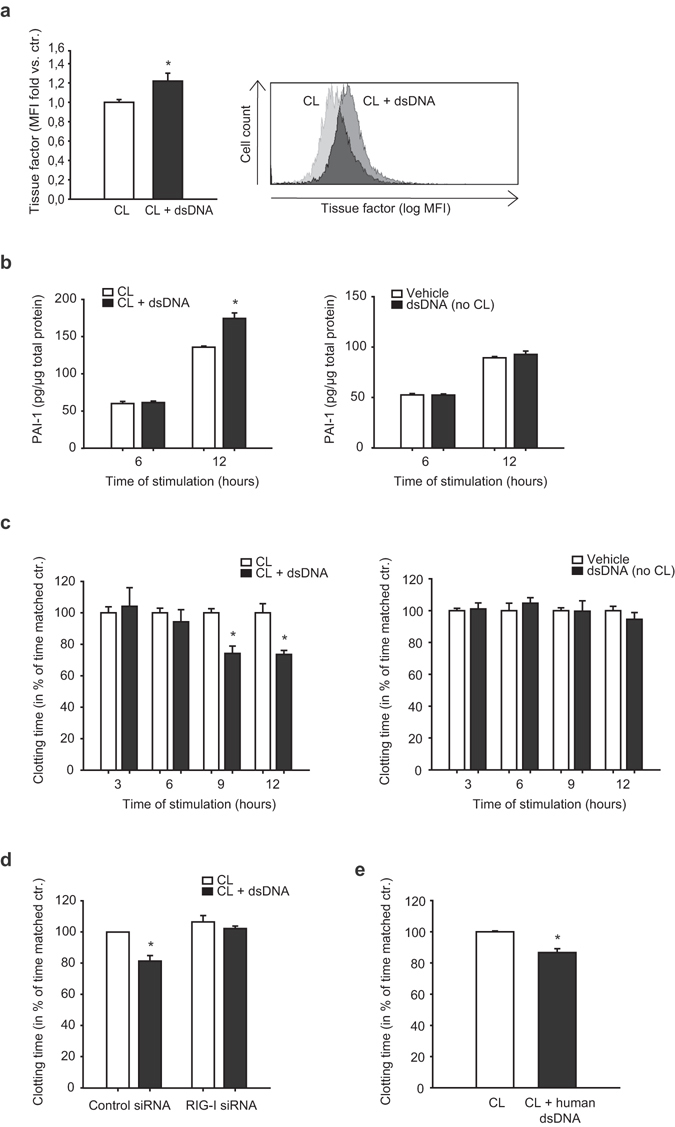
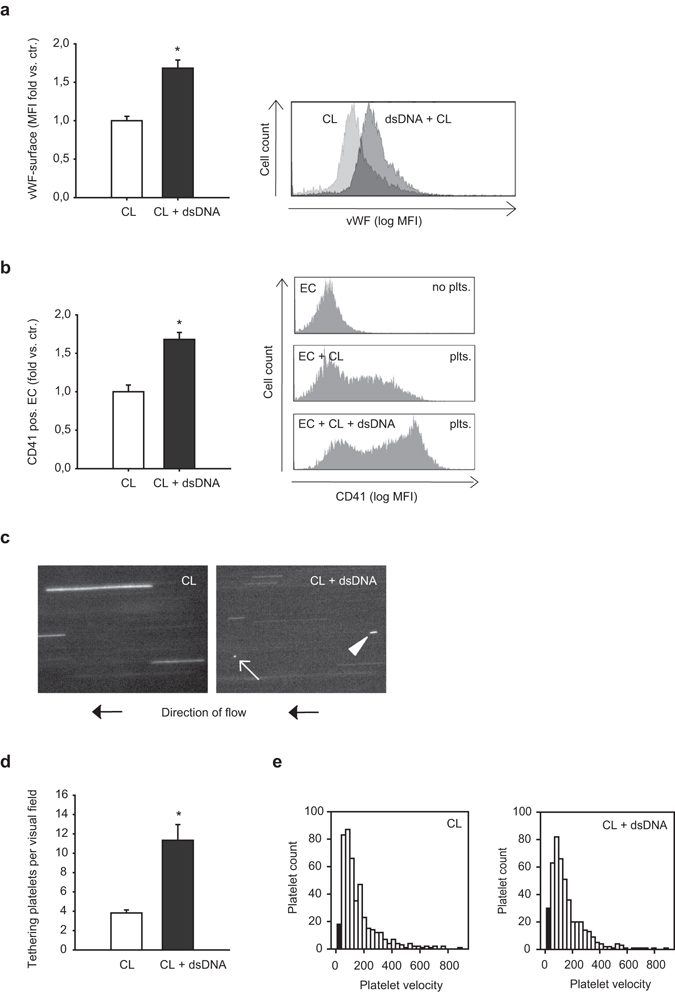
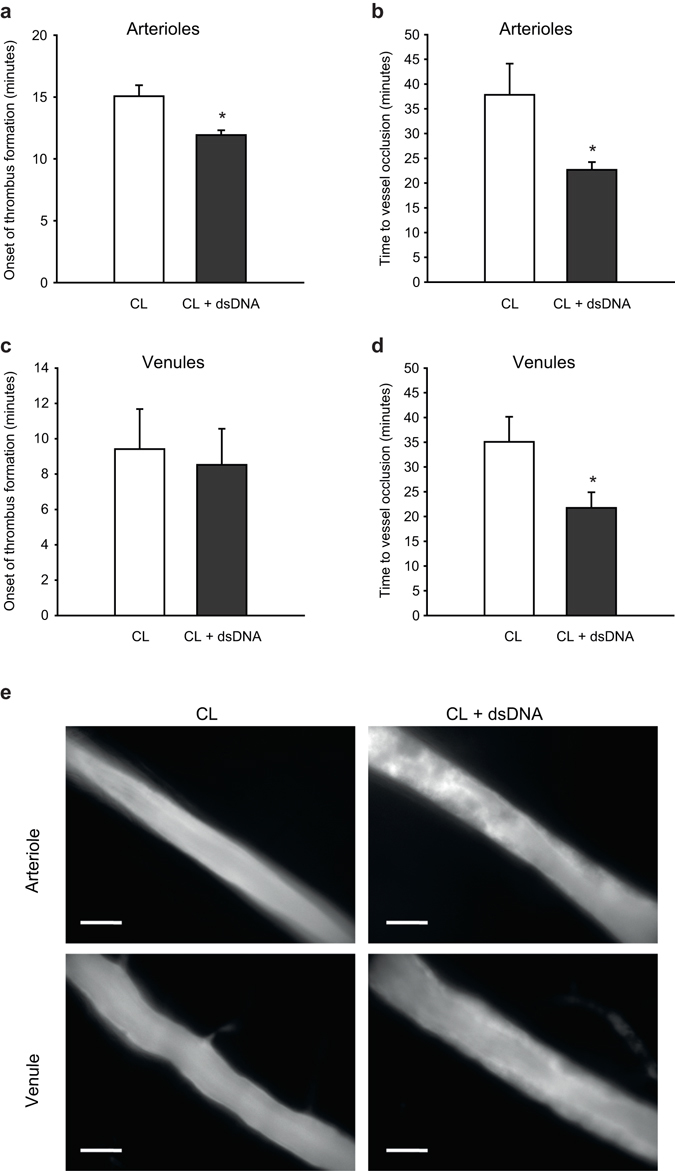
Double-stranded DNA (dsDNA) constitutes a potent activator of innate immunity, given its ability to bind intracellular pattern recognition receptors during viral infections or sterile tissue damage. While effects of dsDNA in immune cells have been extensively studied, dsDNA signalling and its pathophysiological implications in non-immune cells, such as the vascular endothelium, remain poorly understood. The aim of this study was to characterize prothrombotic effects of dsDNA in vascular endothelial cells. Transfection of cultured human endothelial cells with the synthetic dsDNA poly(dA:dT) induced upregulation of the prothrombotic molecules tissue factor and PAI-1, resulting in accelerated blood clotting in vitro, which was partly dependent on RIG-I signalling. Prothrombotic effects were also observed upon transfection of endothelial cells with hepatitis B virus DNA-containing immunoprecipitates as well human genomic DNA. In addition, dsDNA led to surface expression of von Willebrand factor resulting in increased platelet-endothelium-interactions under flow. Eventually, intrascrotal injection of dsDNA resulted in accelerated thrombus formation upon light/dye-induced endothelial injury in mouse cremaster arterioles and venules in vivo. In conclusion, we show that viral or endogenous dsDNA induces a prothrombotic phenotype in the vascular endothelium. These findings represent a novel link between pathogen- and danger-associated patterns within innate immunity and thrombosis.
双链 DNA(dsDNA)在病毒感染或无菌组织损伤期间能够结合细胞内模式识别受体,构成固有免疫的有效激活物。虽然 dsDNA 在免疫细胞中的作用已得到广泛研究,但 dsDNA 信号及其在非免疫细胞(如血管内皮细胞)中的病理生理意义仍知之甚少。本研究旨在描述 dsDNA 在血管内皮细胞中的促血栓形成作用。用合成的 dsDNA 聚(dA:dT)转染培养的人内皮细胞可诱导促血栓形成分子组织因子和 PAI-1 的上调,导致体外血液凝结加速,这部分依赖于 RIG-I 信号。用含有乙型肝炎病毒 DNA 的免疫沉淀物或人基因组 DNA 转染内皮细胞也观察到促血栓形成作用。此外,dsDNA 导致血管性血友病因子的表面表达,从而导致在流动条件下血小板-内皮相互作用增加。最终,dsDNA 的鞘内注射导致在体内小鼠提睾肌动静脉内皮损伤诱导的光/染料后血栓形成加速。总之,我们表明病毒或内源性 dsDNA 在内皮细胞中诱导促血栓形成表型。这些发现代表了固有免疫中病原体和危险相关模式与血栓形成之间的新联系。