Banerjee Deepanwita, Parmar Dharmeshkumar, Bhattacharya Nivedita, Ghanate Avinash D, Panchagnula Venkateswarlu, Raghunathan Anu
Chemical Engineering Division, CSIR-National Chemical Laboratory, Pune, India.
BMC Syst Biol. 2017 Apr 26;11(1):51. doi: 10.1186/s12918-017-0427-z.
The leading edge of the global problem of antibiotic resistance necessitates novel therapeutic strategies. This study develops a novel systems biology driven approach for killing antibiotic resistant pathogens using benign metabolites.
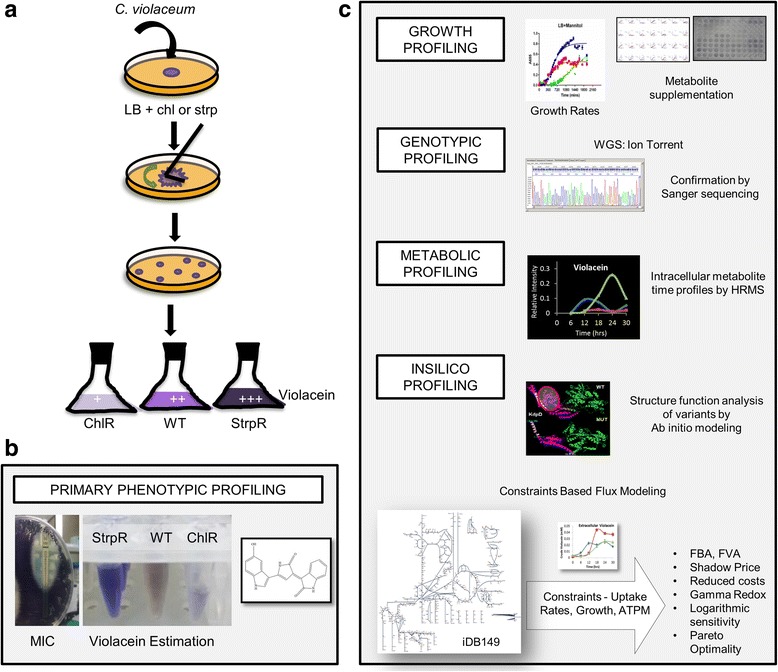
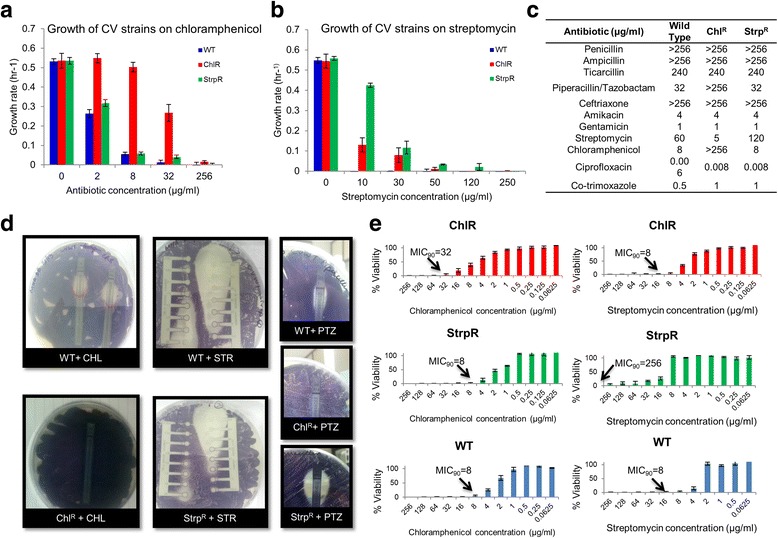
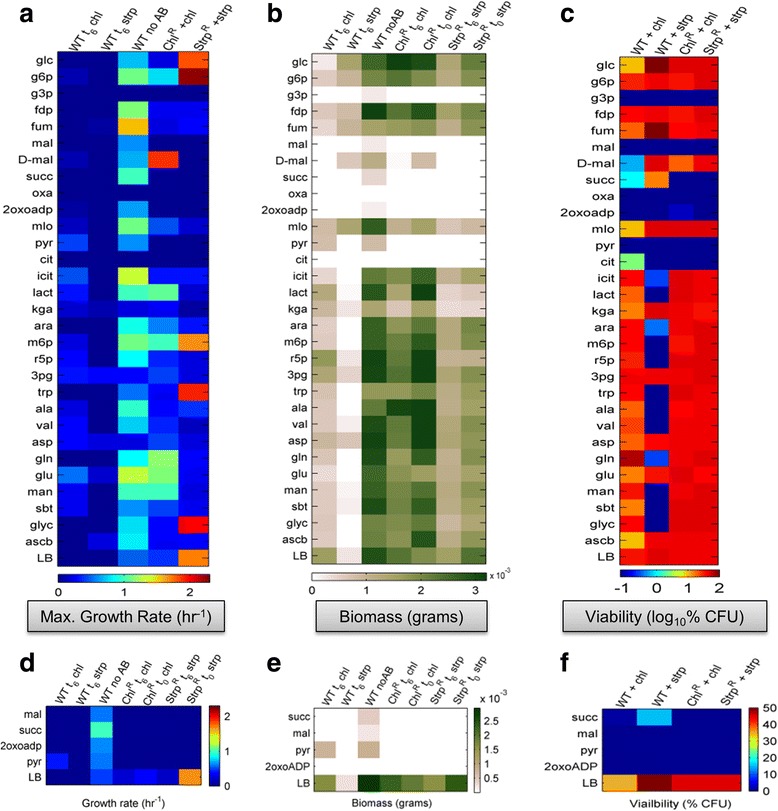
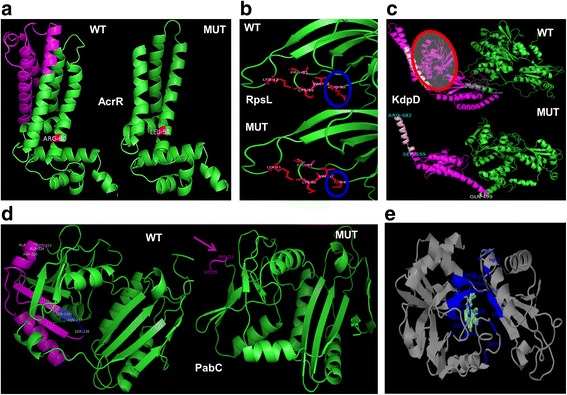
Controlled laboratory evolutions established chloramphenicol and streptomycin resistant pathogens of Chromobacterium. These resistant pathogens showed higher growth rates and required higher lethal doses of antibiotic. Growth and viability testing identified malate, maleate, succinate, pyruvate and oxoadipate as resensitising agents for antibiotic therapy. Resistant genes were catalogued through whole genome sequencing. Intracellular metabolomic profiling identified violacein as a potential biomarker for resistance. The temporal variance of metabolites captured the linearized dynamics around the steady state and correlated to growth rate. A constraints-based flux balance model of the core metabolism was used to predict the metabolic basis of antibiotic susceptibility and resistance.
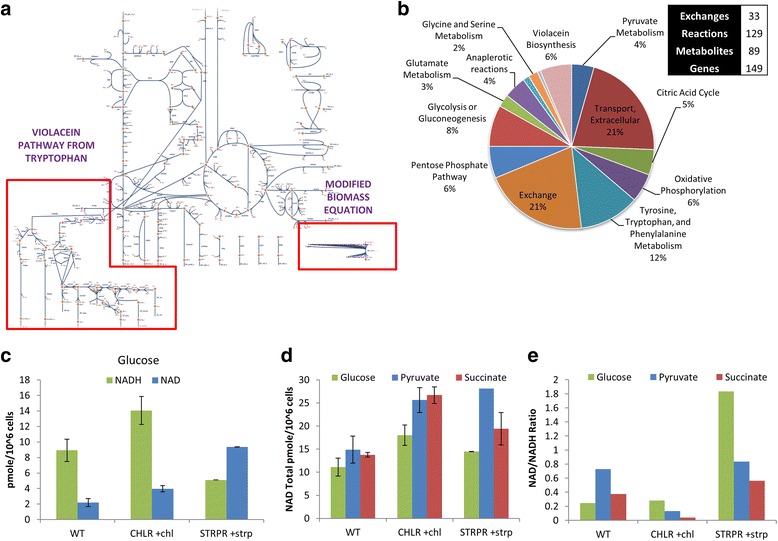
The model predicts electron imbalance and skewed NAD/NADH ratios as a result of antibiotics - chloramphenicol and streptomycin. The resistant pathogen rewired its metabolic networks to compensate for disruption of redox homeostasis. We foresee the utility of such scalable workflows in identifying metabolites for clinical isolates as inevitable solutions to mitigate antibiotic resistance.
抗生素耐药性这一全球问题的前沿需要新的治疗策略。本研究开发了一种新的系统生物学驱动方法,利用良性代谢物杀死抗生素耐药病原体。
在实验室控制条件下的进化产生了对氯霉素和链霉素耐药的嗜色菌病原体。这些耐药病原体显示出更高的生长速率,并且需要更高致死剂量的抗生素。生长和活力测试确定苹果酸、马来酸、琥珀酸、丙酮酸和草酰己二酸为抗生素治疗的增敏剂。通过全基因组测序对耐药基因进行了编目。细胞内代谢组学分析确定紫罗碱为耐药的潜在生物标志物。代谢物的时间变化捕捉了稳态周围的线性化动态,并与生长速率相关。基于约束的核心代谢通量平衡模型用于预测抗生素敏感性和耐药性的代谢基础。
该模型预测抗生素(氯霉素和链霉素)会导致电子失衡和NAD/NADH比例失衡。耐药病原体重新连接其代谢网络以补偿氧化还原稳态的破坏。我们预见,这种可扩展的工作流程在识别临床分离株的代谢物方面具有实用性,这是缓解抗生素耐药性的必然解决方案。